

 "Beijing-Manila South China Sea talks: What the two sides agreed on and what are the sticking points")
While China and the Philippines agreed to de-escalate tensions in the disputed South China Sea and to maintain dialogue and consultations on the issue in a meeting held in Manila on Tuesday, significant differences remained between the two sides, according to a report.
The meeting took place after several rounds of maritime confrontations between the two countries, which raised concerns of a potential wider conflict in the South China Sea, one of the world’s busiest shipping routes.
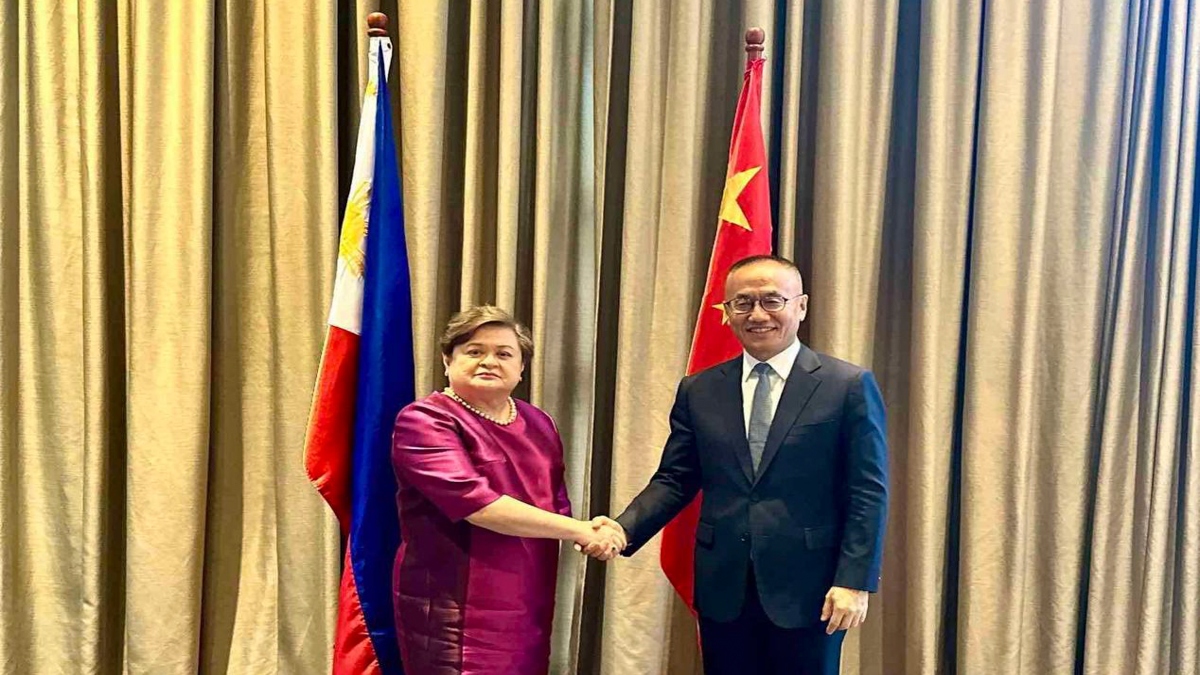
At Tuesday’s bilateral consultative mechanism meeting in Manila, co-chaired by China’s deputy foreign minister Chen Xiaodong and the Philippine foreign ministry undersecretary Theresa Lazaro, the two sides exchanged views on the situation in the South China Sea, particularly tensions at Second Thomas Shoal.
Issues covered in the talks included ways to improve the sea-related communication mechanism between the two countries and how to promote dialogue between their coastguards.
“The two sides made substantial progress on developing measures to manage the situation at sea, but significant differences remain,” the South China Morning Post quoted the Philippine foreign affairs department as saying in a statement released on Tuesday night.
What the two sided agreed on
China and the Philippines both believe that maintaining peace and stability in the South China Sea is in the interests of both, and is also the common goal of regional countries, according to a Chinese foreign ministry statement released late on Tuesday night
The two sides also agreed to continue to maintain dialogue and consultation … to control disputes and differences, added the statement, which described the meeting as “frank and constructive”.
An agreement was signed to improve communications during emergencies at sea and both sides agreed to continue talks on enhancing ties between their coast guards but no details were provided.
Another confidence-building plan was the convening of an academic forum among scientists and academics to improve marine scientific cooperation.
Sticking points
While both the sides “affirmed their commitment to de-escalate tensions without prejudice to their respective positions”, Lazaro, however, told Chen that Manila would remain “relentless in protecting its interests and upholding its sovereignty, sovereign rights and jurisdiction in the West Philippine Sea,” according to a statement by Philippine Department of Foreign Affairs, using Manila’s name for South China Sea waters within the Philippines’ exclusive economic zone.
China, for its part, reiterated its claims over the waterway, including the Second Thomas Shoal, which has emerged as an epicenter of the dispute.
- Three of Manila’s ships were damaged on June 17 when Chinese sailors surrounded and boarded them while wielding edged weapons, and one Filipino sailor lost a finger. Manila had hoped China would promise to pay for the damage they caused during the most recent incident. But the meeting ended without any substantial agreement on the issue.
Meeting after dramatic standoff
Manila and Beijing have a long history of maritime territorial disputes in the hotly contested waterway but last month’s incident was the most serious in a number of escalating confrontations.
Chinese coast guard personnel wielding knives, sticks and an axe surrounded and boarded three Philippine navy boats on June 17 during a resupply mission to Second Thomas Shoal.
A Filipino soldier lost a finger in the clash, with Manila also accusing the Chinese coast guard of looting guns and damaging three boats as well as navigational and communication equipment.
Beijing insisted its coast guard behaved in a “professional and restrained” way and blamed Manila for the clash.
A handful of Filipino troops are stationed on a rusty warship deliberately grounded on Second Thomas Shoal in 1999 to assert Manila’s claims to the area.
China’s sweeping claim
China claims almost the entirety of the South China Sea, brushing aside competing claims from several Southeast Asian nations, including the Philippines, and an international ruling that its stance has no legal basis.
Chinese forces have used water cannon and military-grade lasers and collided with Filipino resupply vessels and their escorts in previous confrontations near disputed reefs.
Second Thomas Shoal lies about 200 kilometres (120 miles) from the western Philippine island of Palawan and more than 1,000 kilometres from China’s nearest major landmass, Hainan island.
Impact Shorts
More ShortsChina deploys coast guard and other boats to patrol the waters around the shoal and has turned several reefs into artificial militarised islands.
With inputs from agencies


 "Russian drones over Poland: Trump’s tepid reaction a wake-up call for Nato?")
 "As Russia pushes east, Ukraine faces mounting pressure to defend its heartland")
 "Why Mossad was not on board with Israel’s strike on Hamas in Qatar")
 "Turkey: Erdogan's police arrest opposition mayor Hasan Mutlu, dozens officials in corruption probe")
 "Russian drones over Poland: Trump’s tepid reaction a wake-up call for Nato?")
 "As Russia pushes east, Ukraine faces mounting pressure to defend its heartland")
 "Why Mossad was not on board with Israel’s strike on Hamas in Qatar")
 "Turkey: Erdogan's police arrest opposition mayor Hasan Mutlu, dozens officials in corruption probe")



