

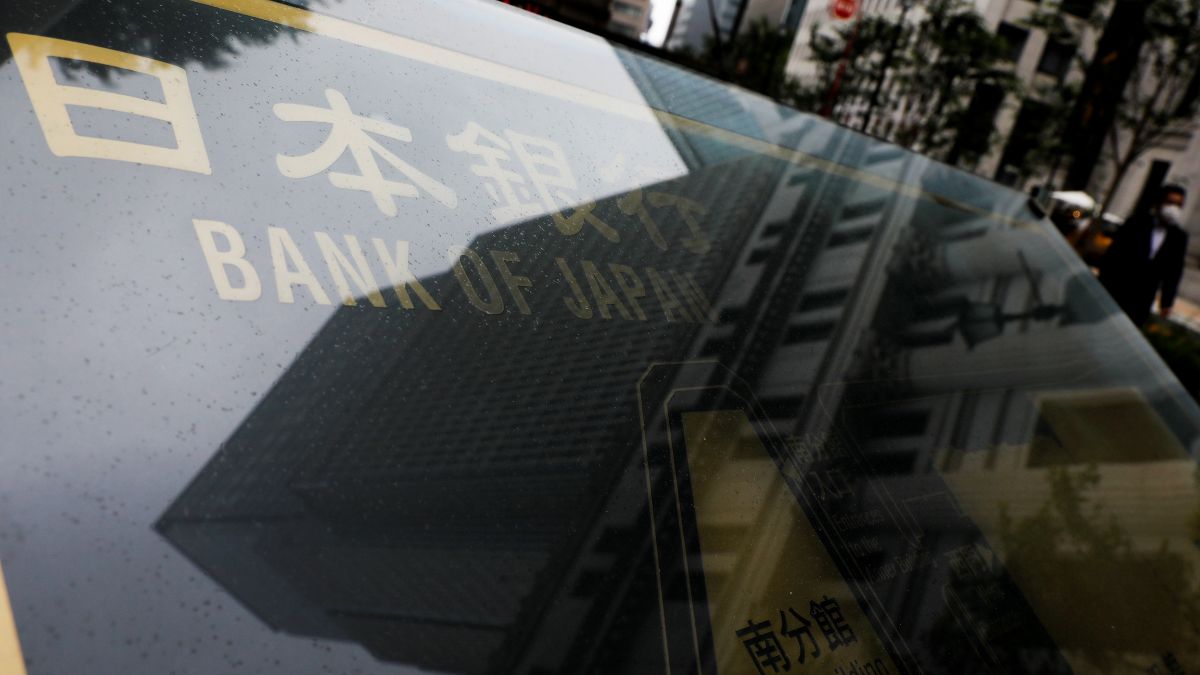
 "Bank of Japan's interest rate hike spurs Tokyo stocks, weakens Yen")
Japan’s yen saw a decline while Tokyo stocks experienced an uptick following the Bank of Japan’s decision to raise interest rates for the first time in 17 years, signaling a departure from its prolonged ultra-loose monetary strategy.
With inflation consistently surpassing the two percent target set by officials and recent wage negotiations resulting in substantial increases, the BoJ felt emboldened to shift away from a policy that had stood out globally, especially as other nations began raising borrowing costs.
The BoJ stated that it evaluated the positive feedback loop between wages and prices, concluding that achieving the two percent price stability target in a sustainable manner was within reach.
This interest rate hike marks the first adjustment since 2007.
The decision coincides with meetings this week among several major central banks, including those of the United States, United Kingdom, and Australia, where discussions on interest rates are underway.
Additionally, the BoJ announced plans to discontinue its yield curve control program, which tightly managed government bond yields, and cease purchasing risk assets such as exchange-traded funds and real estate investment trusts.
Despite the significant departure from its longstanding policy, traders responded calmly, with Japanese stocks rising and the yen weakening against the dollar. This reaction reflects diminishing expectations for interest rate cuts in the United States throughout the year.
Impact Shorts
More Shorts“As the Bank of Japan made significant policy changes, crossing what can be seen as a Rubicon in its monetary approach, the moves had been extensively communicated to the market beforehand,” said SPI Asset Management’s Stephen Innes.
“Consequently, the adjustments were largely anticipated, and the markets had priced them in almost perfectly.”
Still, there is a concern that tighter Japanese policy could disrupt financial markets as investors switch their cash to Japan in search of better returns as other central banks prepare to begin cutting.
Other Asian markets were mixed.
There were also gains in Sydney, Singapore, Taipei, Manila, Jakarta, Bangkok and Wellington.
Hong Kong and Shanghai were down at the break, while there were also losses in Seoul and Mumbai.
Investors are also gearing up for the Federal Reserve’s latest policy decision Wednesday.
While it is forecast to keep rates on hold at a two-decade high, it will release its “dot plot” outlook for the rest of the year, with the December report pointing to three cuts.
But with recent data suggesting inflation remains sticky – including consumer and wholesale prices last week – the economy in rude health and the labour market still strong, there is talk that the new guidance could point to just two.
Investors have revised their view lower consistently over recent months, with June pencilled in as the first likely move.
With inputs from AFP


 "Russian drones over Poland: Trump’s tepid reaction a wake-up call for Nato?")
 "As Russia pushes east, Ukraine faces mounting pressure to defend its heartland")
 "Why Mossad was not on board with Israel’s strike on Hamas in Qatar")
 "Turkey: Erdogan's police arrest opposition mayor Hasan Mutlu, dozens officials in corruption probe")
 "Russian drones over Poland: Trump’s tepid reaction a wake-up call for Nato?")
 "As Russia pushes east, Ukraine faces mounting pressure to defend its heartland")
 "Why Mossad was not on board with Israel’s strike on Hamas in Qatar")
 "Turkey: Erdogan's police arrest opposition mayor Hasan Mutlu, dozens officials in corruption probe")



