

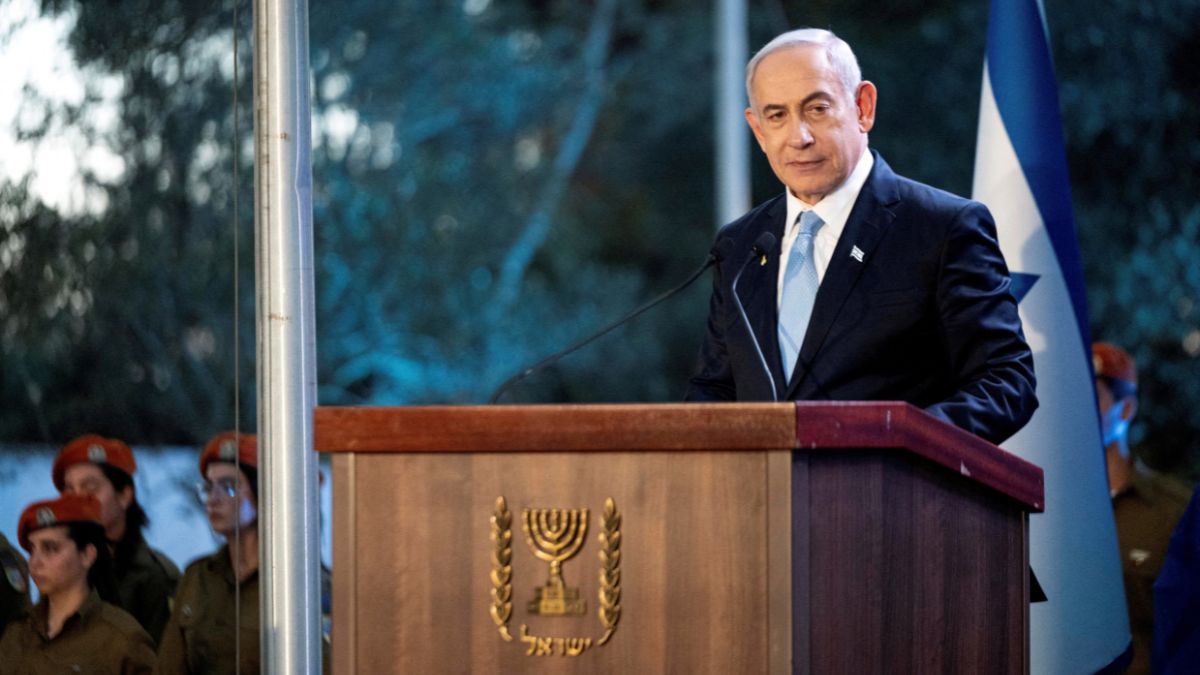
 "Amid right-wing opposition, Israeli Cabinet to vote on Hezbollah ceasefire proposal today")
Prime Minister Benjamin Netanyahu will convene the Israeli Cabinet on Tuesday (November 26) evening to vote on the proposal for a ceasefire with Hezbollah.
Even as Netanyahu appears to be convinced with the ceasefire proposal , not everyone in the Cabinet or his Likud party appears to be on board. Hardliner voices insist that the war should be pursued in Lebanon till Hezbollah’s annihilation.
The ceasefire proposal on the table is a result of mediation by US and French governments. While the specifics of the plan have not been released, it has so far been reported that it proposes an initial 60-day truce during which Israeli forces will withdraw from Lebanon and Hezbollah will withdraw from southern Lebanon bordering Israel. Then, Lebanese forces will take over the area vacated by Hezbollah and the arrangement will be verified by international observers.
Despite opposition from quarters, the Israeli Cabinet is set to approve the ceasefire proposal, an official told The Times of Israel.
Last week, a Lebanese official mediating between US negotiators and Hezbollah had said that Hezbollah had accepted the ceasefire proposal on the table.
Once Israel formally approves the ceasefire proposal, US President Joe Biden and French President Emmanuel Macron are expected to announce the ceasefire in a joint statement.
Right-wing MPs & ministers oppose ceasefire
Even as Netanyahu is said to be onboard with the ceasefire proposal, an increasing group of right-wing figures have come out in opposition, including powerful far-right ministers Itamar Ben-Gvir and Bezalel Smotrich.
Ben-Gvir dubbed efforts for ceasefire a “grave mistake” and a “historic missed opportunity” to eliminate Hezbollah, according to The Jerusalem Post.
Ben-Gvir said that “we need to listen to field commanders and local leaders” and added that at this stage, “with Hezbollah battered and eager for a ceasefire, we must not stop”.
Smotrich went on to say that even if a ceasefire is approved, it would be essentially meaningless.
“No agreement. If signed, it will be worth the paper it’s written on. It doesn’t matter. What matters is that we’ve dismantled them, and we’ll continue dismantling them,” said Smotrich, as per The Post.
Impact Shorts
More ShortsAgriculture Minister Avi Dichter said that if the agreement would be based on the United Nations Security Council (UNSC) Resolution 1701, he would not support it.
Dan Illouz, an MP from Netanyahu’s Likud party, said in a post on X that the proposal “grants Hezbollah strategic achievements and endangers Israel’s security” instead of leveraging Israel’s advantageous position in the war.
Separately, Amit Halevi told Maariv newspaper that the agreement in the making legitimises Hezbollah and nothing less than the removal of Hezbollah from Lebanon should be acceptable.
“The reported settlement raises serious questions — What exactly are we settling? It seems like we are legitimising Hezbollah’s status in Lebanon, its continued control of the parliament and government, and the implementation of the Ayatollah’s Shiite vision with the strongest military power left in Lebanon. This is a moment of truth. Israel must not settle for anything less than the removal of Hezbollah from Lebanon and the liberation of the Lebanese people from the captivity of the murderous Iranian regime. Otherwise, our children will face a future 7/10 scenario with a fully armed political and military Shiite terror state,” said Halevi.
Another Likud MP, Moshe Saada, compared the proposal as a “surrender to the murderous organisation” and said that instead of conceding to the terrorist group, Israel should commit to the defeat and dismantling of Hezbollah.
“Past experience shows that every surrender and Israeli retreat only invites the next round of fighting and constitutes a gamble with Israeli citizens’ security. Therefore, only the continued destruction of Hezbollah will bring northern residents back to their homes and remove the rocket threat over the rest of the country,” said Saada.
Despite such an opposition, the government is hopeful the Cabinet would approve the proposal. An official told The Times of Israel, “There are ministers who speak to their base, and we take it into consideration. But Ben Gvir understands the importance. It’s in Israel’s interest.”


 "Russian drones over Poland: Trump’s tepid reaction a wake-up call for Nato?")
 "As Russia pushes east, Ukraine faces mounting pressure to defend its heartland")
 "Why Mossad was not on board with Israel’s strike on Hamas in Qatar")
 "Turkey: Erdogan's police arrest opposition mayor Hasan Mutlu, dozens officials in corruption probe")
 "Russian drones over Poland: Trump’s tepid reaction a wake-up call for Nato?")
 "As Russia pushes east, Ukraine faces mounting pressure to defend its heartland")
 "Why Mossad was not on board with Israel’s strike on Hamas in Qatar")
 "Turkey: Erdogan's police arrest opposition mayor Hasan Mutlu, dozens officials in corruption probe")



