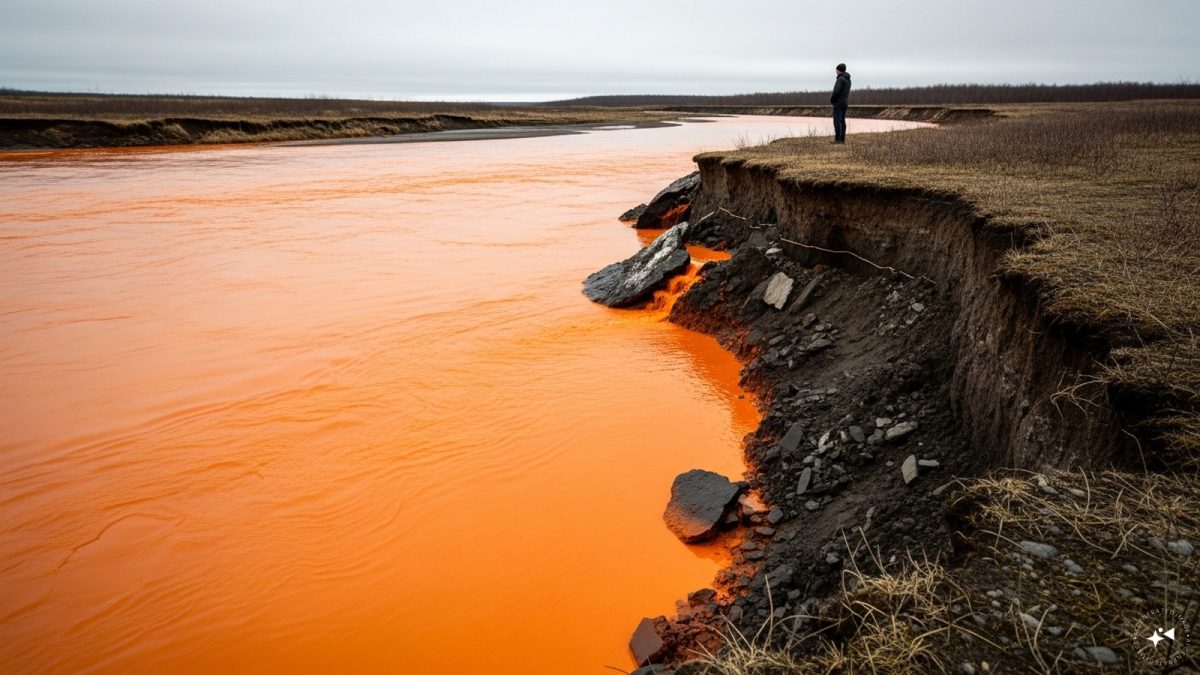
 "Alaska river turns orange as scientists flag heavy metal contamination")
A river in northern Alaska has begun flowing a striking orange, alarming scientists and local communities and signalling a deeper environmental shift underway across the Arctic.
Researchers say the unusual colour is not a natural seasonal phenomenon but the visible result of rising heavy metal pollution, driven largely by thawing permafrost and rapid climate warming. The change is increasingly being seen not as an isolated incident, but as part of a broader transformation affecting Arctic rivers, ecosystems and livelihoods.
The discolouration, caused by iron and other metals oxidising when exposed to air and water, has turned stretches of once-clear waterways rusty orange. Scientists warn that while the colour itself is dramatic, the chemical changes beneath the surface pose a far greater threat.
Permafrost thaw unleashes buried metals
At the heart of the phenomenon is permafrost — the permanently frozen ground that underpins much of Alaska’s Arctic landscape. As temperatures rise, permafrost that has remained frozen for thousands of years is thawing, releasing minerals and metals that were previously locked safely underground.
Studies cited by researchers show that thawing exposes sulfide-rich rocks, which react with oxygen and water to produce sulfuric acid. This process, similar to acid mine drainage, leaches metals such as iron, zinc, copper and nickel into nearby rivers and streams. When iron oxidises, it gives water its distinctive orange hue.
Scientists monitoring these rivers say the changes are accelerating. Federal and academic reports indicate that dozens of rivers across Alaska have shown rising metal concentrations in recent years, with some waterways becoming acidic enough to threaten aquatic life. Unlike pollution from industrial accidents, this process is driven by climate change and is far harder to contain or reverse.
Quick Reads
View AllEcological and community risks grow
The implications for Arctic ecosystems are severe. Fish species that rely on clean, oxygen-rich water are particularly vulnerable to acidic conditions and heavy metals. Researchers have warned that even low concentrations can disrupt fish development, reduce reproductive success and alter food chains.
For Indigenous and rural communities that depend on rivers for fishing, drinking water and transport, the changes raise serious concerns. In remote parts of Alaska, rivers serve as lifelines, and contamination can quickly translate into health risks and food insecurity. Some communities have already reported declines in fish populations and changes in water taste and clarity.
Scientists stress that these orange rivers are an early warning sign. “What we’re seeing is a toxic shift in what was once considered pristine wilderness,” researchers have noted, pointing out that Arctic regions are warming at several times the global average. As glaciers melt and permafrost continues to thaw, more waterways are likely to be affected.
A climate signal with global consequences
The phenomenon has caught the attention of federal agencies and climate researchers because it underscores how climate change can trigger cascading environmental effects. Unlike oil spills or industrial discharge, permafrost-driven pollution emerges gradually and spreads over vast areas, making mitigation extremely challenging.
Recent federal assessments of Arctic change have highlighted that melting glaciers, thawing ground and changing hydrology are fundamentally reshaping northern landscapes. Orange rivers, scientists say, are part of the same pattern that includes collapsing coastlines, methane emissions and shifting wildlife habitats.
There are also broader implications beyond Alaska. The Arctic plays a critical role in regulating the planet’s climate, and chemical changes in its rivers can affect coastal waters and the Arctic Ocean. Increased metal loads may alter marine ecosystems and biogeochemical cycles, with consequences that scientists are only beginning to understand.
Researchers are now expanding monitoring programmes to track metal concentrations and acidity across Arctic watersheds. However, they caution that adaptation, rather than prevention, may be the only realistic response in many areas. Once permafrost thaws, refreezing it on a large scale is virtually impossible.
As northern Alaska’s rivers turn orange, scientists say the colour serves as a stark visual marker of a warming world, a reminder that climate change is not only melting ice, but also unlocking hidden pollutants with lasting ecological and human costs.