

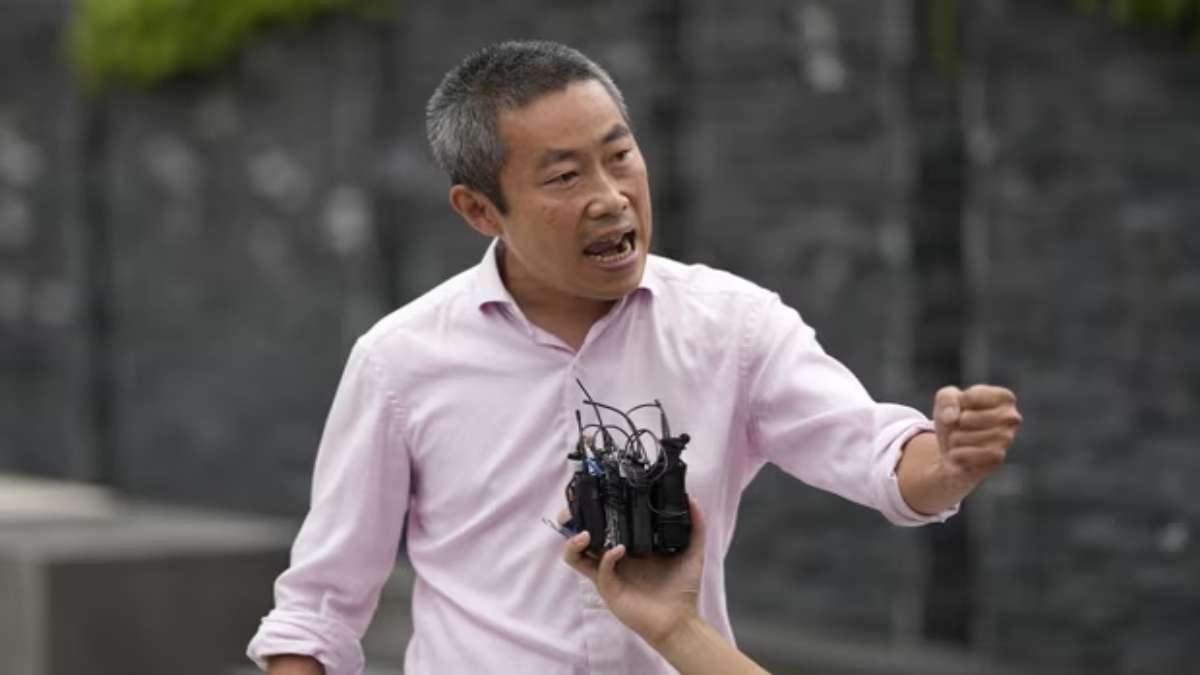
 "200,000 foreign adoptions in 70 years: South Korea finds hospitals, agencies forced mothers to give up babies")
South Korea has found new evidence that mothers were coerced into giving up their children for adoption in countries such as Australia, Denmark, and the United States.
According to The Guardian report, since the 1950s, at least 2 lakh South Korean children have been adopted internationally, but allegations have surfaced that hospitals, maternity wards, and adoption agencies systematically pressured parents — mainly single mothers — into relinquishing their children.
In some instances, adoption workers falsely claimed that adoptees were abandoned and accused the biological parents of neglecting to search for them.
However, a report from a government Truth and Reconciliation Commission set up to investigate the claims has detailed some of the coercive methods used to force mothers living in welfare shelters to give up their sometimes day-old children, reported The Guardian.
Citing one such case, the report said that a mother unwilling to be separated from her child was recorded as being “a problem” and “mentally ill”. The record was later updated to explain that the parental rights’ waiver had been secured and the baby transferred to an adoption agency, added the report.
The Guardian report, citing researchers who were interviewed by the outlet last year, said that the international adoption was poorly understood at the time, with parents being led to believe it was akin to sending their child abroad for studies, with the expectation they would return.
Adoptees reported being told that they were better off being adopted in Denmark than remaining as impoverished children in South Korea.
Among its recommendations, the commission called for the government to issue a formal apology and provide financial compensation to victims of the detention centers.
“It’s inconceivable how violent and systemic it was, but there’s also redemption in the truth coming out,” The Guardian quoted Peter Møller, an adoptee himself and founder of the Danish Korean Rights Group (DKRG), which has campaigned for an inquiry into the adoption industry that sent them predominantly to white families in western countries, as saying.
Impact Shorts
More ShortsAccording to the report, in the 1970s and 1980s, as international adoptions surged, South Korea’s military dictatorship enforced a “social purification” policy, forcibly placing thousands into government-funded, privately run welfare centers.
A recent government commission has confirmed longstanding suspicions of serious misconduct within the adoption programme, revealing widespread human rights abuses and horrific conditions at four of these centers.
Inmates endured forced labor, brutal treatment, and indefinite confinement. Many who died were buried in shallow graves or donated to medical schools without family notification.
Babies born in these facilities were often quickly placed with adoption agencies for overseas placement, added the report.
Danish adoptee Sussie Brynald, 51, expressed deep distress over the revelations.
“It makes me angry and sad,” The Guardian quoted Brynald as saying.
“It only goes to show just how much (South Korea’s adoption system) was always about money, and how little it was about the children,” Brynald added.
With inputs from agencies


 "Russian drones over Poland: Trump’s tepid reaction a wake-up call for Nato?")
 "As Russia pushes east, Ukraine faces mounting pressure to defend its heartland")
 "Why Mossad was not on board with Israel’s strike on Hamas in Qatar")
 "Turkey: Erdogan's police arrest opposition mayor Hasan Mutlu, dozens officials in corruption probe")
 "Russian drones over Poland: Trump’s tepid reaction a wake-up call for Nato?")
 "As Russia pushes east, Ukraine faces mounting pressure to defend its heartland")
 "Why Mossad was not on board with Israel’s strike on Hamas in Qatar")
 "Turkey: Erdogan's police arrest opposition mayor Hasan Mutlu, dozens officials in corruption probe")



