

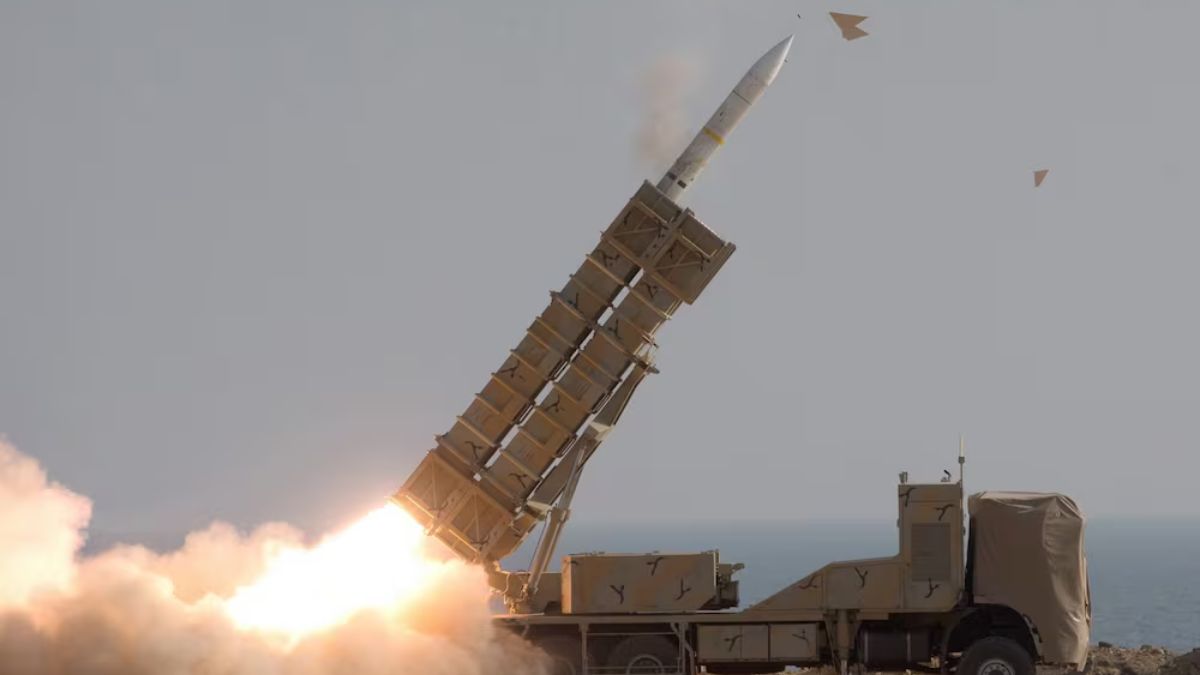
 "Iran has vowed to avenge top general's killing, here are 10 ways it may attack Israel")
Israel and the United States are preparing for an “imminent” Iranian attack that is expected over the weekend or early next week. The attack may be a missile barrage or drone strikes across Israel or a mixture of the two.
Iran has repeatedly vowed to punish Israel for the killing of Brigadier General Mohammad Reza Zahedi, the top Iranian commander for operations in Syria and Lebanon. He was killed along with six other senior military and intelligence officers when an airstrike hit a building part of the Iranian diplomatic mission in Syrian capital Damascus on April 1. Iran blamed the strike on Israel.
Following Iran’s vow to avenge the killing of Zahedi, the senior-most Iranian officer to be killed since the US assassination of famed General Qasem Soleimani in 2020, the US has assured “ironclad” support to Israel. On its part, Israel has also declared that an attack on Israel would me met with a retaliatory strike on the attacker’s soil.
An Iranian attack on Israel would be a first and will drag the two countries in a direct confrontation. Since the outbreak of the Israel-Hamas War in October 2023, Middle East has been on the edge and an Israel-Iran conflict, which is also expected to drag the US into it, would further destabilise the region.
As the US ropes in partners to press Iran to not escalate the situation while also bracing for an attack, here we describe the 10 ways in which Iran may attack Israel.
Impact Shorts
More Shorts1. Ballistic missile strike from Iran
Iran has a large stock of missiles of various kinds. It has used ballistic missiles in the past in such ‘revenge’ strikes.
In 2020, in response to Soleimani’s killing, Iran launched up to 22 ballistic missiles to target US personnel and Iraqi partners in the country’s Kurdistan region. The missiles were reported to be launched from many locations in Iran and 11 of them struck Al-Asad Base in Iraq that housed US troops.
2. Ballistic missile strikes from Iraq
As part of a strategy to keep the exchange of fire away from Iranian soil, Supreme Leader Ayatollah Khamenei’s regime may choose to launch ballistic missiles from Iraq.
During 2018-19, there were reports that said Iran had housed missiles in Iraq. Notably, Iran maintains a significant influence in Iraqi affairs and has a large network of militias there that it supports.
Iran may seek to place long-range ballistic missiles in Iraq to attack Israel, according to The Jerusalem Post. The newspaper noted that this method would seek to replicate former Iraqi ruler Saddam Hussain’s tactic in 1991 when he launched attacks on Israel.
3. New long-range ballistic missiles
Iran may also use its long-range and relatively new Kheibar Shekan ballistic missiles that it used in attacks in Syria in January, according to the report.
The missile reportedly has a range of 1,450 km and is supposed to have high-speed and precision-strike capabilities.
4. Joint drone and cruise missile attack
This may be the most anticipated medium of attack as Iran has developed a vast arsenal of drones that it has also exported to Russia for use against Ukraine. It is expected that a combination of drones and cruise missiles may be used to attack Israel. There is a precedent for it.
In 2019, Iranian drones and missiles struck Saudi Arabia’s Abqaiq oil facility. The attacks emanated from Iraq and comprised seven missiles and 18 drones, according to Saudis.
5. Drones or missiles by Iraq’s militias
Instead of using Iran’s regular military or the Islamic Revolutionary Guards Corps (IRGC), the vastly influential Iranian armed force separate from the country’s regular military that reports directly to the Supreme Leader, Iran may also deploy non-state actors that it sponsors across the Middle East.
Throughout the region, Israel has a network of militias, comprising Gaza-based Hamas, Lebanon-based Hezbollah, Yemen-based Houthis, and numerous groups in Iraq. They are part of what Iran calls ‘Axis of Resistance’. They share Iran’s opposition to Israel.
6. Syria-based groups sponsored by Iran
Iran may also resort to using armed groups based in Syria. Lebanon-based Hezbollah has a presence in Syria. The Jerusalem Post also reported that the IRGC also runs Fetemiyoun, a group of Afghan Shias, in Syria. The report said that both of these groups could be mobilised to attack Israel.
7. A joint attack by Iran’s proxies in Middle East
The report further said that Iran could deploy the various proxies in the region to mount a multi-front attack on Israel.
This is a particularly likely scenario as such a situation has almost been created multiple times. While Hamas has been fighting Israel in Gaza, Hezbollah has been clashing with Israel on a nearly-daily basis along the Lebanese border, and Yemen-based Houthis have also mounted attacks.
The report said that such a combined assault may drag Israel into a seven-front scenario.
“Iran could seek to push several of its partners and proxies to carry out a multi-front attack. It has already attempted this during the current war on Israel. For instance, Iraqi militias have targeted Eilat, as did an Iranian-backed group in Syria in November. Hezbollah has fired thousands of missiles at Israel. The Houthis have launched cruise missiles, drones and also ballistic missiles. Iran seeks to ring Israel with this ‘fire’ and has already successfully mobilised most of the components involved,” noted Seth J Frantzman in an analysis.
8. Attack on Israel in other countries
To avoid a direct confrontation with Israel, Iran may also opt to strike Israeli interests, such as diplomatic missions or Jewish places, in other countries.
There are precedents for such incidents. In 1992, a bombing at the Israeli embassy in Argentina killed 29, which Israel blamed on Iran-backed Hezbollah. Then, in 2012, Israeli diplomats were targeted in India, Georgia, and Thailand, which Israel also blamed on Iran.
9. Attacks on Kurds in Iraq
In a rather unlikely target, Iran may also choose to strike on Kurds in Iraq whom Iran has linked with Israel in recent years, according to the report. The Kurds are also US partners in the region.
10. Bringing in Hezbollah in war with Israel
While Hezbollah has clashed with Israel on a nearly-daily basis since the beginning of Israel-Hamas War, it has stayed out of a full-fledged war. Iran may seek to change that and push Hezbollah into a proper war with Israel. This would mean engaging Israel on a second front at a time when the country is largely isolated internationally and support for its war in Gaza is at an all-time low.
Hezbollah is the strongest armed group in the region. It is reported to have around 100,000 fighters with an arsenal of around 100,000 rockets.


 "Russian drones over Poland: Trump’s tepid reaction a wake-up call for Nato?")
 "As Russia pushes east, Ukraine faces mounting pressure to defend its heartland")
 "Why Mossad was not on board with Israel’s strike on Hamas in Qatar")
 "Turkey: Erdogan's police arrest opposition mayor Hasan Mutlu, dozens officials in corruption probe")
 "Russian drones over Poland: Trump’s tepid reaction a wake-up call for Nato?")
 "As Russia pushes east, Ukraine faces mounting pressure to defend its heartland")
 "Why Mossad was not on board with Israel’s strike on Hamas in Qatar")
 "Turkey: Erdogan's police arrest opposition mayor Hasan Mutlu, dozens officials in corruption probe")



