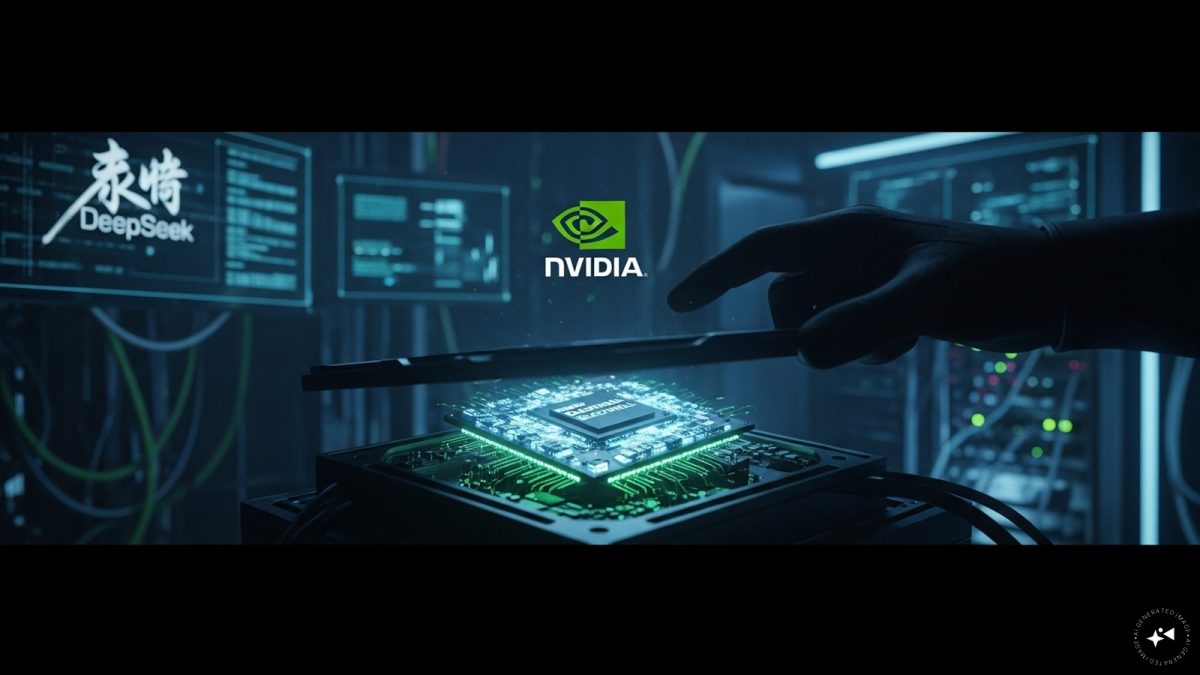
 "Is China's DeepSeek using smuggled Blackwell AI chips? Nvidia says...")
A high-stakes row over whether China’s fast-rising AI startup DeepSeek has obtained banned Nvidia Blackwell chips has put export controls, corporate oversight and the future of the global AI supply chain under intense scrutiny.
Nvidia has refuted allegations of a clandestine smuggling operation, saying it has seen no substantiated evidence of “phantom datacentres” built to funnel Blackwell cards into China but the dispute has already intensified pressure on both regulators and industry to tighten tracking and enforcement.
The controversy traces to a report that accused DeepSeek of using thousands of Nvidia’s most advanced Blackwell GPUs — hardware that US export policy restricts from being sold directly into China.
The allegation, if true, would imply a sophisticated circumvention: servers shipped to jurisdictions where Blackwell exports are permitted, stripped down after compliance checks and then covertly transported into China for reassembly and use. DeepSeek’s meteoric rise earlier in the year, after it unveiled the R1 model at a fraction of typical training costs, amplified suspicion that it might be tapping illicit compute resources.
Nvidia pushed back decisively. Company spokespeople quoted by CNBC as saying that they had not received credible tips or uncovered evidence of phantom data centres, describing the smuggling scenario as “far-fetched” but emphasising they would pursue any leads.
Quick Reads
View AllNvidia also highlighted a parallel technical response: a new optional location-verification capability designed to help data-centre operators monitor the health and inventory of GPU fleets and potentially to make it harder for advanced chips to be diverted to restricted locations undetected.
That mixture of denial and defensive innovation frames the issue in two ways. First, Nvidia’s public rebuttal aims to protect the company’s customers and its reputation at a moment when questions about chip provenance could spook investors and partners. Second, the company is signalling that it intends to harden controls technologically where policy cannot immediately close gaps in complex global supply chains.
The stakes go beyond a single startup. Blackwell-class GPUs represent a crucial competitive advantage in training large models; unauthorised access could materially accelerate capabilities in jurisdictions cut off from legal supply.
For Washington, allegations of smuggling test the effectiveness of export restrictions as a tool to slow strategic rivals’ access to frontier compute. For Beijing and Chinese AI firms, the row spotlights the tension between national ambitions to develop indigenous stacks and the reality that cutting-edge silicon remains concentrated among a few suppliers.
Crucial questions remain unanswered. Nvidia’s denial does not amount to an independent, public audit of DeepSeek’s hardware inventory. DeepSeek has not publicly produced verifiable evidence that it uses only permitted chips. And export-control enforcement across multiple jurisdictions is notoriously difficult to police in real time.
Even if no smuggling occurred, the episode is likely to hasten changes: more rigorous tracking features in chips, closer coordination between chipmakers and regulators, and heightened scrutiny of how AI compute moves through the global market. If smuggling did occur, authorities face the hard task of tracing shipments and proving intent across multiple legal systems.
For now, Nvidia’s message is cautious: the company says it will investigate credible tips and deploy new tools to make diversion harder. The industry and governments will be watching closely because whether or not DeepSeek used smuggled hardware, the case has already exposed real weaknesses in the architecture of global AI control.