

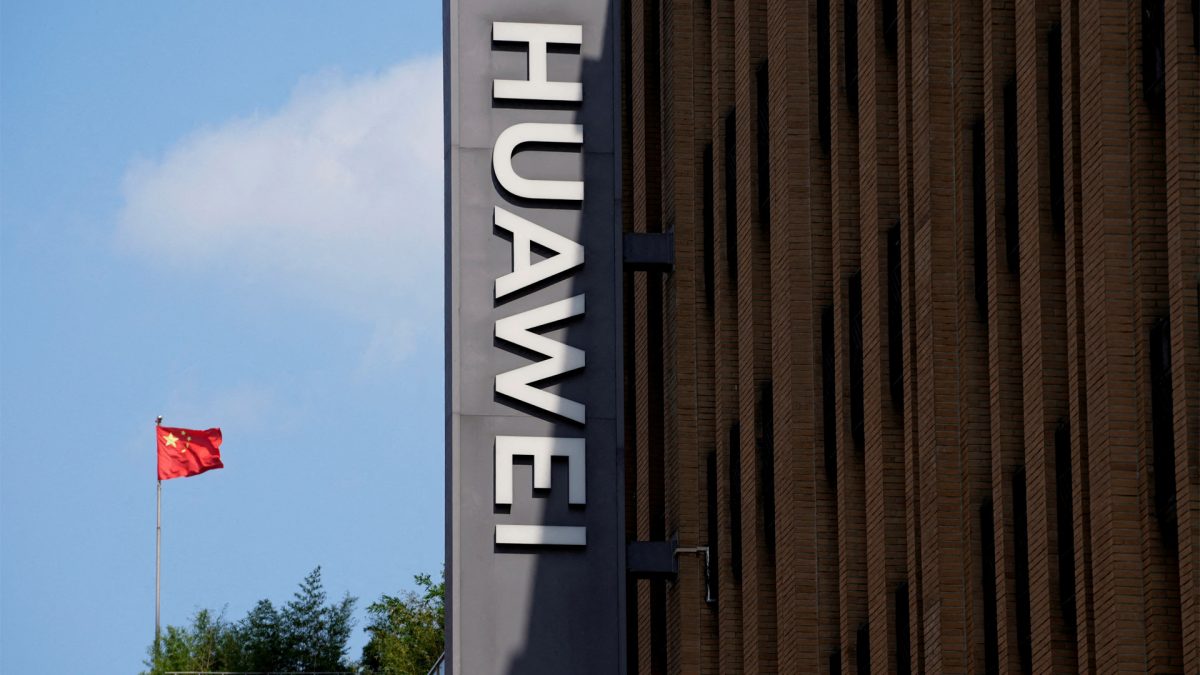
 "Huawei’s revenue jumps 22% YoY in 2024, sets new record despite US sanctions")
Huawei Technologies has defied US sanctions, reporting an impressive revenue of over 860 billion yuan (US$118.3 billion) for 2024. This represents a 22 per cent increase compared to the 704.2 billion yuan recorded in 2023. The strong performance highlights Huawei’s resilience and strategic focus on innovation despite ongoing trade restrictions from Washington.
Howard Liang Hua, Huawei’s chairman, noted that the company’s operations met expectations, driven by growth in both its consumer electronics and smart car solutions divisions. Although this year’s revenue did not surpass Huawei’s all-time high of 891 billion yuan in 2020, it stands as the second-highest in the company’s history, underscoring its steady recovery since the imposition of sanctions.
Navigating US sanctions and R&D investments
Since being placed on the US trade blacklist in 2019, Huawei has faced tightened restrictions, particularly in accessing advanced semiconductors that rely on American technology. These measures have significantly impacted its mobile phone and global operations. In response, the tech giant has been doubling down on research and development to reduce its reliance on foreign technology.
Despite these efforts, the company experienced a drop in net profit during the first nine months of 2024, down by 13.7 per cent to 62.9 billion yuan. Analysts attribute this decline to Huawei’s increased capital spending on R&D as part of Beijing’s push for technological self-sufficiency. Since its founding in 1987 by Ren Zhengfei, Huawei has become a central figure in China’s strategy to counter US restrictions and develop homegrown technological capabilities.
AI expansion and industry recognition
Huawei’s technological ambitions continue to advance, particularly in the field of artificial intelligence (AI). Its cloud-computing division recently partnered with DeepSeek, making advanced AI models available to users through Huawei’s Ascend cloud service. According to the company, these models match the performance of those running on top-tier global graphics processing units (GPUs), reinforcing Huawei’s competitiveness in the AI space.
Chairman Liang emphasised that AI is rapidly evolving and entering a crucial stage of adoption across multiple industries. His remarks were echoed by Guangdong Communist Party chief Huang Kunming, who commended Huawei’s role in empowering industries through digital technology. Huang highlighted DeepSeek’s AI models, asserting that they have challenged established American tech giants with a bold and fearless approach.
Future prospects amid challenges
Huawei’s ability to achieve such remarkable growth in 2024, despite facing significant global restrictions, demonstrates its adaptability and long-term vision. By prioritising R&D and diversifying into sectors such as cloud computing, AI, and smart automotive solutions, the company is positioning itself as a leader in China’s tech ecosystem.
As AI adoption accelerates globally, Huawei’s continued focus on innovation will likely play a pivotal role in shaping the future of technology, both in China and beyond.

 "Russian drones over Poland: Trump’s tepid reaction a wake-up call for Nato?")
 "As Russia pushes east, Ukraine faces mounting pressure to defend its heartland")
 "Why Mossad was not on board with Israel’s strike on Hamas in Qatar")
 "Turkey: Erdogan's police arrest opposition mayor Hasan Mutlu, dozens officials in corruption probe")
 "Russian drones over Poland: Trump’s tepid reaction a wake-up call for Nato?")
 "As Russia pushes east, Ukraine faces mounting pressure to defend its heartland")
 "Why Mossad was not on board with Israel’s strike on Hamas in Qatar")
 "Turkey: Erdogan's police arrest opposition mayor Hasan Mutlu, dozens officials in corruption probe")



