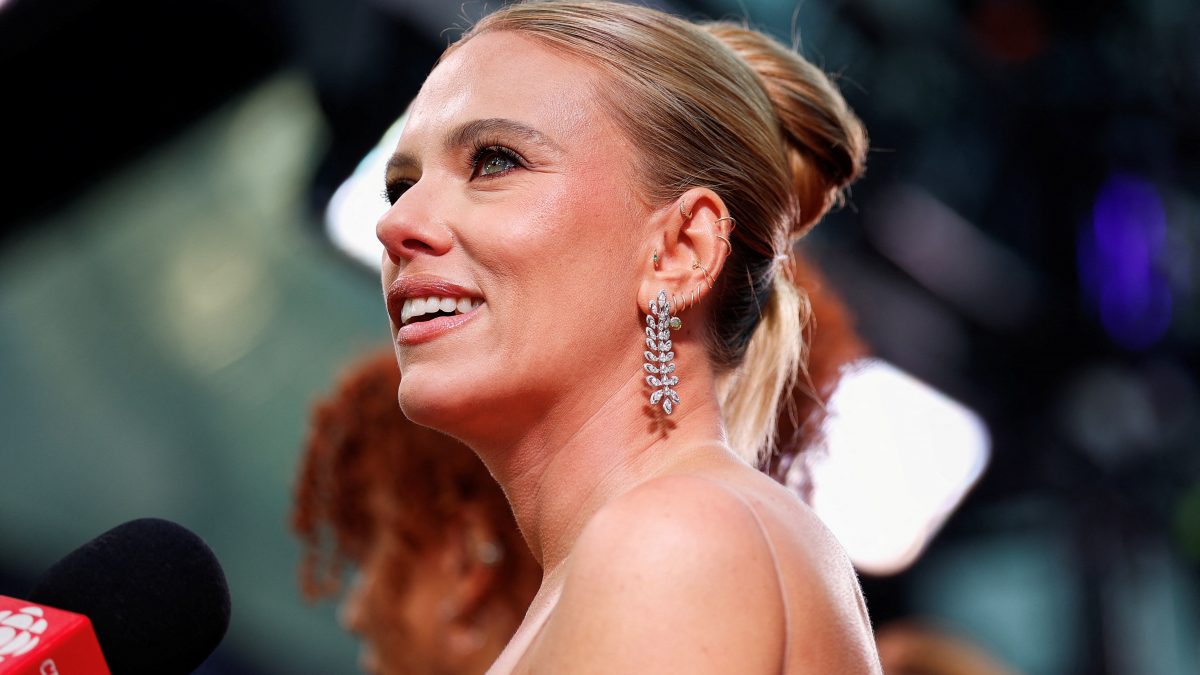
 "Scarlett Johansson and 800 Hollywood artists against AI big tech (REUTERS/Carlos Osorio)")
Hundreds of Hollywood actors, musicians, and authors have united to accuse artificial intelligence companies of “stealing” their work, escalating tensions between the creative industries and Silicon Valley.
The new campaign, titled “Stealing Isn’t Innovation”, launched on Thursday with the backing of around 800 artists, including Scarlett Johansson, Cate Blanchett, REM, Jodi Picoult, Joseph Gordon-Levitt, and Breaking Bad creator Vince Gilligan. The movement warns that AI companies are exploiting creative works without permission to power their systems, in what campaigners describe as a sweeping act of digital theft.
Creators call out tech giants for unauthorised use
The statement issued by the campaign delivers a clear message: “Stealing our work is not innovation. It’s not progress. It’s theft, plain and simple.” It accuses AI developers of using material created by writers, musicians, and artists to build powerful platforms “without authorisation or regard for copyright law.”
The coalition is calling on AI companies to negotiate licensing deals and form transparent partnerships with the creative industries, rather than scraping work from the internet without consent. The statement also acknowledges firms that have taken steps in that direction.
OpenAI, for instance, has struck partnerships with Disney and The Guardian, while Warner Music Group recently announced a licensing agreement with AI music generator Suno.
However, campaigners argue that such examples are the exception, not the rule. The vast datasets used to train chatbots and image generators, such as OpenAI’s ChatGPT or xAI’s Grok Imagine, often include text, music, and imagery sourced from across the web, much of which remains copyrighted. Artists insist that they should be asked for permission before their work is used, and compensated if they choose to allow it.
Mounting backlash and legal battles
Copyright has emerged as one of the fiercest battlegrounds in the AI revolution. Dozens of lawsuits have been filed in the United States against companies accused of using copyrighted works to train their models. Tech firms, meanwhile, maintain that the practice falls under “fair use”, a US legal principle allowing limited use of protected material without explicit permission.
For many creatives, that defence offers little comfort. Johansson, who became embroiled in an AI controversy last year after OpenAI’s voice assistant used a vocal likeness strikingly similar to hers, said she was “shocked, angered, and in disbelief” at the incident. OpenAI later removed the voice following public criticism.
Quick Reads
View AllVince Gilligan, another signatory to the new campaign, has previously described AI as “the world’s most expensive and energy-intensive plagiarism machine.”
The campaign’s organisers, the Human Artistry Campaign, include the Writers Guild of America, the Recording Industry Association of America, and SAG-AFTRA, the actors’ union that led a historic strike in 2023, partly over concerns about AI’s growing role in entertainment.
The debate is also intensifying in the UK, where the government faced backlash for proposing that AI firms be allowed to use copyrighted content without prior permission unless creators opt out. Technology secretary Liz Kendall has since announced a “reset” on those plans, with a review expected in March.
As AI systems continue to evolve, the creative community’s message is growing louder: innovation cannot come at the expense of human creators. The battle over ownership, consent, and compensation is only just beginning, and its outcome could define the future of both art and artificial intelligence.