

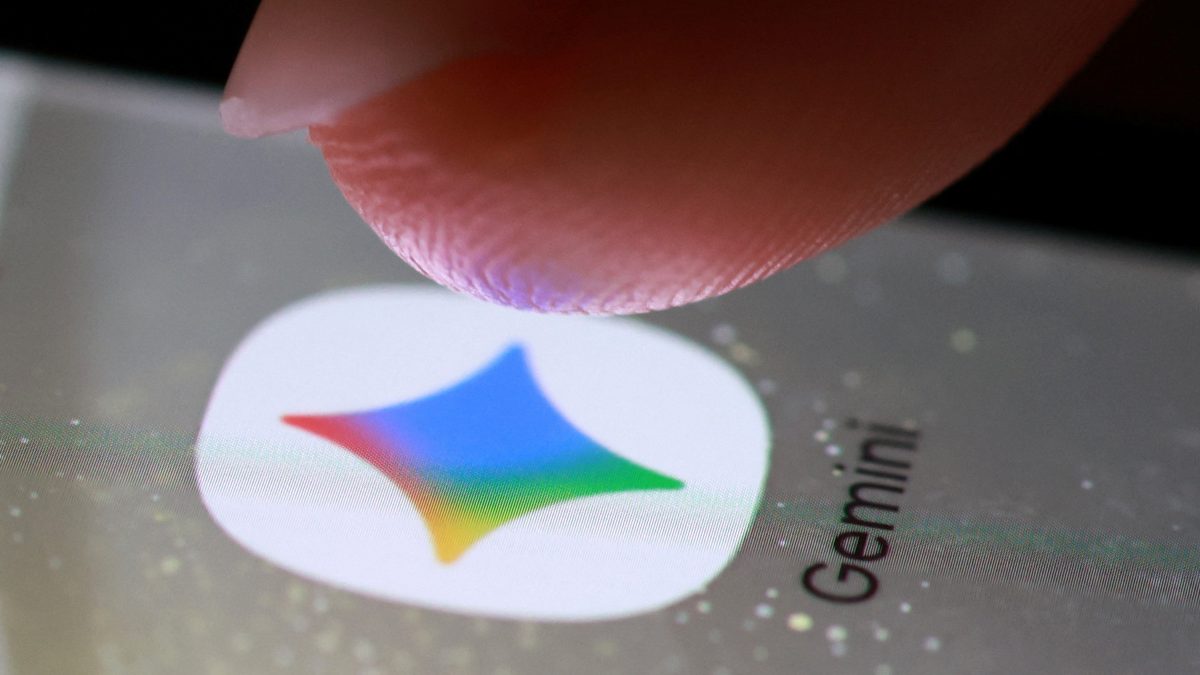
 "After ChatGPT, Google DeepMind CEO confirms no plans to bring ads to Gemini")
Speaking at the World Economic Forum in Davos, Google DeepMind chief, Demis Hassabis made it clear that Google’s Gemini chatbot won’t be sprouting ads anytime soon.
“It’s interesting they’ve gone for that so early,” Hassabis said when asked about OpenAI’s decision to roll out sponsored content in ChatGPT. “Maybe they feel they need to make more revenue,” he told the Sources website.
That little jab landed with precision. OpenAI recently began testing promoted answers for both free users and its $20-a-month Plus subscribers in the United States, a move that has drawn mixed reactions. Some see it as a pragmatic way to pay for the enormous computing power behind ChatGPT. Others view it as the moment artificial intelligence discovered capitalism.
Two roads diverge in AI land
Hassabis’s stance reveals a growing philosophical rift between Silicon Valley’s AI titans. OpenAI’s approach is fast and furious: build, release, monetise, repeat.
Google, on the other hand, is playing the long game. With over $200 billion in annual advertising revenue already flowing from its search empire, the company can afford to let Gemini remain blissfully ad-free, at least for now.
As tech columnist Kevin Roose quipped on X, “Gemini is an ad-supported product, too. The ads just don’t appear on Gemini.”
To state the obvious: Gemini is an ad-supported product, too. The ads just don’t appear on Gemini. https://t.co/wOZQuEbcag
— Kevin Roose (@kevinroose) January 20, 2026
He’s not wrong. Google’s AI Overviews, those AI-generated summaries sitting atop search results, already carry ads performing on par with traditional search placements, according to Business Insider.
That’s the secret sauce. Rather than stuffing promotions into chat windows, Google is keeping them where they’ve always been, in discovery.
Quick Reads
View AllMeanwhile, OpenAI’s rollout has been rockier. Search Engine Land reported that some ChatGPT ad campaigns were paused this month to tweak targeting and measure engagement. And while the company hasn’t disclosed revenue figures, analysts believe rising infrastructure costs, especially with the development of GPT-5, are forcing its hand.
Apple, AI, and Alphabet’s big win
The Davos remarks weren’t the only news ripple from DeepMind’s leader. Hassabis also addressed Google’s growing partnership with Apple, confirming that Gemini models will soon power the next generation of Siri. The collaboration has been hailed as a coup for Google, and a quiet admission that Apple’s in-house AI development hasn’t kept pace.
The market certainly noticed. The deal helped Alphabet’s valuation surpass Apple’s for the first time since 2019, according to CNBC. Industry watchers called it a “masterstroke,” arguing that the Apple-Google tie-up showcases Google’s AI comeback while deepening OpenAI’s existential headache.
Hassabis, who remains one of the most respected figures in AI research, described DeepMind as the “engine room” behind Google’s surge of new products. That phrasing wasn’t accidental, it reflects the internal re-energising of a division once accused of being too academic for Google’s product machine.
As for OpenAI’s ad venture, scepticism lingers. With costs to train its next-generation model running into tens of billions, advertising may be less an experiment and more a necessity. Hassabis’s comments suggest he sees that as a risky trade-off, one that could dilute user trust before the technology itself reaches maturity.
For now, Google’s hybrid strategy seems to be working. Ads remain confined to search and discovery layers, while Gemini stays uncluttered for both consumers and enterprise users. It’s a neat trick, monetising curiosity without invading conversation.
Hassabis summed up the approach with trademark understatement: DeepMind isn’t chasing ads; it’s chasing intelligence. And in the AI arms race, that might prove to be the more profitable philosophy after all.

 "Shinzo Abe assassination: Japanese court sentences gunman to life in prison")
 "Trump’s Air Force One returns after technical snag, he will now fly in back-up aircraft to Davos")
 "2 billion people, 25% of world’s GDP: What makes India-EU trade pact the ‘mother of all deals")
 "Campaign to 'Danify California' gathers pace as Trump presses to acquire Greenland")
 "Shinzo Abe assassination: Japanese court sentences gunman to life in prison")
 "Trump’s Air Force One returns after technical snag, he will now fly in back-up aircraft to Davos")
 "2 billion people, 25% of world’s GDP: What makes India-EU trade pact the ‘mother of all deals")
 "Campaign to 'Danify California' gathers pace as Trump presses to acquire Greenland")



