

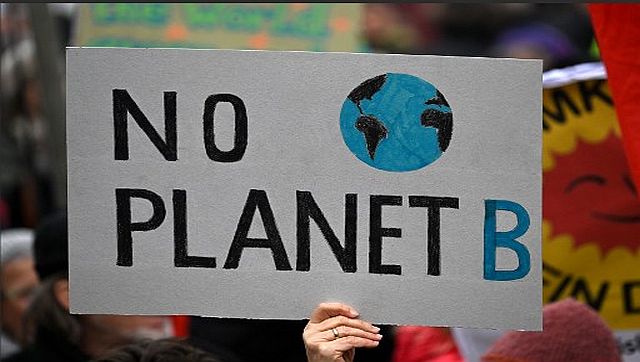
 "World Earth Day: Combatting health effects of climate change through strategic global cooperation")
In 2015, the Paris Agreement brought together countries across the globe, for a shared commitment of limiting global warming to well below 2°C. A major reason for this global understanding was to address the increasing health threats posed by the impact of global warming. According to WHO, between 2030 and 2050, climate change is expected to cause approximately 250 000 additional deaths per year, from malnutrition, malaria, diarrhea and heat stress. With increasing costs of health and healthcare, developing nations, especially with their weak health infrastructure will be in the most challenging positions to navigate, prepare, and respond to the crisis. COVID-19 has already demonstrated the health, social and economic impacts of a pandemic, it is therefore imperative for global agencies and Governments to forge mutually beneficial partnerships, leverage cutting-edge technology and create efficient policies towards a common goal. Developing countries to focus on policy goals Given the increasing trends of urbanisation, growth, and consumption rates in developing nations, the impact of CO2 emissions per person has also been subsequently increasing. These trends have major implications on public health. There is an urgent need to reconsider policies to protect health from climate-related threats in developing cities. These policies must also include goals to reduce GHG emissions. Decision makers would therefore benefit from assessments that can assist them to select development policies that can bring synergies or optimize trade-offs between protecting the local and global environment while also bringing health gains. For instance, addressing air pollution, which is the second highest risk factor for noncommunicable diseases, is key to protecting public health. According to a report by the Global Burden of Disease (GBD), air pollution caused over 1.7 million deaths in India in 2019, making it the leading risk factor for premature deaths in the country. Similarly, The Indian Institute of Technology (IIT) Delhi found that exposure to high levels of air pollution during pregnancy can lead to adverse birth outcomes, including low birth weight and preterm births. Health informatics as a tool to curb carbon emissions The production and disposal of med-tech devices, energy costs of operating data centers and telecommunication centers contribute to CO2 emissions globally. The public and private sector globally must strategize to direct health data science towards modeling the emission consequences of decisions in surgical anesthesia and in intensive care, using industrial life cycle assessment software. Another way is to ensure that health informatics work to build the new national health information infrastructure, needed to support governments to reduce carbon emissions across their entire hospital networks and health systems. In India, IoT, mHealth, HIE systems, telemedicine are becoming seamless and dependable systems to share patient health information, enhance subsequent care and reduce medical errors. It has also helped in providing much-needed services to the remotest regions of the country. According to the World Health Organization (WHO), less than 30% of low-income countries have a functioning health information system. Health informatics is still not easily accessible in many developing nations, including India. The lack of infrastructure, funding, and trained personnel are some of the major obstacles that need to be overcome to improve the accessibility of health informatics in these countries. However, efforts are being made to address these challenges, and the situation is gradually improving. Encouraging an enhanced role of global agencies The international community can help developing nations by providing financial support and developing institutional capacity. Given that these nations will be the most impacted socially and economically, agencies like the UN, IMF, WHO, World Bank must support the vision of countries to ensure climate change does not jeopardize their development and stability. For example, the pandemic taught the world the importance of efficient and effective public investment. Today, the emphasis has broadened to foster the economic recovery from the pandemic and to meet the SDGs in a broader range of areas. The Global Climate and Health Alliance is a partnership of over 120 organizations worldwide that aims to promote action on climate change and its health impacts. The alliance brings together health professionals, environmental groups, and development organizations to advocate for policies that protect public health from the effects of climate change. The Sustainable Energy for All (SEforALL) initiative is a partnership between the United Nations and various organizations that aims to increase access to sustainable energy and improve public health. The initiative promotes clean energy solutions that can reduce air pollution and mitigate the health impacts of climate change. These are just a few examples of the many partnerships between global agencies for climate change and health action. These collaborations are critical to addressing the health impacts of climate change, which are increasingly becoming a global health priority. Given the importance of Climate Change and its impact across the Globe, a G20 co-branded event on “Addressing the Challenges of Climate Change & Health: One Earth, One Family, and One Future,” was organised by Ministry of Health and Family Welfare and Asian Development Bank (ADB). Sustainability, Climate Finance & LiFE, and Green Development are among the key priorities of the Indian G20 presidency. The G20 HWG priority topics includes convergence on various international initiatives to tackle Pandemic Prevention, Preparedness, and Response. It has become essential to address and mitigate the threats posed by Climate Change to human health within this framework. Future efforts in this direction must include better safeguards and a policy roadmap that addresses animal health with the seriousness it deserves. Zoonotic diseases have such destructive potential, as we saw during the Covid-19 Pandemic, that failure to mitigate and prepare for them can prove fatal for vast numbers of people. The “One Health” approach, which emphasizes not just the Health of Humans, but that of animals and the environment as well, must take center focus to address complex relationship between climate and health. The effects of climate change are becoming more severe and evident, with rising temperatures and extreme weather causing health issues such as respiratory illnesses, heat-related illnesses, and various diseases. Immediate action is needed- to invest in climate adaptation measures, strengthen health systems, develop early warning systems, and protect vulnerable communities. We also need to prioritize equity and social justice and raise public awareness about the link between climate change and health. Addressing the challenges of climate change and health requires collaborative efforts, urgency, political will, and collective action. By prioritizing mitigation, enhancing resilience, promoting equity, and fostering education and awareness, we can create a more sustainable and healthier future for our planet and future generations. The author is the Co-Founder and CEO, Primus Partners. Views expressed are personal. Read all the Latest News , Trending News , Cricket News , Bollywood News , India News and Entertainment News here. Follow us on Facebook, Twitter and Instagram.
With increasing costs of health and healthcare, developing nations, especially with their weak health infrastructure will be in the most challenging positions to navigate, prepare, and respond to the climate crisis
Advertisement
End of Article


 "Russian drones over Poland: Trump’s tepid reaction a wake-up call for Nato?")
 "As Russia pushes east, Ukraine faces mounting pressure to defend its heartland")
 "Why Mossad was not on board with Israel’s strike on Hamas in Qatar")
 "Turkey: Erdogan's police arrest opposition mayor Hasan Mutlu, dozens officials in corruption probe")
 "Russian drones over Poland: Trump’s tepid reaction a wake-up call for Nato?")
 "As Russia pushes east, Ukraine faces mounting pressure to defend its heartland")
 "Why Mossad was not on board with Israel’s strike on Hamas in Qatar")
 "Turkey: Erdogan's police arrest opposition mayor Hasan Mutlu, dozens officials in corruption probe")



