

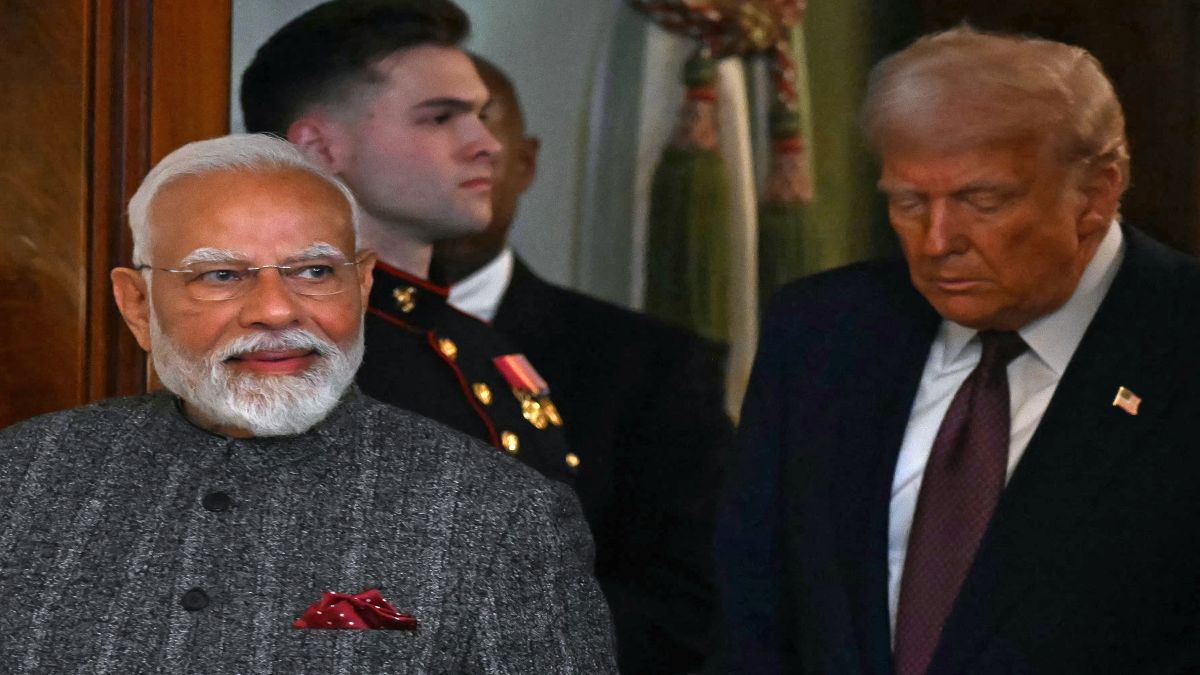
 "Why Washington’s ‘With Us or Against Us’ doctrine no longer works on New Delhi")
The message from the West has often been subtle, but lately, it has become a deafening roar. As friction mounts over India’s continued purchase of Russian energy, the diplomatic whispers from Washington and Brussels carry a familiar, archaic undertone: you are either with us or against us.
It is a doctrine that worked in 2001. It is a doctrine that terrified nations during the Cold War. But in December 2025, faced with a confident New Delhi, this binary ultimatum is not just ineffective—it is intellectually lazy.
The recent displeasure expressed by Western capitals regarding India’s energy security choices misses the fundamental shift in global geopolitics. They view India’s refusal to isolate Moscow as “sitting on the fence”. They are wrong. India is not sitting on the fence; India is building its own fence.
The Death of the Binary World
For decades, the West has been operating under the assumption that the “liberal international order” is the only system that exists. In this worldview, countries like India are considered “swing states” and are prizes that can be won or lost in a geopolitical tug-of-war between Washington and Beijing (or Moscow).
However, the “Trump 2.0” administration, for all its transactional bluster, is colliding with a New Delhi that refuses to be a junior partner. While the US demands alignment on sanctions, Americans forget that alignment is a luxury of the wealthy, while energy security is a necessity for the developing world.
Quick Reads
View AllWhen Indian officials procure low-cost Russian oil, they are not expressing ideational support for the Kremlin. They are exercising their responsibility toward the Indian consumer. It is the height of irony that Europe, which has spent decades self-indulging on Russian gas to fuel its industrial base, now demands moral responsibility from a developing country with a far lower per capita income.
Transactional Ties in a Multipolar Era
Under Donald Trump, US diplomacy went back to being what it has always been: transactional. The thin veneer of ‘shared values’ went out the window. New Delhi is more attuned to this reality than most European capitals, albeit for different reasons.
India has been able to hold its ground and, unlike European capitals, is under no pressure to decipher Trump’s arbitrary tariffs and Nato threats. Why is that? Because India’s foreign policy is no longer reactive. It is strategic and consistent. New Delhi’s position towards the G7 is the same as it is towards the Brics: strategic autonomy.
India has managed to strengthen its defence technologies collaboration with the US through the iCET deals while continuing its longstanding defence ties with Russia. To the Western mind, this is a contradiction. To the Indian mind, the answer is balance. It is the ability to walk and chew gum at the same time, a concept that binary thinkers in Washington find excruciatingly difficult to comprehend.
The Voice of the Global South
This resistance has a third dimension. No longer speaking for only itself, India has now become the self-assumed representative of the Global South.
When Washington calls on India to sever ties with certain sanctioned entities, it fails to appreciate that the Global South sees the war in Europe as anything but a global war. For the African, Latin American, and Southeast Asian countries, it is not Vladimir Putin who is a ‘threat’; it is the soaring food prices, the lack of fertiliser, and the dire energy shortages.
India is signalling the rest of the Global South that it is possible to keep one’s dignity and stand your ground in the face of Western powers.
A New Rulebook
Western nations ought to retire their “With Us or Against Us” attitude, which belongs alongside the unipolar moment of the 1990s.
India is an ally of the West, arguably the most important long-term partner in countering Chinese hegemony in the Indo-Pacific. But it is an ally that seeks equitable partnership, not hierarchical subservience. We will buy oil from whom we select. We will buy missile defence systems from whom we select. And we will trade with whom we select.
Washington is absolutely anxious regarding India’s independent streak, and it is misplaced. A strong, independent India will be a more valuable partner of the West than a compliant and weak India. It is time the strategists in the Beltway conformed to this new reality: India is not a swing state waiting to be wooed. It is a pole, and a significant one at that.
(The author is a research analyst at the Centre for North America and Strategic Technologies, Manohar Parrikar Institute for Defence Studies and Analyses, New Delhi. Views expressed in the above piece are personal and solely those of the author. They do not necessarily reflect Firstpost’s views.)


 "‘Bangladesh’s Yunus govt failed to control ‘mobocracy’’: BNP leader on attack on Indian mission")
 "Tarique Rahman to return to Bangladesh after 17 years: Can Khaleda Zia’s son influence February elections?")
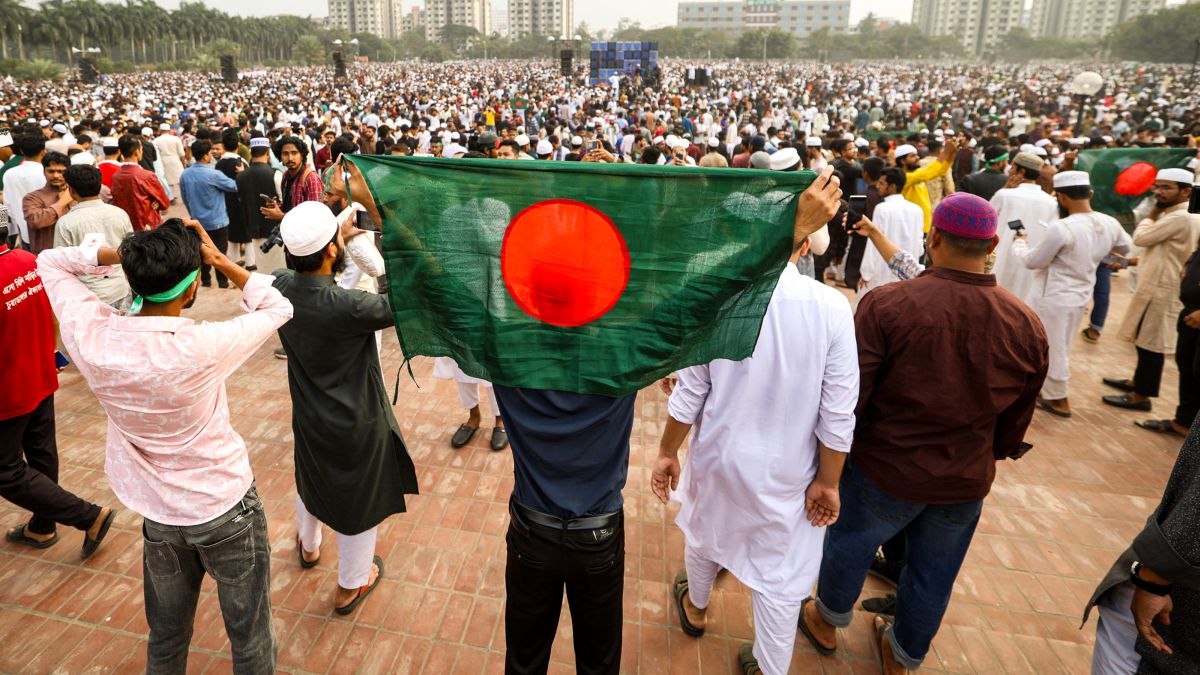 "US Congressmen raise alarm over anti-Hindu violence in Bangladesh")
 "‘Time to Kash out’: Why Kash Patel’s choice of new wheels has sparked a row")
 "‘Bangladesh’s Yunus govt failed to control ‘mobocracy’’: BNP leader on attack on Indian mission")
 "Tarique Rahman to return to Bangladesh after 17 years: Can Khaleda Zia’s son influence February elections?")
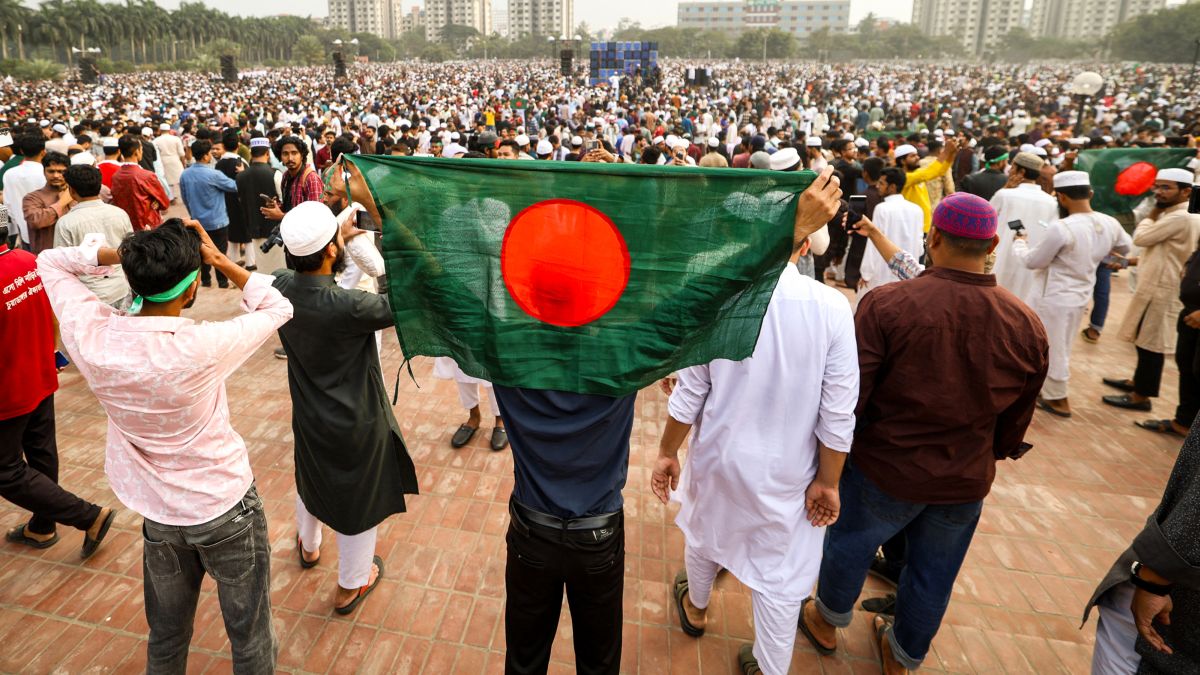 "US Congressmen raise alarm over anti-Hindu violence in Bangladesh")
 "‘Time to Kash out’: Why Kash Patel’s choice of new wheels has sparked a row")



