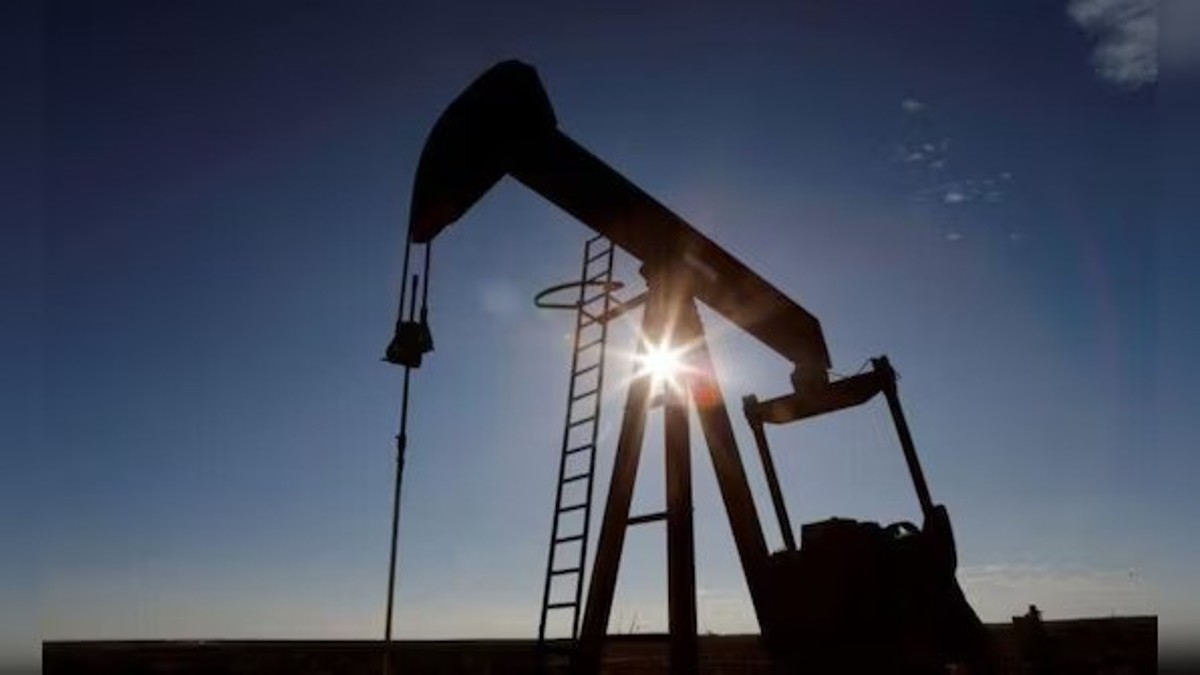
 "Why India must reject US demands to cut Russian oil")
India’s position in the post-Ukraine war energy order has been pivotal. Since 2022, it has emerged as one of Russia’s top two crude buyers, importing 1.7 to 1.9 million barrels per day at sustained discounts to Brent. These flows have been central to stabilising domestic energy costs, containing inflation, and protecting fiscal space. Yet this strategic advantage is now directly under attack from an explicitly political campaign by Washington.
On August 7, US President Donald Trump issued an executive order imposing an additional 25 per cent tariff on Indian goods, citing that India “directly or indirectly” imports Russian oil. The tariff, which will take effect 21 days later, is not a marginal measure. It targets a strategic partner in a manner no other major Russian oil buyer—notably China—has faced. Trump’s framing is unambiguous: India’s energy decisions are being weaponised in the broader US campaign against Moscow. This is the first time a U.S. president has linked trade penalties so explicitly to India’s crude import mix, making the move as much a test of Indian sovereignty as of its economic resilience.
The irony is that this pressure comes amid fluid US–Russia negotiations. Trump has publicly claimed “great progress” in talks between his special envoy and President Vladimir Putin, while simultaneously preparing secondary sanctions. Market reaction to this ambiguity has been sharp. Brent futures fell to $66.89 per barrel, their lowest since June 10, and U.S. WTI settled at $64.35, marking five consecutive days of losses. Traders are now caught between two signals—the threat of harsher sanctions on Moscow and the possibility of a sanctions rollback if a ceasefire deal materialises. In this environment, India’s crude sourcing is being politicised at a time when the market itself is in flux.
The selective nature of U.S. pressure is difficult to ignore. In 2024, the European Union’s bilateral trade in goods with Russia reached €67.5 billion, with an additional €17.2 billion in services trade in 2023—figures far exceeding India’s total trade with Russia. European imports of Russian liquefied natural gas reached a record 16.5 million tonnes in 2024, surpassing the previous record of 15.21 million tonnes in 2022. Yet these LNG flows, which are strategically significant and directly revenue-generating for Moscow, are not a sustained bone of contention for Washington. This disparity reinforces the perception that India is being singled out for political leverage while Western allies are afforded a wider berth in managing their own energy dependencies.
If India were to sharply reduce its intake of Russian crude, the global oil market would tighten almost immediately. Brent prices could rise by three to seven dollars per barrel in the short term, with eight to twelve dollars possible if Russian redirection of cargoes falters and OPEC Plus delays the release of spare capacity. Domestically, India would face higher procurement costs for Middle Eastern grades, higher freight rates, and refinery yield penalties as plants shift away from Urals and ESPO blends. This would increase retail fuel prices or require fiscal subsidies—either of which would place upward pressure on inflation and reduce budgetary space for development spending.
Quick Reads
View AllIf China were to make a similar move, the market impact would be more severe. Chinese imports of Russian crude are in the range of 1.8 to 2.0 million barrels per day and are critical to Moscow’s export revenues. A cut of this magnitude would strand more barrels for longer, as rerouting flows from China is more complex and costly than from India. Brent could rise by eight to fifteen dollars per barrel under typical market conditions and by as much as fifteen to twenty dollars if sanctions enforcement, insurance restrictions, or maritime bottlenecks reduce the flexibility of the shadow fleet. The impact would also be felt in refined product markets. China’s large-scale refineries supply diesel, gasoline, and jet fuel to the region, so even modest run cuts would tighten global product balances and lift refining margins across Asia and Europe.
A simultaneous reduction by both India and China would constitute the largest disruption to Russian oil flows since the imposition of Western sanctions in 2022. In this combined scenario, the market could face an effective supply outage of three million barrels per day or more. Brent prices could spike well beyond twenty dollars per barrel in the short term, with sustained double-digit increases for months if OPEC Plus maintained production restraint. Freight rates would surge, the Dubai–Brent spread would narrow sharply, and refined product cracks would remain elevated. The shock would also spill into LNG markets if China sought to replace crude with higher gas imports, potentially tightening European gas supply and driving up benchmark prices in both Asia and Europe.
The geopolitical asymmetry in Washington’s approach remains striking. China faces no comparable public censure or tariff penalties, despite its imports being of equal or greater significance to Russia’s revenue stream. The United States has limited leverage over Beijing and therefore concentrates its pressure on New Delhi, assuming greater compliance. Accepting such treatment would set a precedent that could extend beyond energy policy, inviting similar interventions in other areas of strategic importance.
India’s capacity to purchase discounted Russian oil is not merely a tactical advantage—it is a structural pillar of its macroeconomic stability. In 2024 alone, the discount on Russian grades saved India billions in procurement costs and helped keep consumer inflation within manageable bounds. Abandoning this under external pressure, particularly when major Western economies continue substantial trade with Russia, would be strategically counterproductive.
The choice before New Delhi is about whether India will allow its energy policy to be dictated by another country’s geopolitical agenda, even when that agenda is applied inconsistently across partners. A policy anchored in strategic autonomy means engaging with all partners, including the United States, from a position of equal respect, not asymmetric compliance.
At a time when the global energy order is fragile, OPEC Plus is signalling potential supply increases, and markets are reacting sharply to diplomatic uncertainty, India should resist moves that compromise its economic and strategic flexibility. Energy security is a core national interest. Surrendering it under coercion risks weakening not only India’s negotiating position today but also its sovereignty in the policy choices of tomorrow.
Aditya (X: @adityasinha004) writes on macroeconomic and geopolitical issues. Views expressed in the above piece are personal and solely those of the author. They do not necessarily reflect Firstpost’s views.

 "UAE to host first 'trilateral' talks between Ukraine, US and Russia, says Zelenskyy")
 "Trump finds new raid target? Report says US actively seeking regime change in Cuba by 2026-end")
 "Power shift in Hanoi: Vietnam party list hints PM and president losing clout")
 "Can Trump’s Board of Peace replace the United Nations?")
 "UAE to host first 'trilateral' talks between Ukraine, US and Russia, says Zelenskyy")
 "Trump finds new raid target? Report says US actively seeking regime change in Cuba by 2026-end")
 "Power shift in Hanoi: Vietnam party list hints PM and president losing clout")
 "Can Trump’s Board of Peace replace the United Nations?")