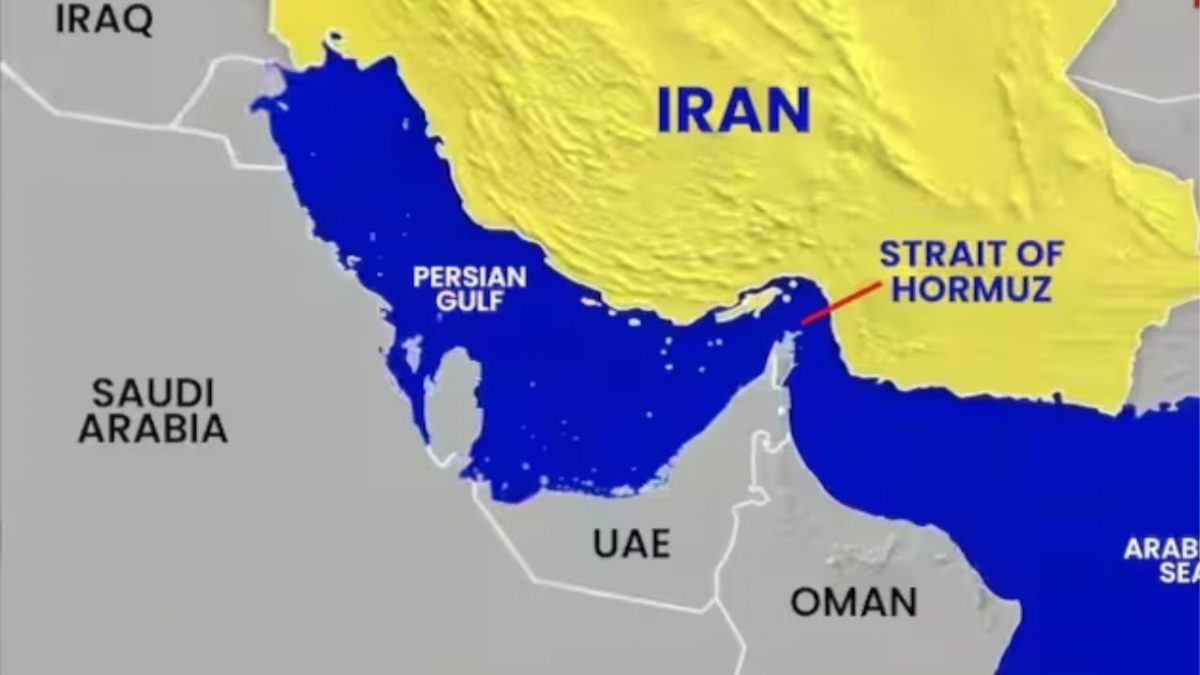
 "From risk to reality: How the Ras Laffan shutdown and Hormuz standstill are rekindling a global energy crisis.")
West Asia has moved from a geopolitical risk to a physical shock. Within 72 hours, Iranian drone strikes have forced QatarEnergy to suspend production at Ras Laffan, the world’s largest liquefied natural gas complex, responsible for roughly a fifth of global LNG supply. Tanker traffic through the Strait of Hormuz (the artery through which about 20 per cent of the world’s oil and a similar share of LNG exports flow) has come to a standstill. Maritime insurers are withdrawing war-risk cover. Saudi refining capacity has been temporarily shuttered. Israel’s Leviathan gas field has been closed. Tankers are idling on both sides of the Gulf.
Markets have reacted accordingly. European benchmark gas prices have surged by as much as 50 per cent, the sharpest move since the 2022 Russia shock. Brent crude has jumped towards $80 a barrel, up double digits in days. Gold has rallied. Equities have softened. The dollar has strengthened. The energy complex is pricing in interruption.
The distinction between oil and gas is now critical.
Oil markets remain tight but not yet broken. The world entered this crisis expecting surplus supply in 2026. Spare capacity exists in Saudi Arabia and the UAE. Strategic reserves in China, Japan and South Korea are substantial. Even the United States retains more than 400m barrels in its Strategic Petroleum Reserve.
In a contained disruption scenario, prices can remain anchored near $80, reflecting a geopolitical premium of perhaps $8-12 a barrel. For crude to move decisively towards $100 would require either sustained damage to Gulf production infrastructure or a prolonged, effective closure of Hormuz. Neither has yet occurred.
LNG is a different matter. Gas markets are regional, infrastructure-bound and capacity-constrained. Ras Laffan is not a marginal exporter; it is the backbone of global LNG trade. The United States cannot immediately compensate.
American LNG export terminals are already running near maximum capacity. Cheap shale gas cannot simply flow to Europe or Asia overnight. That means any meaningful disruption must be absorbed through price rationing.
Europe is vulnerable. Storage levels are below 30 per cent as winter ends, compared with roughly 40 per cent a year ago. Germany and France are barely above 20 per cent. While Europe imports a smaller share of LNG directly from Qatar than Asia, the market is global. If Asian buyers bid aggressively to secure alternative cargoes, European benchmarks must rise to compete. The result is price convexity — small physical shortfalls generate outsized financial moves.
Asia’s exposure is asymmetric. China sources roughly half its crude from West Asia but holds extensive strategic reserves, estimated at around three months of imports, and has crude in floating storage. Japan and South Korea possess emergency oil reserves covering more than 200 days of consumption. Oil shortages are therefore unlikely in the near term. LNG is less comfortable. India buys roughly two-thirds of its LNG from Qatar, the UAE and Oman. Japan’s LNG inventories cover only a few weeks. Should Ras Laffan remain offline, Asian spot demand will intensify quickly.
The shipping channel is now the decisive variable. Hormuz has never been formally closed. It does not need to be. Satellite jamming, drone attacks and insurance withdrawal can render a waterway commercially unusable without a declaration of blockade. Even with Saudi and Emirati pipeline bypasses running at full capacity, between 8m and 10m barrels per day of oil remain exposed to the Strait. For LNG, there is no meaningful bypass at all.
What happens next depends on duration.
If production resumes within days and shipping stabilises, markets may retrace part of the spike. US natural gas prices, which rose in sympathy despite warm weather and strong production, already look overstretched on fundamentals. European central banks are likely to “look through” a short-lived shock. The inflation impulse would be noticeable but temporary.
If disruption extends beyond a week, the arithmetic changes. LNG cargoes scheduled for March and April would be displaced. European storage refilling would become more expensive. Asian utilities would bid for prompt cargoes. Freight rates would climb as vessels reroute around Africa and insurers price in risk. Oil could test $90 as inventories begin to draw faster than expected. LNG benchmarks could revisit levels last seen in the immediate aftermath of Russia’s invasion of Ukraine.
The longer-term oil trajectory hinges on the political endgame. A swift de-escalation that removes Iranian instability from the regional equation could restore the surplus narrative and pull crude lower. A drawn-out conflict, particularly one that embeds shipping risk in Hormuz, would hardwire a structural premium into prices.
For now, markets are trading interruption risk, not permanent scarcity. The next few days will be shaped less by speeches and more by satellite data: are tankers moving? Are insurers reinstating cover? Is Ras Laffan loading cargoes? If shipping resumes, crude is likely to stabilise in the high $70s to low $80s. If vessels continue to idle and LNG cargoes are deferred, volatility will intensify.
Energy markets do not require formal closures to panic. They require uncertainty at the choke point. That condition is already present.
(Aditya Sinha [X: @adityasinha004] writes on macroeconomics and geopolitics. Views expressed in the above piece are personal and solely those of the author. They do not necessarily reflect Firstpost’s views.)