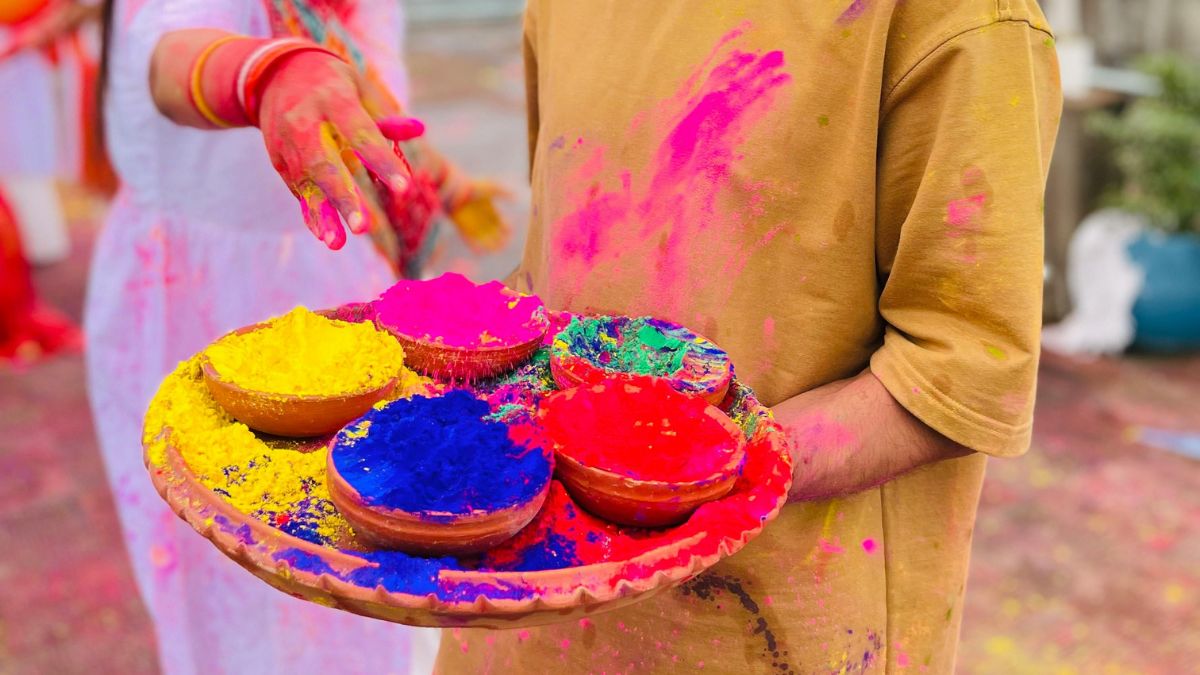
 "Holi 2026: Why more people are choosing dry and eco-friendly celebrations")
As India prepares for Holi 2026, a noticeable shift is underway in how the festival of colours is being celebrated. Across cities such as Delhi, Mumbai and Bengaluru, more people are opting for “dry Holi” gatherings and eco-friendly colours instead of water-heavy street celebrations and chemical-based powders.
The change is being driven by a mix of environmental awareness, water scarcity concerns and health considerations.
From water fights to water anxiety
Holi arrives at the edge of summer, just as conversations about water shortages intensify in many Indian cities. Tanker prices climb. Groundwater warnings resurface. Resident welfare associations urge restraint.
In that context, playing with unlimited water no longer feels neutral. It feels visible.
Dry Holi, using only powder or flower petals, has become the compromise. It allows celebration without the optics of waste. In gated communities, it is increasingly the default. This is not just environmentalism. It is urban self-awareness.
The shift in aesthetic
The change is also visual. Where Holi once meant thick, synthetic reds and purples that lingered on skin for days, 2026’s celebrations lean toward organic, plant-based powders: turmeric yellows, rose pinks, indigo blues.
Brands are marketing beetroot gulal and marigold-based colour as skin-safe, child-friendly and biodegradable. Instagram feeds show carefully staged Holi brunches, coordinated white outfits and controlled bursts of colour. The mess has not disappeared. It has become curated.
Tradition, reframed
Dry Holi is often framed as modern or eco-conscious, but it is not entirely new. Flower-based celebrations have long been practised in temple towns such as Vrindavan, where petals, not balloons, fill the air.
What is new is how mainstream this adaptation has become. Environmental messaging, social media advocacy and school campaigns have repositioned “responsible celebration” as aspirational. The tone around Holi is shifting from abandon to accountability.
Quick Reads
View AllCelebration in a climate-conscious era
Holi has always symbolised renewal: the arrival of spring, the triumph of good over evil, the loosening of social boundaries. In 2026, that renewal carries a quieter question: how do you celebrate abundance in a time of scarcity?
Dry and eco-friendly Holi celebrations are unlikely to entirely replace traditional street revelry. But their rise reflects a broader cultural moment, one where festivals are being filtered through climate awareness and lived realities.
The colours still fly. They just leave a lighter footprint.


 "US-Israel Iran War Live Updates: IRGC claims control over Strait of Hormuz, warns damage to ships")
 "How Mojtaba Khamenei, Iran’s new supreme leader, built a £100-million global property empire")
 "MEA sets up special control rooms as West Asia conflict enters fifth day")
 "Spy dental chip and more.. The many theories on how Mossad tracked Khamenei")
 "US-Israel Iran War Live Updates: IRGC claims control over Strait of Hormuz, warns damage to ships")
 "How Mojtaba Khamenei, Iran’s new supreme leader, built a £100-million global property empire")
 "MEA sets up special control rooms as West Asia conflict enters fifth day")
 "Spy dental chip and more.. The many theories on how Mossad tracked Khamenei")