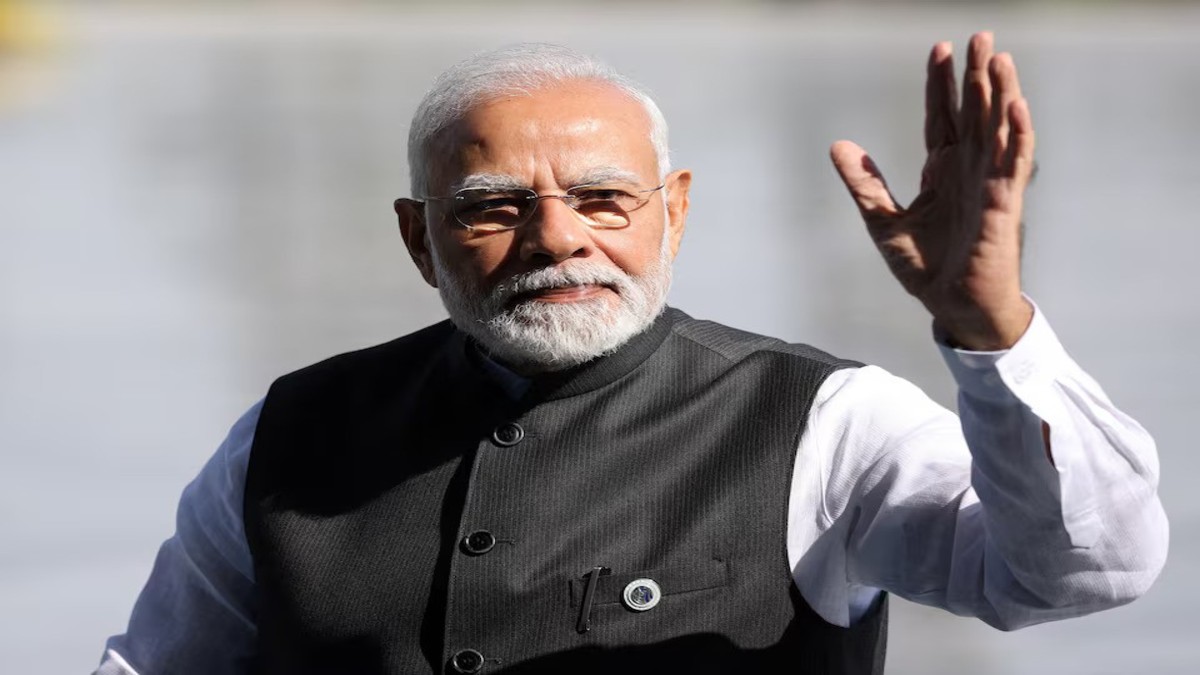
 "“One phone call from PM Narendra Modi could help end the Iran–Israel conflict,” said former UAE envoy to India Hussain Hassan Mirza, highlighting India’s potential role in regional diplomacy. Image: Sputnik/Sergey Bobylev/Pool via Reuters")
Since February 28, 2026, the United States and Israel have conducted coordinated military strikes against Iran under a joint campaign aimed at degrading its military and nuclear capabilities. The campaign has expanded into a sustained, large-scale air operation targeting military, nuclear, and leadership infrastructure across at least 26 of Iran’s 31 provinces.
The coalition has struck over 5,500 targets, including 11 of Iran’s 17 tactical airbases, the Islamic Revolutionary Guard Corps (IRGC) headquarters, and the underground fuel enrichment plant at Natanz. US forces have reportedly destroyed at least 50 Iranian vessels, including mine-laying ships near the Strait of Hormuz, which remains virtually closed due to the conflict. Human rights organisations report over 1,700 deaths, while other sources suggest total Iranian casualties may exceed 4,300, including nearly 1,300 civilians.
Iran has vowed an “eye for an eye” response to attacks, and the IRGC has dismissed claims of its missile capabilities being destroyed. Iran has responded with missile and drone strikes against US bases and civilian sites in Israel, the UAE, Qatar, Bahrain, Kuwait, and Saudi Arabia. Iran is engaging in a multi-front, asymmetric retaliation, launching hundreds of missiles and drones at Israel, US bases, and Gulf state energy infrastructure.
Iran aims to sustain high-intensity attacks to exhaust regional air defences, disrupt global oil supplies, and force a costly, long-drawn-out conflict. The blockage of the Strait of Hormuz has paralysed global oil traffic, with Iran warning that prices could reach $200 per barrel.
The campaigns codenamed Operation Epic Fury by the US and Operation Roaring Lion by Israel have pursued several overlapping strategic and military objectives. A core goal is to permanently prevent Iran from obtaining nuclear weapons. This follows the collapse of previous negotiations and findings by the International Atomic Energy Agency (IAEA) regarding increased uranium enrichment. The operation seeks to destroy Iran’s ballistic missile stockpiles and raze its missile production industry, targeting weapons capable of reaching Israel, Europe, and the US mainland.
The US and Israel aim to neutralise Iran-backed proxy groups, such as Hamas, Hezbollah, and the Houthis, to reduce regional instability and threats to Israeli security. A stated objective is to “annihilate” the Iranian Navy and destroy mine-laying vessels to ensure freedom of navigation through the Strait of Hormuz. Some analysts suggest long-term US interests include influencing global oil prices and potentially controlling Iranian energy infrastructure post-conflict to diminish Russian and Chinese influence.
Quick Reads
View AllAbove all, both nations have explicitly called for the overthrow of the Iranian government. US President Donald Trump has urged the Iranian people to “take over the government”, and the initial strikes included a “decapitation” attempt that killed Supreme Leader Ayatollah Ali Khamenei.
Thus, President Trump and Israeli Prime Minister Benjamin Netanyahu have framed the campaign as an opportunity for the Iranian people to “take over” their government. However, US intelligence and independent analysts remain sceptical that these actions will successfully topple the Iranian government. Shortly before the war began, the US National Intelligence Council concluded that a large-scale military attack was unlikely to quickly topple Iran’s “deeply entrenched” political structure.
Following the death of Ali Khamenei, his son Mojtaba Khamenei has already been named the new Supreme Leader, suggesting the regime’s core structure remains intact. The IRGC and the Basij militia remain loyal and maintain deep control over the country, effectively suppressing domestic uprisings.
The current US and Israeli strategy appears to involve using intense military pressure and sanctions to create an environment where the Iranian people or internal military factions (like the Artesh, the national army) might rise up and overthrow the government themselves.
This is widely viewed by analysts as “hope” rather than a reliable strategy, as a sufficiently numerous, organised, and ideologically motivated internal opposition force has not yet emerged. A ground assault, whether by external military forces or an internal armed opposition group, is generally seen as necessary to fully remove the existing power structure and prevent it from regrouping.
History suggests that air power alone is rarely sufficient to collapse a deeply entrenched regime. While US and Israeli airstrikes can severely damage Iran’s military capabilities, nuclear programme infrastructure, and leadership, they cannot seize territory or secure physical assets like the underground uranium stockpiles. It is widely considered difficult, if not impossible, to achieve the complete toppling of the Iranian regime using only air power, sanctions, and other non-ground interventions. Regime change typically requires some form of “boots on the ground”, whether by foreign forces or a substantial domestic opposition movement.
Examples often cited include the 2003 invasion of Iraq and the 2011 intervention in Libya. In both cases, the regimes were only removed when significant ground forces (a US-led invasion in Iraq and local rebel forces supported by Nato air power in Libya) were involved in the ground offensive. In short, most experts agree that without a significant force on the ground, a complete regime change remains an elusive goal for the US and Israel.
President Trump has not ruled out the possibility of putting “boots on the ground” in Iran, though no formal announcement of a ground invasion has been made. While the US has primarily relied on air and naval strikes so far, President Trump has stated he would “never say never” regarding ground troop deployment, noting the administration will do “whatever is necessary” to protect US interests.
However, many military analysts believe a traditional mass-infantry invasion is unlikely due to Iran’s large size and rugged terrain; instead, they expect potential targeted special operations if ground forces are used. Some US lawmakers have expressed alarm over a potential ground war, citing risks of a wider regional conflict and the involvement of Russian and Chinese support for Tehran. Moreover, Pentagon officials have framed current operations as a “limited war” aimed at destroying Iran’s offensive capabilities rather than an Iraq-style “nation-building quagmire”.
The Iranian regime is a deeply embedded theocratic system that has weathered severe sanctions and large-scale protests in the past through brutal repression. The assassination of key leaders may simply lead to the consolidation of power under even more hardline factions, as the system is designed with succession plans in mind.
The situation is described as a “lethal cocktail” affecting global energy markets and security. Indian Prime Minister Narendra Modi expressed “grave concern” over the escalation, urging a return to dialogue and diplomacy. While diplomacy is being pursued, the situation remains highly volatile with continued attacks, making an immediate, lasting peace difficult to guarantee.
India is increasingly viewed by regional actors as a potential mediator in the escalating conflict between Iran, Israel, and the United States, though it has not formally accepted a lead mediation role. India maintains robust, independent partnerships with all primary rivals—Israel, Iran, and the Gulf states. This unique positioning allows New Delhi to act as a neutral “back channel” for de-escalation.
This month, former UAE envoy to India, Hussain Hassan Mirza, stated that “one phone call from PM Modi” has the potential to encourage dialogue between the conflicting nations. Previously, in mid-2025, Israeli Ambassador Reuven Azar expressed optimism that India could play a role due to its “avenues for dialogue with both sides”. Iran has indicated a willingness to engage with India as a mediator, provided India more openly condemns Israeli actions. Iranian diplomats have stated that while they recognise India’s balanced, neutral approach toward Iran and Israel, they expect India—as a voice of the Global South—to openly condemn Israeli actions against Iran and in Gaza.
India is navigating a difficult balancing act, ensuring its economic interests—including energy imports and the safety of its diaspora in the Gulf—are protected amid the 2026 conflict. India has stated its willingness to support peace efforts, emphasising its close relations with all involved parties. India is viewed as a credible, neutral “back channel” for de-escalation, particularly as traditional western mediation mechanisms face challenges.
India has avoided explicit condemnation of any side to maintain its neutrality, a stance criticised by some domestic opposition as “silence” but which serves as a “calibrated response” to protect its diverse partnerships. India can offer to host talks or provide humanitarian aid, positioning itself as a “peace architect” that emphasises stability and dialogue over military escalation.
Will India play the role of a mediator in the Iran war? Will India act as a passive observer or leverage its “multi-aligned” foreign policy to mediate in order to bring to an end this volatile situation?
India’s foreign policy framework, which involves maintaining strong, simultaneous ties with all involved parties (Israel, Iran, the US, and Gulf nations), positions it as a potential “back-channel” negotiator. India is one of the few powers with credibility to talk to all sides. It has a “Special Strategic Partnership” with Israel (for defence and technology) while maintaining long-standing, strategic ties with Iran (via the Chabahar port). India’s current strategy allows it to act as a “peace architect”.
Given the high stakes, India should leverage its multi-aligned policy to facilitate de-escalation through quiet diplomacy and back channels. While a public, high-profile mediation attempt might be risky, a passive stance would be detrimental to India’s national interest. Therefore, a proactive, balanced, and behind-the-scenes role that advocates for dialogue (as shown by recent diplomatic engagements) is the most logical path forward.
(The writer is a retired Indian diplomat and had previously served as ambassador in Kuwait and Morocco and as Consul General in New York. Views expressed in the above piece are personal and solely those of the author. They do not necessarily reflect Firstpost’s views.)