 "Will US attacks on Iran’s Kharg Island push up oil prices?")
The United States has taken a risky bet by targeting Iran’s “oil lifeline”. US President Donald Trump announced on Friday (March 13) that American forces have “totally obliterated” all military targets on Kharg Island, key to Iran’s oil network.
He also threatened to strike the island’s “oil infrastructure” if Iran continues targeting commercial shipping in the Strait of Hormuz. Earlier, Trump turned down questions about the US potentially seizing Kharg Island.
But what is this island? Why is it important? We explain.
US strikes Kharg Island
President Donald Trump said on Friday that moments ago, “the United States Central Command executed one of the most powerful bombing raids in the History of the Middle East and totally obliterated every MILITARY target in Iran’s crown jewel, Kharg Island”.
He added that American strikes on Kharg Island did not target oil infrastructure. But “should Iran, or anyone else, do anything to interfere with the Free and Safe Passage of Ships through the Strait of Hormuz, I will immediately reconsider this decision,” he wrote on social media.
The US president went on to call on Iran to lay down its weapons and “save what’s left of their country, which isn’t much”.
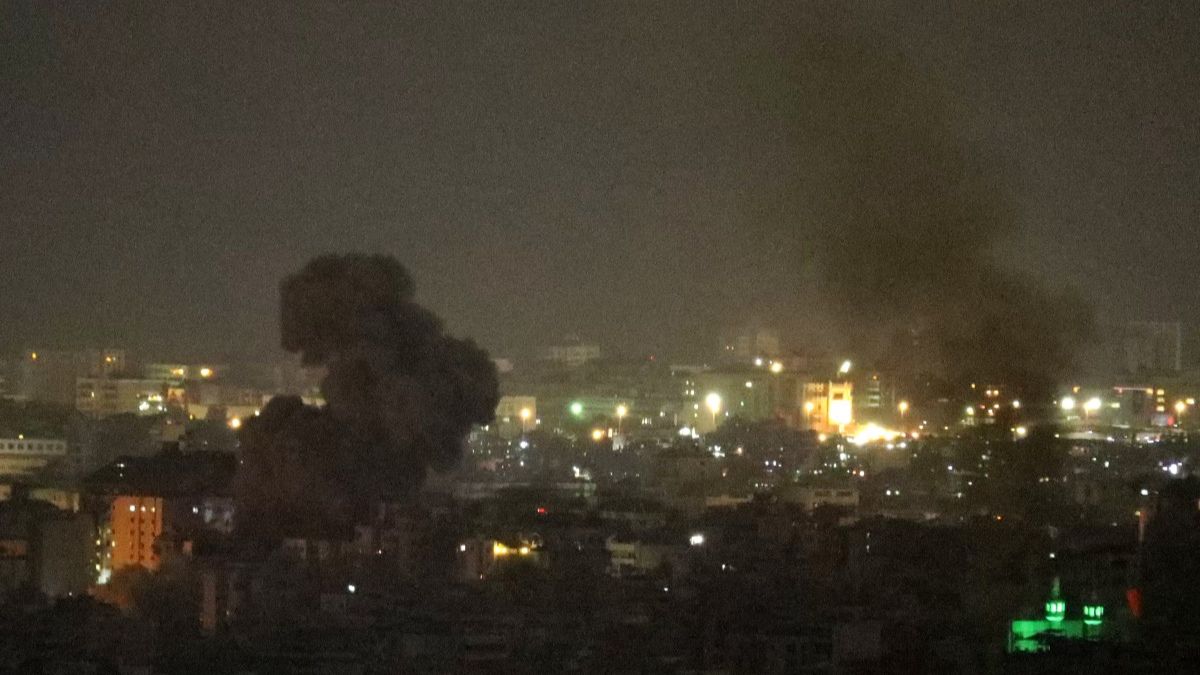
According to sources of Iran’s semi-official Fars news agency, over 15 explosions were heard on Kharg Island during the US attacks. They added that the US hit air defences, a naval base, and airport facilities, but did not cause damage to oil infrastructure.
On Saturday (March 14), Iran’s armed forces warned that a strike on their country’s oil and energy infrastructure would lead to strikes on facilities owned by oil companies cooperating with the US in the region, Reuters reported, citing Iranian media.
Quick Reads
View AllEarlier this week, Trump was evasive about the prospect of the US seizing Kharg Island. “It’s not high on the list,” the US president said in an interview with Fox News radio. “It’s one of so many different things, and I can change my mind in seconds.”
As per an Axios report on March 7, the Trump administration has discussed seizing the strategic island.
Significance of Kharg Island
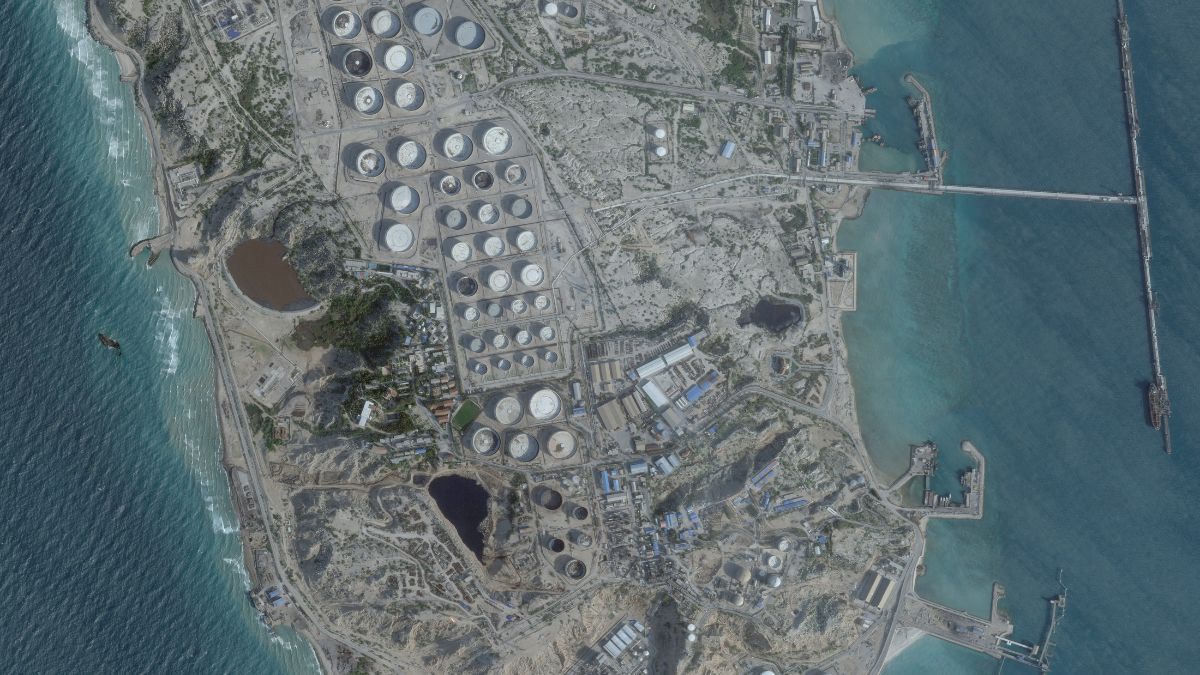
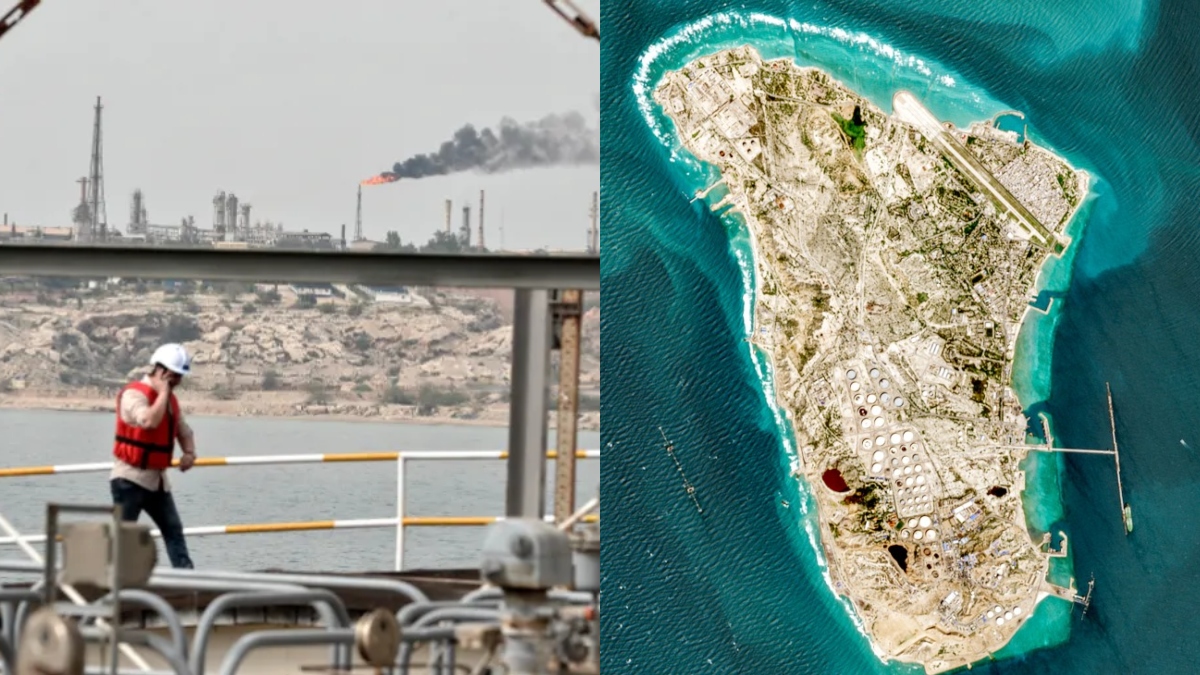
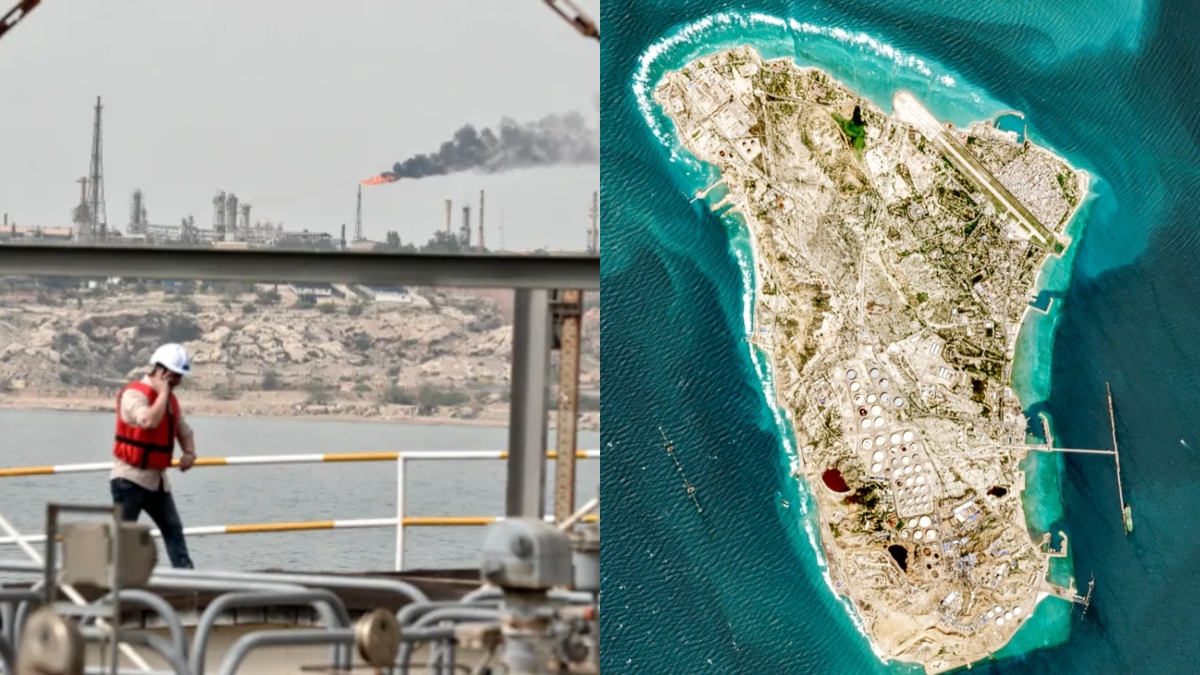
Kharg Island is a 22-square-kilometre coral island, which is located 55 km northwest of the Bushehr port and 15 nautical miles (about 28 km) from the Iranian mainland.
The island, which lies in the waters of the northern Persian Gulf, is the economic backbone of Iran. It accounts for around 90 per cent of the Islamic Republic’s crude exports and has a loading capacity of about seven million (70 lakh) barrels per day.
The terminal receives crude from three major offshore fields – Aboozar, Forouzan and Dorood. The island’s deep surrounding waters allow supertankers to dock safely and load crude.
The crude oil is transported via a complex network of subsea pipelines to onshore processing facilities. It is later stored or shipped to global markets, reported Al Jazeera.
The crude processed at the island is primarily exported to Asia, with China as the leading market.
Will US attack on Kharg Island push up oil prices?
Oil prices have climbed since the US and Israel started the conflict with Iran late last month.
Global oil futures rose 2.7 per cent to more than $103 (Rs 9,532) a barrel on Friday.
Iran has effectively shut the Strait of Hormuz, a vital waterway through which a fifth of global oil passes. This has led to a spike in global oil prices as crude supplies have been disrupted.
Until Friday, Iran’s vital Kharg Island had remained untouched as the war in West Asia continued for two weeks.
“No major Iranian oil & gas production, export facility has thus far been attacked. I believe it is a deliberate measure in the interest of stabilising the oil price. It is partly a signal to Iran to reciprocate by refraining from attacking other countries facilities – which it has so far rebuffed. It is partly also a measure to keep the Iranian people on side in the days after the war, as Iran’s ability to produce and export oil and gas will be the foundation on which its economy can be revived,” a shipping expert had told Indian Express days before the strike.
But with the US attacking the island and not ruling out its takeover, oil prices could further inch towards the $150 (Rs 13,881) per barrel mark.
To seize Kharg Island, the US would have to send boots on the ground. The US is sending more troops to West Asia, including an amphibious ready group (ARG) that will include nearly 5,000 Marines and sailors. The amphibious assault ship USS Tripoli has also been ordered to the region, Associated Press (AP) reported.
The additional US military deployment to the Gulf has fuelled the speculation that the US is planning to seize the island.
These developments are expected to disrupt the global oil market next week.
Bob McNally, president of Rapidan Energy Group, told Reuters that Trump’s remarks on Friday “will focus the market’s mind on pathways that this energy disruption, already history’s largest, could expand and last longer.”
Speaking to CNBC, Francis Galgano, an associate professor and military geography and environmental security specialist at Villanova University in Pennsylvania, said the US will be at a major advantage over Iran if it takes over Kharg Island.
“I will put on my war hat … if the objective is to win the war (quickly), you destroy or capture Kharg immediately,” Galgano said in an email, adding that any such attempt would create maximum leverage over Tehran.
But he added that seizing the island would not be easy. “It would involve moving a considerable number of ground combat troops into the region … I estimate about 5,000 to take and hold the island.”
He added, “All of this of course affects global oil markets, but they are already being affected.”
According to analysts at JPMorgan, if access to Kharg Island were cut off, the loss of Iran’s storage buffer and the shortage of viable export alternatives would “rapidly trigger upstream shut-ins across major southwest fields.”
“With production near 3.3 mbd [million barrels a day] and exports around 1.5 mbd, as much as half of national output could be at risk if the hub remains offline, and the previously assumed 20‑day buffer would vanish from day one,” they said in a note on Sunday.
With inputs from agencies

 "US-Israel Iran War Live Updates: Iran says Kharg Island oil infrastructure unharmed after US strikes, warns over retaliation")
 "'Iran’s crown jewel': What the US bombing of oil-critical Kharg Island means for West Asia war")
 "North Korea fires 10 suspected ballistic missile towards Sea of Japan, Seoul says")
 "Eden Gardens 2001 Miracle Silver Jubilee: The spiritual calm behind VVS Laxman’s immortal 281")
 "US-Israel Iran War Live Updates: Iran says Kharg Island oil infrastructure unharmed after US strikes, warns over retaliation")
 "'Iran’s crown jewel': What the US bombing of oil-critical Kharg Island means for West Asia war")
 "North Korea fires 10 suspected ballistic missile towards Sea of Japan, Seoul says")
 "Eden Gardens 2001 Miracle Silver Jubilee: The spiritual calm behind VVS Laxman’s immortal 281")