

 "Union Budget: Embracing Digital Public Infrastructure and Open Networks for a global future")
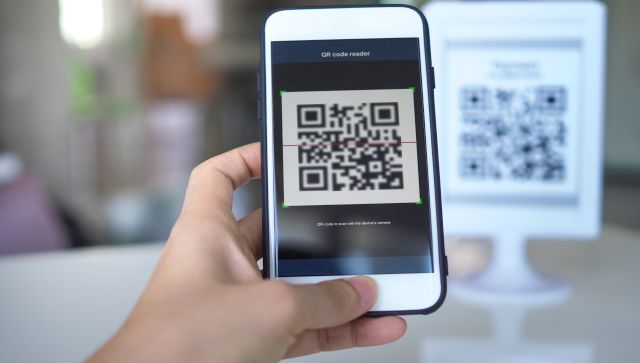
Over the past decade, India has witnessed a remarkable digital revolution, one that has not only transformed the lives of its citizens but also set an example for the world to follow. While the seeds of this revolution were sown earlier, the last 10 years have been characterised by a concerted effort to bring digital services to the very doorstep of every Indian. From Aadhaar to UPI to Direct Benefit Transfers in an astonishing six years, India has achieved an 80 per cent financial inclusion rate, with the fact that just a decade ago less than a third of its population had access to formal financial institutions, earning the dubious distinction of being the world’s most unbanked nation. This is an achievement recognized and commended in a recent policy recommendation report by the G20 Global Partnership for Financial Inclusion (GPFI) in collaboration with the World Bank. The exponential transformation that India has shown the world is not just limited to the financial sector but has shown massive transformations in other sectors as well. For example, DIKSHA has changed the way primary education was being delivered and became the backbone that brought resiliency amidst the COVID shock and has delivered 1.85 billion-plus learning sessions in 30+ languages with energised QR-based textbooks. DIKSHA became one of the largest DPI in education that enabled access to PM eVidya programme meeting the needs of diverse population of India ensuring inclusive, equitable access to education for all. In the health sector, Ayushman Bharath Digital Health Mission is one of the largest DPI initiatives that not only established digital health registries for authenticated and verified health facilities and professionals but also aims to develop the digital backbone for enabling accessible and equitable services to citizens. The scan and share service for OPD registrations enabled by ABDM via a linked health account has been rolled out to public hospitals and has reduced waiting time from 50 minutes to four minutes ensuring convenience to pregnant women, elderly patients. In addition, an ABDM building block “Unified Health Interface” which is a health adaptation of the popular “Open Network” the latest DPI buzzword powered by beckn protocols (again a DPG) has enabled discovery and fulfillment of health services across the diverse and fragmented health delivery ecosystem and has taken a step towards unifying the patient’s experience and enabled multiple choices for citizens to seek healthcare as per their financial and socio-economic status. Not just health but Open Network has emerged as the latest revolutionary DPI which has enabled sector agnostic transformations by establishing transactional interoperability across multiple consumer and provider platforms for discovery of products, services and resources via set of standard protocols creating an ecosystem for revolutionising eCommerce. India has been pioneering the open network revolution and has established multiple open networks like Open Network for Digital Commerce for empowering middle and small-scale businesses & sellers, Open Network for Education Skilling Transformation for skilling, education and livelihood for students, youth, GIG workers & purple economy, Namma Yatri and Kochi Open Mobility Network beating the aggregator led monopolies and the most recent launch - Protocol for Unified Legal Services to enable access to social justice and legal services. The Beckn Protocol, modelled on the design principles of the internet like openness, interoperability, and a layered structure, aims to establish such a universal language for digital commerce transactions to facilitate commerce beyond geographical boundaries. The day is not far wherein India can enable cross border trade and transactions via Open networks powered by UPI and digital identities augmenting the trust in international transactions. What is more notable is that all the DPI initiatives from digital identity to registries to UPI to open networks have turned out to be inclusive of physical and socioeconomic conditions. For example, Open networks have also created new pathways for collaboration and inclusion. EnAble India and Namma Yatri have partnered to create “Purple Rides” for persons with disability. In addition to support the cause the Digital Economy Working Group as part of the G20 mission has secured the first-ever international agreement on DPI and the Digital Economy Ministers’ Meeting has approved three key DPI achievements: a. establishing a framework for DPI development, b. funding (Prime Minister Narendra Modi unveiled Social Impact Fund) to support DPI initiatives in LMICs, and c. establishment of a Global DPI Repository. On the same lines, Deloitte has also published a DPI Playbook that speaks about the said framework- a kickstart guide for countries to carve out their own DPI story. With DPI & DPGs at the heart of all major digital transformations, India is creating positive impacts in capital markets to social sectors creating digital rails for more such transformation and has created a breeding ground for new innovations with a population-scale impact making the last-mile reach a reality today. India’s journey towards embracing DPI is a testament to the nation’s determination to transform itself into a global digital powerhouse. As India continues this path, the world watches with anticipation, recognising the potential for positive global change that arises from India’s digital prowess. With innovation, inclusivity, and decentralization at its core, India is not just transforming itself but also paving the way for a brighter global future. NSN Murty is Partner and Government and Public Services Leader, Deloitte India and Priyanka Yadav, Associate Director, Deloitte India. Views expressed in the above piece are personal and solely that of the author. They do not necessarily reflect Firstpost’s views. Read all the Latest News , Trending News , Cricket News , Bollywood News , India News and Entertainment News here. Follow us on Facebook, Twitter and Instagram.
What is more notable is that all the DPI initiatives from digital identity to registries to UPI to open networks have turned out to be inclusive of physical and socioeconomic conditions
Advertisement
End of Article


 "Russian drones over Poland: Trump’s tepid reaction a wake-up call for Nato?")
 "As Russia pushes east, Ukraine faces mounting pressure to defend its heartland")
 "Why Mossad was not on board with Israel’s strike on Hamas in Qatar")
 "Turkey: Erdogan's police arrest opposition mayor Hasan Mutlu, dozens officials in corruption probe")
 "Russian drones over Poland: Trump’s tepid reaction a wake-up call for Nato?")
 "As Russia pushes east, Ukraine faces mounting pressure to defend its heartland")
 "Why Mossad was not on board with Israel’s strike on Hamas in Qatar")
 "Turkey: Erdogan's police arrest opposition mayor Hasan Mutlu, dozens officials in corruption probe")



