

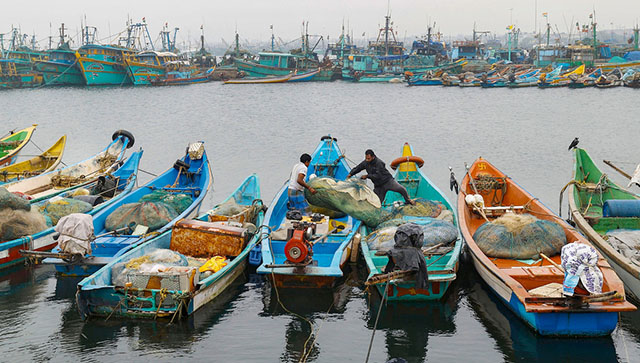
 "Tamil Nadu fishers ready to set sail into electoral politics amid issues with Sri Lanka")
Come 2026, it is not only Tamil film’s current super-star Vijay who will be entering electoral politics through his recently registered political party, Tamizhaga Vetri Kazhagam (TVK). Some fishing community leaders, especially those fishing in the troubled Palk Bay region with neighbouring Sri Lanka have since vowed to float a new party to protect their lives and livelihoods as according to them all existing political parties have failed to do it. The issue is about the Sri Lanka Navy (SLN) and fishermen in the island nation’s Tamil-exclusive Northern Province attacking them, arresting them and impounding their trawlers and fishing gear, and local courts sending them to prison, more often than not. Under a Sri Lankan law passed in 2018, at the behest of Tamil parliamentarian MA Sumanthiran, courts can order trespassers to pay huge fines and their boats can be sold in public auction, not to realise the fine is merely a measure to discourage others from doing so. Nearly 40 of 234 assembly segments and 14 of 39 Lok Sabha constituencies are on the coast. According to official figures, marine fishers total 10.5 lakh (approximately), and are a decisive factor in many assembly constituencies. They are so in some Lok Sabha constituencies, especially wherever there is a close contest. Tilting the scales Given that the Lok Sabha election this time may face a three-cornered contest among alliances headed by the ruling DMK in the state, BJP-NDA at the Centre and also the erstwhile ruling AIADMK, which has since walked out of the latter to contest alone, there could well be a few constituencies where the fishers’ votes can tilt the scales. There is however a problem now. The initiators of the fishers’ party have not clarified if they would support any one alliance or another or other parties or independents in the 2024 General Elections. In the absence of such an initiative and campaign, their voice would not carry weight this one more time at least. That is if they are launching a political party before the assembly polls and field candidates on their own. Even so, they do not have the numbers to win a single seat in the assembly elections, and not certainly one in the LS polls, whenever their proposed party decides to join in. That means, the fishers’ party, by whatever name is called, can still manage to become the ‘decision-maker’ say in about a dozen or more assembly segments. In about 10 Lok Sabha constituencies, if the community votes together and on the dictates of the leaders of the yet-to-be-formed party, they can tilt the scales, depending on the performance of other vote banks. This takes them to the next option – to roll out a manifesto that any of the existing alliances of the time adopts as theirs and join their company. It could mean that the alliance leader could allot the new political party some seats in the assembly elections. Both in the Assembly and Lok Sabha elections, the alliance leader and their electoral rivals will consider fielding candidates from the fishers’ community. Artisanal fishers’ row However, such theories should end there. The reasons are not far to seek. There are two identifiable groups of marine fishers, namely, those traditional fishers or artisanal fishers who trade closer to the coast in their boat and the trawler-fishers, who go slightly farther, including the Sri Lankan waters, violating the bilaterally agreed upon international maritime boundary line (IMBL). Frequent clashes have been reported between the two groups in many parts of the state with the artisanal fishers complaining that the trawlers fish within the five-km coastal belt reserved for them. They have often held protests outside local government offices, invariably the district collectorates but to no avail, they say. Two, at the focus of the current political initiative, is the Sri Lankan fishers issue. While many fishers from the southern coasts are affected in more ways than one, the same cannot be said about the northern coastal districts. This means that the new party should have a broader socio-political manifesto that goes beyond the Sri Lankan dispute but here again artisanal fishers do have occasional issues with the trawler-bound brethren. Sea lotus and more There is a larger question. The fishers are upset that no political party has done them justice, but their main woes are centred still on the Sri Lankan dispute. To be fair to them, no political party or leader ruling either in the Centre or the State has been able to work out a lasting negotiated settlement with the Sri Lankan government. Instead, they have at best managed to obtain freedom, mostly after days, weeks or months, after the arrest of Indian fishers in Sri Lankan waters. Their boats are at best freed after months and years, after they had gone to decay in rain and sun in the open along the northern Sri Lankan coast. The last one to come up with a huge promise was the BJP in 2014. The late Sushma Swaraj campaigned for the party in Rameswaram and held what the party called the ‘Kadal Thamarai’, or ‘Sea Lotus’ protest named after the BJP’s election symbol. She promised to resolve the Sri Lankan dispute if the party came to power. The BJP did come to power, Narendra Modi became prime minister and Sushma Swaraj was his foreign minister for a time. Nothing much came of it. Rather, it was business as usual. Indian fishers from Tamil Nadu and Puducherry’s Karaikal enclave continued to be detained with their boats, as Tamil Nadu chief minister, AIADMK’s Jayalalithaa would write to Prime Minister Modi, and the MEA would follow it up with the Sri Lankan counterpart through the Indian High Commission in Colombo, and try and have them released – as and when the hosts desired. Yet, there is no denying the Modi government’s good work in obtaining freedom for five Tamil Nadu fishers sentenced to death for drug-smuggling by a Sri Lankan court. Though the state BJP blew it out of proportion, observers of the Sri Lankan scene pretty well knew that even without a law barring the same, the government had suspended the execution of the death sentence, which is still being retained as a deterrent for heinous crimes and drug-smuggling. What the Modi government achieved was to obtain their freedom and return home instead of having to languish in Sri Lankan prisons, indefinitely. Poll mood catches on Independent of the proposal for Tamil Nadu fishers to float a brand-new political party for the assembly polls two years hence, already, the LS poll mood has caught up with the political system in the state. DMK chief minister M K Stalin recently detailed in the state assembly how the number of mid-sea arrests of state fishers by the Sri Lanka Navy (SLN) has gone up disproportionately high in recent weeks. The fact is Sri Lanka is also having nationwide presidential polls later this year. This may be followed up, if not preceded by parliamentary elections, and certainly not later than August next year. This creates a unique situation where the political leaderships in both nations are hard-pressed for choices. They both have domestic constituencies that they cannot afford to upset, let alone antagonise. In the background of earlier media rumours that Prime Minister Modi could choose Ramanathapuram in southern Tamil Nadu as a second seat apart from Varanasi, the Rameswaram fishers in the constituency cannot afford to be left upset and unsure more than already. They are the main victims of the fishers’ dispute with Sri Lanka. As an aside, this is one more reason why the rumour would remain a rumour and nothing more. It is not just about Modi contesting from Ramanathapuram or any other Tamil Nadu constituency. Even without it, his BJP is planning to put together a winnable alliance under the NDA brand after traditional AIADMK ally broke the ties after twin defeats in 2019 and 2021 in the party’s company. According to the AIADMK leadership of former chief minister Edappadi Palaniswami, traditional voters and even party cadres had cross-voted across the state even in Lok Sabha constituencies where they had their candidates. It was not about the DMK-Congress combine winning 38 of 39 seats from the state. It was more about most victors sweeping it by huge margins. Missed the bus? However, it needs to be remembered that the BJP-NDA combine did poll a respectable 18.5 per cent vote share, winning two seats in Lok Sabha Elections 2014, when ruling AIADMK’S Jayalalithaa swept the remaining 37 seats, rendering the traditional DMK-Congress rivals with a zero score. Her clarion call for the voter to choose between Modi and ‘this lady’ resonated well with voters across the state as she played the anti-Hindutva card effectively. This time again, the BJP hopes to put together a strong alliance, with party leaders claiming a total 25 per cent vote-share (which may be a wee bit high until proven otherwise. However, there are others, who claim that their party or alliance would win 25 seats – too tall an order under the prevailing socio-political circumstances. There is a hitch all the same. The larger the NDA combine, more will be the number of political parties that will have a stake in flagging the Sri Lankan fishers issue. The list of possible BJP allies includes the PMK and the DMDK, the latter founded by late film star Vijayakanth. Their cadres would pressure the respective leaderships to make Prime Minister Modi pronounce a political position in the matter. As they point out, the Government of India might have missed the bus when New Delhi rushed food, fuel, medicines and cash assistance totalling $4 billion to Sri Lanka at the height of the economic crisis in 2022. That is easier said than done. That was because the Tamil fishers in Sri Lanka who had been complaining about violations by their Tamil Nadu brethren and their socio-political leaderships were impervious to the economic crisis and the consequent Aragalaya protests that shook Colombo, the capital of Sri Lanka. Like the rest of the Tamil community, those fishers also shrugged of their shoulders and went on with their lives, claiming how they had gone through worse travails through the three decades of ethnic war under the LTTE and it was only the southern Sinhalas who were learning it the hard way. Traditional culture Today, the threats are more real. A Sri Lankan court recently sentenced pilots/drivers of two Tamil Nadu fishing boats to six months in prison and another to one year while ordering a few others’ freedom but with a warning not to be seen in these waters a second time. There is another incident in which three fishers from the southernmost Kanyakumari district were arrested in Mumbai after landing there in their owner’s boat they had stolen in Dubai. They have alleged harassment, violence and starvation, and claim others of the ilk are still caught there. It is a rarely known fact that fishers from six villages in coastal Thothoor in Kanyakumari district have taken to deep-sea fishing on traditional craft and catamarans from very many decades and centuries. They took to new technologies like conventional motor-boats and refused to shift to destructive bottom-trawlers, GPS and other navigational aids as they made their appearance in the past two or three decades, but stick to the hook-and-line method of fishing, carrying anything up to 15,000 hooks in each boat. It was thus that many from the village and adjacent areas in the district were downed when Cyclone Ockhi stuck in 2017, reportedly after the weatherman failed to report the onset in time for them to be able to return home. The government said about 100 died but the locals put the toll at 1,000-plus, with many survivors reaching Maldives and other nations in the neighbourhood and a little afar. The fact is that the Thothoor fishers are unwilling to or unable to teach the Palk Bay brethren the early lessons in deep-sea fishing, which the Centre and the state government feel is the only way to wean away the local fishers from Sri Lankan waters – and yet get a catch that has much higher monetary value. There is a greater problem with the Palk Bay fishers’ traditional culture of not staying in the sea for more than a night at a time – whereas deep-sea fishing entails them staying away from the shores for days and weeks. Thereby hangs a tale! The author is a Chennai-based policy analyst and political commentator. Views expressed in the above piece are personal and solely that of the author. They do not necessarily reflect Firstpost’s views. Read all the Latest News , Trending News , Cricket News , Bollywood News , India News and Entertainment News here. Follow us on Facebook, Twitter and Instagram.
The fishers are upset that no political party has done them justice, but their main woes are centred on the Sri Lankan dispute
Advertisement
End of Article

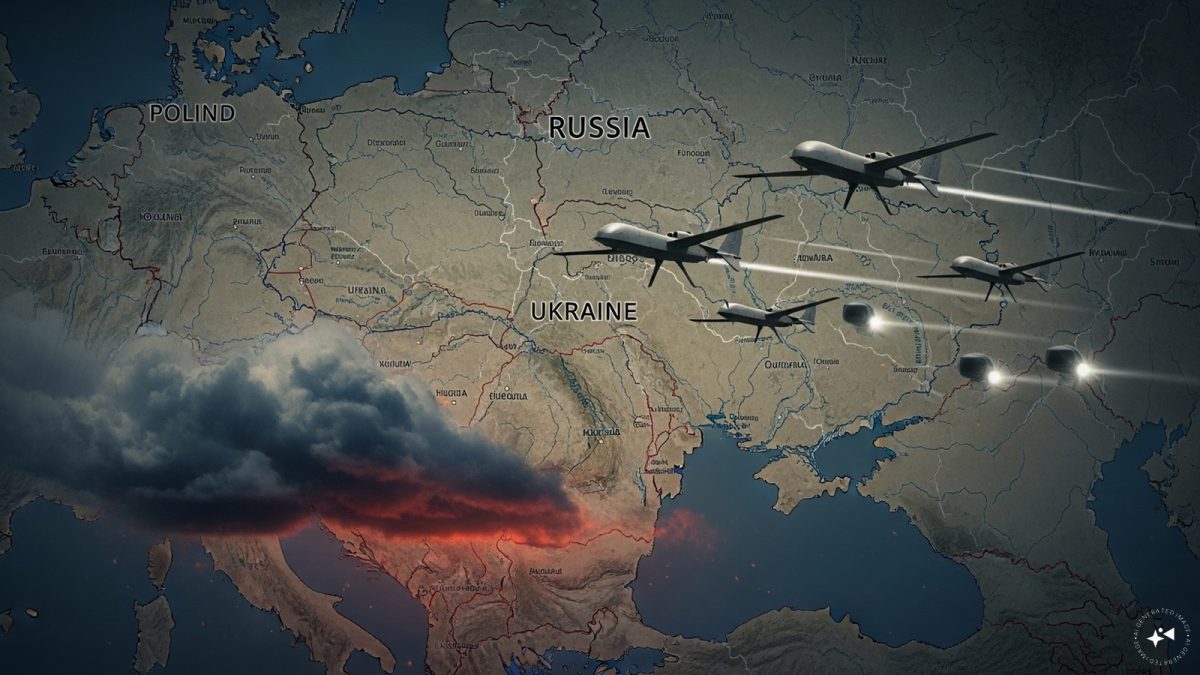 "Russian drones over Poland: Trump’s tepid reaction a wake-up call for Nato?")
 "As Russia pushes east, Ukraine faces mounting pressure to defend its heartland")
 "Why Mossad was not on board with Israel’s strike on Hamas in Qatar")
 "Turkey: Erdogan's police arrest opposition mayor Hasan Mutlu, dozens officials in corruption probe")
 "Russian drones over Poland: Trump’s tepid reaction a wake-up call for Nato?")
 "As Russia pushes east, Ukraine faces mounting pressure to defend its heartland")
 "Why Mossad was not on board with Israel’s strike on Hamas in Qatar")
 "Turkey: Erdogan's police arrest opposition mayor Hasan Mutlu, dozens officials in corruption probe")



