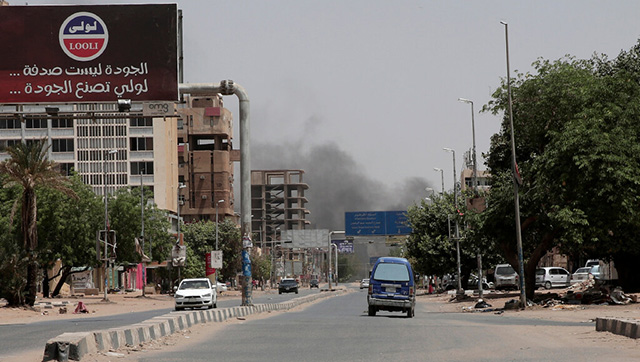
 "Sudan: A textbook example of elitist power struggles on corpses of people")
Two Indian C-130J military transport aircraft are waiting at Jeddah, Saudi Arabia, while an Indian Navy ship has reached port Sudan to evacuate Indians from a conflict that continues to be “volatile”, reported PTI. In fact, the first special flight carrying 360 Indians from the crisis-hit Sudan landed in New Delhi on Wednesday night. According to the World Health Organisation, more than 400 people have died and over 3,500 are injured in the sub-Saharan country which has been witnessing a civil war with army and paramilitary being on the opposing sides.
Just like India, Western countries including the US, Britain, Greece, Netherlands etc. have started their respective evacuation drives for the safety of ‘their’ citizens in a ‘General versus General’ conflict.
Even as these nations are concerned for their diaspora, days of ‘street battles’ have confined people to their homes, unable to access basic civic amenities. Capital city Khartoum is witnessing a risky mass-migration of its residents who are suffering a lack of essential survival means, reported The Guardian.
As Gurujit Singh’s article on Firstpost has shown, the military considers the paramilitary — RSF (Rapid Security Force) — as rural hicks, and it continues to be unrelenting in power-sharing with the paramilitary force. Further, the RSF knows that it is their closest opportunity to power.
But amid this blood-thirsty and ambitious struggle for power lies the Sudanese population. People who are not lucky enough to have a government that is concerned about their safety in case of a ‘degrading’ ‘security-situation’.
Quick Reads
View AllWhile these immigrants have a destination-B, this may not be the privilege with these Sub-Saharan people, who are fractionated in tribes and identities, and have been used by vested interests in furtherance of selfish interests, and left dissatisfied after use.
According to the “2021 extrapolatory analysis of the 2014 Household Budget and Poverty Survey” conducted by United Nations Children’s Fund- “Overall poverty rates have increased from 43 per cent in 2014 to 80 per cent in 2018 and 97 per cent in 2020.” Further, the same report indicates high Child poverty rates in this north-eastern African country.
The past and the future of this nation appears in gloom ever since 1956 after the UK and Egypt recognised Sudan’s unilateral independence, the country is marred by several power hiccups, and none of the civilian government has ever succeeded in qualifying the stability threshold essential to establish responsible democratic governance.
Further post-1980, the country has witnessed an upthrust towards Arabic-Islamisation, in 1983, President Numeiri declared the introduction of Sharia Islamic law. And, in the 1990s, under the influence of the National Islamic Front led by Hassan al-Turabi, Sudan saw Arabisation and Islamisation of education and public narratives. This excited public sentiment towards moral policing and militant Islam. Clearly, the nation failed to develop a mature political culture quintessential for democracy.
This ‘Arabic-zeal’ certainly translated itself into a cultural clash with other non-Arabic cultures inhabiting Sudan.
The year 2003 became the boiling point, the Sudan Liberation Movement and Justice Equality Movement raised banners against the government of Sudan, these rebel militias represented ethnic minorities, and accused the Sudanese government of oppressing the non-Arab population.
This resulted in an armed conflict in the Darfur region. The government responded by ethnic cleansing of non-Arabs. Fighting from the government’s side were the Sudanese military, police and ‘dreadful’ Janjaweed. Together these forces wreaked havoc on the people and the security of the nation collectively.
In fact, Sudanese president, Omar al-Bashir, was indicted by International Criminal Court, for genocide, war crimes and crimes against humanity in March 2009, becoming the first sitting head of state to be formally indicted.
As we know, power is more fluid than water, Bashir was ousted in 2019 through a military coup, with the military promising citizens civilian rule.
In September 2019, a new government took over the office under the prime ministership of Abdalla Hamdok as part of a three-year power-sharing agreement among military, civilian representatives and protest groups.
In 2021 again, the military ousted Hamdok who was placed under house arrest, but he was reinstated to facilitate the transition to civilian rule. However, popular protests emerged as it was widely assumed that he might agree to share power with the military. Hamdok resigned on 2 January, 2022 and the military became all-powerful, yet the distant dream of a responsible civilian government was kept alive.
An internationally-backed plan was floated that proposed a military under civilian control and paramilitary RSF (much of whose cadres came from the same Janjaweed which was involved in the Darfur crisis) to be merged with the military.
This certainly meant the end of RSFs autonomy and complete subservience to the military, which certainly would not have been easy to gulp for RSF’s leader General Mohamed Hamdan Dagalo. Hence, the paramilitary raised arms against its old ally - the Sudanese Armed Forces - led by General Abdel Fattah al-Burhan.
Never in these long tremors of political earthquake, Sudanese people ever got a chance to be the master of their own destiny, never did they feel that any government in Khartoum ever cared about their aspirations. Just as an innocent orphan child is left to wander amidst the wilderness, Sudanese people suffer the same fate.
International diplomacy may roll in, it might happen that a faction completely wipes out the other, dictatorships and dummy governments might come and go, but never can Sudanese attain true self-government until the whole of the International community and the people of Sudan understand that a stable democracy demands a mature political culture and civic socialisation that accommodate ideas and the aspirations of the population as a collective entity with farsightedness and not merely the sectional, selfish and short-term political interests of the power-haves.
Read all the Latest News, Trending News, Cricket News, Bollywood News,
India News and Entertainment News here. Follow us on
Facebook,
Twitter and
Instagram.

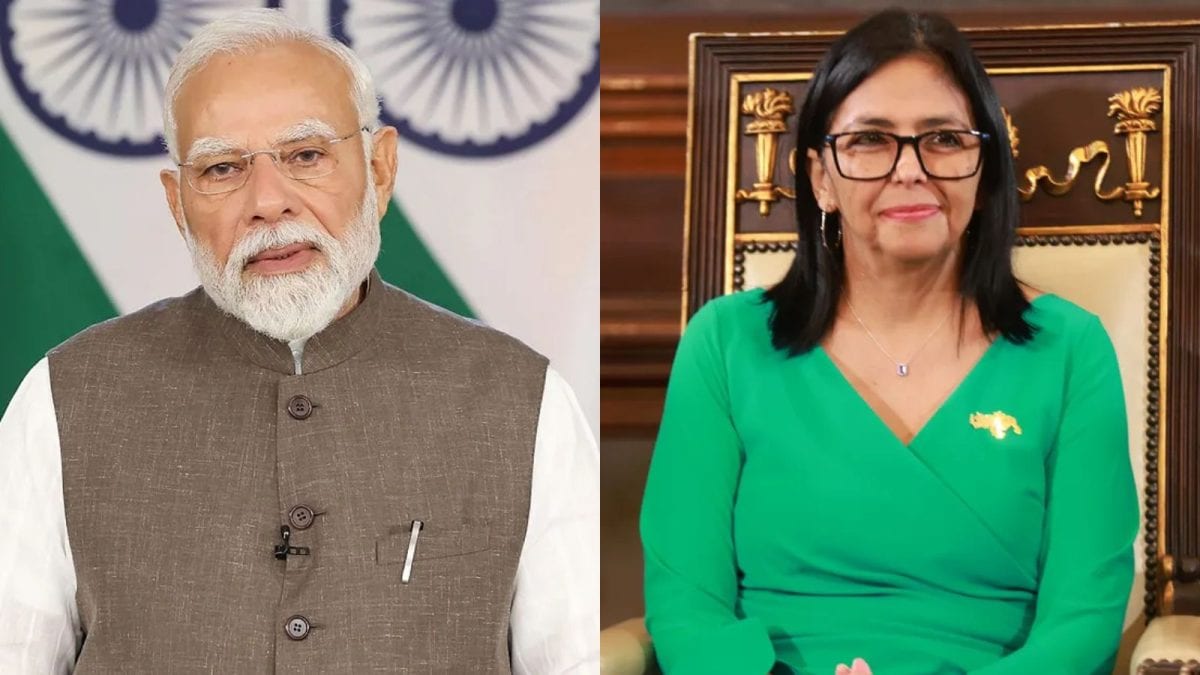 "PM Modi speaks with Venezuela’s Rodríguez, vows to 'expand bilateral partnership' amid US tensions")
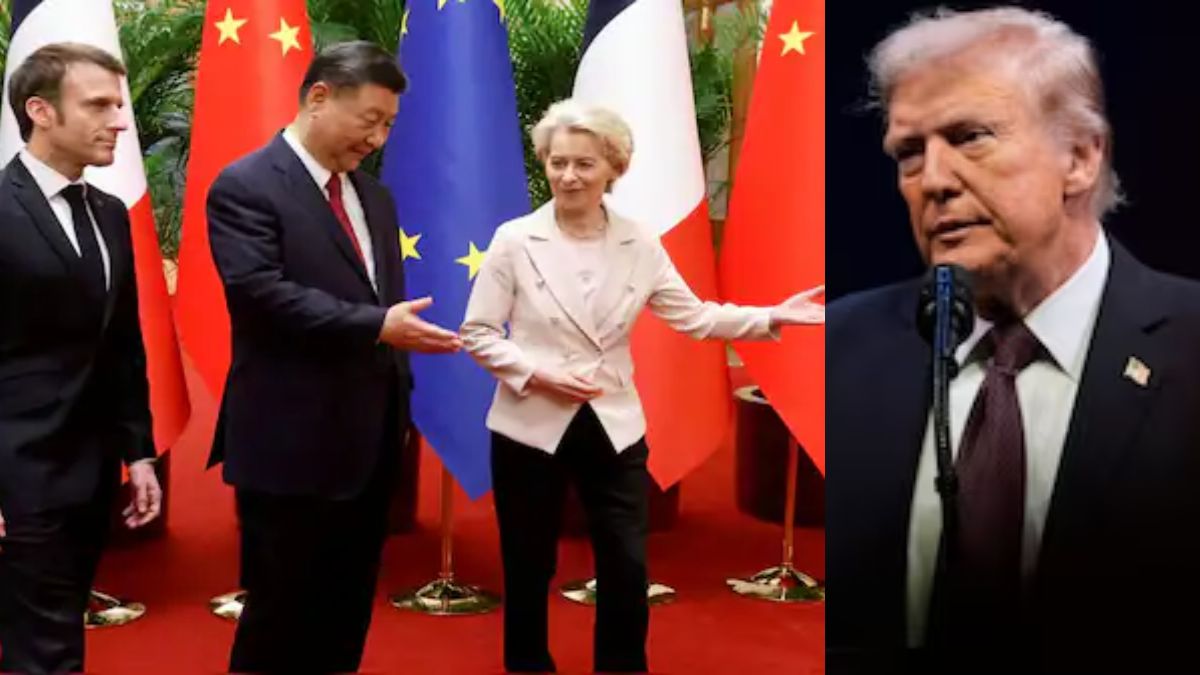 "Trade rifts with Washington drive US allies to reset ties with Beijing")
 "Congress committed 'grave mistake' by pushing FTA with China, failed deals with Japan and Korea: Goyal")
 "US justice department releases more investigative records on Jeffrey Epstein")
 "PM Modi speaks with Venezuela’s Rodríguez, vows to 'expand bilateral partnership' amid US tensions")
 "Trade rifts with Washington drive US allies to reset ties with Beijing")
 "Congress committed 'grave mistake' by pushing FTA with China, failed deals with Japan and Korea: Goyal")
 "US justice department releases more investigative records on Jeffrey Epstein")