

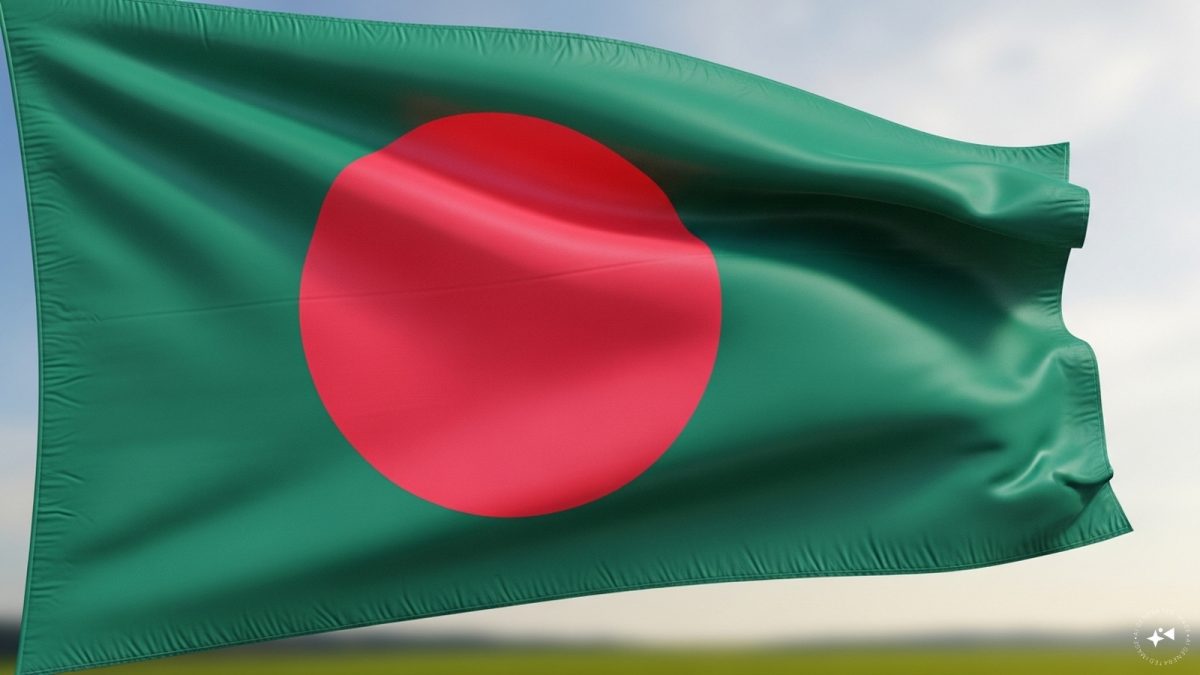
 "Ramification | Bangladesh: When law collapses, the mob takes charge")
Last week, the Ministry of External Affairs, Government of India, released a strongly worded statement against the recent attacks on Hindus and other minorities in Bangladesh. The response warned that these incidents could no longer be brushed aside as mere “media exaggeration” or dismissed as political violence.
MEA spokesperson Randhir Jaiswal added that “the unremitting hostilities against minorities in Bangladesh, including Hindus, Christians and Buddhists, at the hands of extremists is a matter of grave concern. We condemn the recent gruesome killing of a Hindu youth in Mymensingh and expect the perpetrators of the crime to be brought to justice. Over 2,900 incidents of violence against minorities, including cases of killing, looting and arson, have been documented by independent sources during the tenure of the interim government.”
Much has already been written about post-Hasina Bangladesh and the re-emergence of extremism in the country. The first repercussions of the regime change were acutely felt by the minorities. Attacks, particularly on Hindus, did not emerge and take shape gradually; they erupted immediately, signalling a deeper societal and structural failure in Bangladesh, hastened by the political transition. Though these incidents cannot merely be dismissed as law and order problems, the lack of any law and order in the country has encouraged “mob governance”. In addition to the vacuum left by the Sheikh Hasina government of an experienced administration, the sudden regime change has also given a fillip to political opportunism hinged on the vilification of minorities.
Unfortunately, the Muhammad Yunus-led interim government was quick to take over power in the country but not the responsibility that comes with political chaos. In situations like these, it is the ability to maintain order, enforce law and protect the most vulnerable that an administration is judged by, and not its rhetoric. On this fundamental account, the failure of the interim government has been decisive. Transitional legitimacy has not converted into administrative capacity, and the Chief Adviser is to be blamed for the abysmal situation in Bangladesh.
Yunus has often attempted to please extremists with an anti-India rhetoric, encouraging radical elements to feel emboldened and equate anti-India rhetoric with an anti-Hindu one. He has gifted the sometimes titled ‘Art of Triumph’ maps to foreign delegations (such as Turkish officials and Pakistani generals) that included India’s Northeast (Assam, Meghalaya, etc.) within Bangladesh’s borders. On another occasion, during a March 2025 visit to China, he referred to India’s northeastern states as “landlocked”, suggesting Bangladesh could serve as their gateway to the sea and inviting Chinese economic investment—sparking controversy and strong condemnation from Indian officials, including Assam Chief Minister Himanta Biswa Sarma.
Quick Reads
View AllBut Yunus’ provocative actions against India are not the only reasons for the rhetoric. One of his first decisions after assuming power was to release terror-accused prisoners such as Jashimmudin Rahmani, the chief of al-Qaeda affiliate Ansarullah Bangla Team (ABT), who asked West Bengal Chief Minister Mamata Banerjee to “declare independence from Modi’s rule”. The recently freed terrorist also said that “India will be partitioned, and Islamist flags hoisted over Delhi.” Perhaps Yunus’ silence screams louder than his words, because every time he provokes India or allows aggressive narratives against India to dominate the political and social space, he extends tacit support to extremist mobs.
The lynching of Dipu Chandra Das, a Hindu, on 18 December 2025—who was hanged from a tree and set on fire in Bhaluka, Bangladesh—is not an isolated incident. The reason we do not know the names of the 2,900 victims of violence against minorities in Bangladesh under the Yunus-led interim government is because radicalisation never happens in a vacuum. It happens when it becomes the norm and that norm senses impunity. Radicalisation has thrived because authorities have become selective—and the streets know it.
But it has not thrived only because authorities in Bangladesh have become selective; it has also thrived because the world has become selective in its outrage. Political and strategic agendas manipulate outrage, and the Western world sets the tone. If the West feels outrage, so must the rest of the world. That is why “All Eyes on Rafah” was seen on social media across the world, but “All Eyes on Bangladesh Hindus” was barely seen even on social media in India. In-group solidarity and tribalism in today’s “world of outrage” is not founded in morality but rather in public perception and the need for people to align their outrage with what seems fashionable.
If not, then what explains the meagre international coverage of the burning of Bangladesh’s media outlets? Prothom Alo, Chhayanaut and The Daily Star buildings were set on fire, with journalists trapped inside. The editor of The Daily Star, Mahfuz Anam, has called it an era of murder. The attempt was not just to burn down the buildings but to attack the journalists working inside. Nurul Kabir, president of the Editors’ Council and editor of New Age, while speaking as a special guest at the 6th Broadcast Conference of the Broadcast Journalist Centre, stated that he believed that “some part of the government allowed the attacks, vandalism and arson on the media offices of Prothom Alo, The Daily Star, and Chhayanaut to occur”. He said this in the presence of Syeda Rizwana Hasan, Adviser for Information and Broadcasting, who was the chief guest at the event.
With elections now announced in Bangladesh, the much-anticipated return of Tarique Rahman has had considerable fanfare. In his first public address, he offered condolences for the death of student activist Sharif Osman Hadi. Yet there was a telling silence: no message for the family of Dipu Chandra Das, and not even a word of outreach to Bangladesh’s minorities. In a moment meant to signal national leadership, omission has spoken louder than intent.
Whether it is Yunus’s Bangladesh or Tarique’s, the message increasingly appears the same: minorities, especially Hindus, are expendable for political gain—even if that expediency fuels radicalisation. In the long run, Bangladesh will bear the brunt of this short-term vision. Whatever the results of the upcoming elections may be, irrespective of the leadership, if governments do not move from statements to prosecutions, from appeals to enforcement, they risk allowing extremism to become embedded rather than episodic. And once that threshold is crossed, restoring trust will prove far harder than restoring order.
(Rami Niranjan Desai is a scholar of India’s northeast region and the neighbourhood. She is a columnist and author and is presently a Distinguished Fellow at India Foundation, New Delhi. Views expressed are personal and solely those of the author.)


 "‘True strength’: China lauds India as economy marches past Japan to emerge world's 4th largest")
 "'We believe in you and our victory': Putin sends New Year message to Russian troops in Ukraine")
 "Kiribati, New Zealand, Australia: Which countries are the first to ring in 2026?")
 "The silent crisis: 50% of humanity is resistant to antibiotics, who's to blame?")
 "‘True strength’: China lauds India as economy marches past Japan to emerge world's 4th largest")
 "'We believe in you and our victory': Putin sends New Year message to Russian troops in Ukraine")
 "Kiribati, New Zealand, Australia: Which countries are the first to ring in 2026?")
 "The silent crisis: 50% of humanity is resistant to antibiotics, who's to blame?")



