

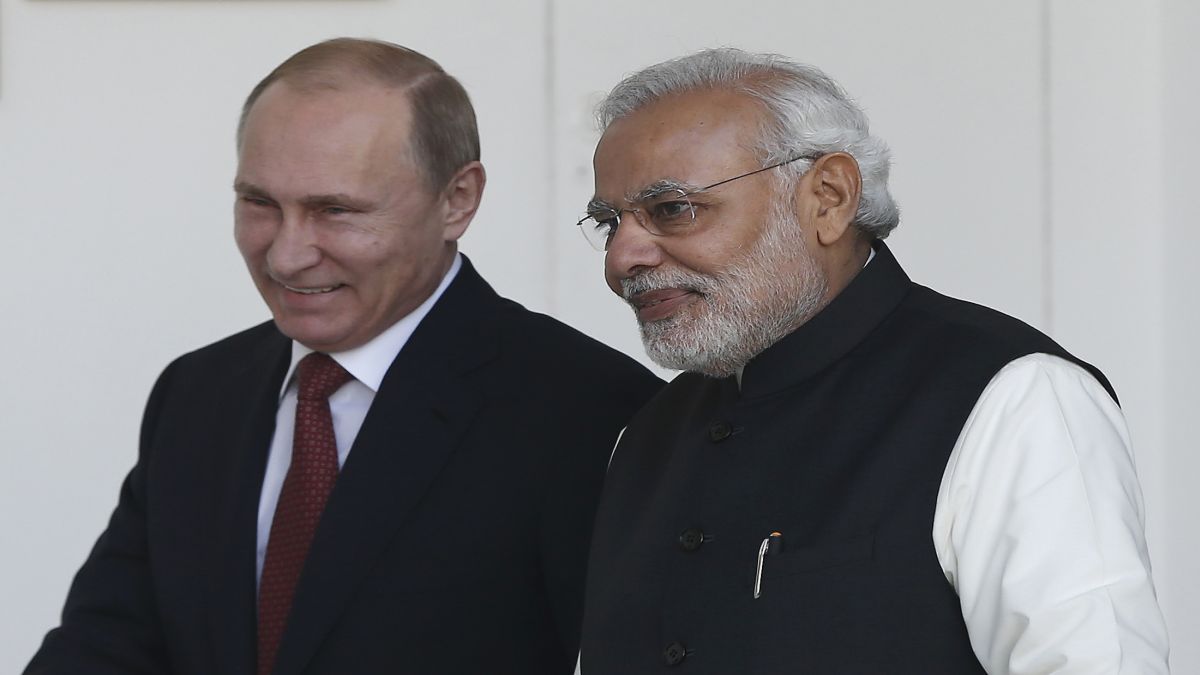
 "Putin in Delhi: India’s moment in a fragmenting world order")
When Vladimir Putin lands in New Delhi in December 2025, it will not be just another chapter in a “time-tested” partnership. The visit comes at the intersection of three converging crises: a grinding war in Ukraine moving toward an uneasy negotiation, a sharp downturn in India-US ties over tariffs and Russian oil, and a global order fragmenting into competing power centres.
Against this backdrop, India is being watched carefully. Is New Delhi doubling down on Moscow just as the West looks for a face-saving way out of Ukraine? Is India signalling defiance to Washington’s tariff pressure? Or is it quietly positioning itself for the world that will emerge once the war ends?
Analysts such as Michael Kugelman have described the moment as a “Putin conundrum” for India; any move to deepen ties with Moscow risks aggravating Washington, and any concession to US pressure risks weakening a long-standing strategic partnership.
At the same time, former Indian Defence Attaché in Moscow, Maj Gen Deepak Mehra, has argued that Putin’s 2025 visit is part of a deeper Russian pivot from “Greater Europe” to “Greater Eurasia,” with India as a central pillar in that shift.
The visit is happening after three important developments:
Russia has clawed back initiative on the battlefield and is no longer negotiating from obvious weakness.
Trump’s Washington has imposed up to 50 per cent tariffs on Indian goods, half of it explicitly as punishment for India’s continued purchase of Russian oil, creating the worst crisis in two decades of the strategic partnership.
A Trump-backed 29-point peace framework for Ukraine is under discussion, designed less to deliver justice and more to freeze the conflict on terms tolerable to Moscow and survivable for the West.
Putin arrives not as an isolated pariah, but as a leader who senses the strategic winds turning slightly in his favour. For India, this is no longer a simple case of maintaining “good relations with both”. The Ukraine war has placed New Delhi under simultaneous cross-pressure. On one side, discounted Russian oil has helped cushion inflation and protect growth; at its peak, Russia became India’s largest crude supplier. That trade, however, has drawn sustained criticism from the US and Europe, culminating in steep American tariffs and the threat of secondary sanctions. Washington’s public line is that Indian refiners are indirectly financing Russia’s war.
On the other side, Moscow now sees India as indispensable to its Eurasian pivot. With its market size, demographics and geography, India prevents Russia from becoming a junior partner locked into China’s embrace. Institutions such as BRICS, SCO and the Eurasian Economic Union now frame a Russia that looks east and south — and in that frame India occupies a unique place. It is during Putin’s visit that these competing demands will collide in full public view.
Putin’s Agenda: More than Defence, Deeper than Energy
Moscow’s objectives from this summit go beyond reassuring a traditional friend. On the hard-security side, Russia will push to:
Lock in long-term defence cooperation: co-development and localisation of spares for aircraft, air defence and naval platforms, including long-delayed projects.
Stabilise energy flows amid sanctions turbulence; long-term crude and LNG contracts, investments in Arctic and Far East fields, and non-dollar payment mechanisms that shield trade from Western pressure.
On the economic and technological side, one can expect Russian offers on:
Critical minerals and rare earths, where Russia’s reserves complement India’s industrial ambitions.
Labour mobility, using Indian skilled manpower to compensate for Russia’s demographic crunch.
There is also a political objective: to show Washington and Brussels that Russia still has major partners, and to signal to Beijing that Moscow has options beyond China.
Washington’s View: Resentment and Realism
In Washington, this visit will be filtered through the lens of the 2025 US-India trade and diplomatic crisis in which a US perception — that India bankrolled Russia’s war in Ukraine — prevailed. Trump has turned tariffs into an instrument of pressure, explicitly tying punitive duties to India’s Russian oil imports.
At the same time, the US recognises three uncomfortable facts:
India’s energy decisions helped stabilise global oil prices at a time when Western economies themselves would have suffered from a supply shock — a policy earlier tacitly encouraged by US officials before the tariff turn.
India remains central to any credible Indo-Pacific strategy aimed at balancing China.
A stable, not desperate, Russia is preferable during a sensitive peace negotiation in Europe.
Washington could therefore view the Putin-Modi meeting with a mix of political irritation and strategic restraint. Trump may bristle publicly, but the US system as a whole is unlikely to “punish” India beyond what has already been announced, lest it drive New Delhi further away.
What, if Anything, is Expected of India in Ukraine?
Neither Moscow nor Washington will say so openly, but there are quiet expectations that India could play a stabilising role as the Ukraine war approaches a negotiated pause.
From the Russian side, India is seen as a sympathetic listener on issues like NATO expansion, sanctions and European security architecture — not because New Delhi endorses Moscow’s methods, but because it understands the logic of red lines and spheres of influence from its own strategic history.
From the Western side, India is one of the few major powers still able to talk to both Moscow and Kyiv without moral grandstanding. Western diplomats will hope that New Delhi can, at minimum, reinforce messages on:
The need to respect ceasefire lines and verification mechanisms.
The importance of avoiding nuclear rhetoric and escalation.
The benefits of Russia diversifying away from over-dependence on China in a post-war order.
They remember how Prime Minister Modi was the only international leader who spoke to Putin about “this not being the season for war”. India will resist any formal “mediation” label. But through private conversations and public posture, it can encourage restraint rather than maximalism.
How Beijing and Islamabad May See It
China will watch this visit carefully, with mixed feelings. Since 2022, Beijing has benefitted from Russia’s isolation — discounted energy, a more pliant partner, and a tighter alignment against the West. A successful Putin visit to India — with announcements on energy, minerals, labour and connectivity — hints at Russia trying to broaden its options. Beijing will not oppose that, but it will note any sign that Moscow’s dependence on China may dilute over time.
Pakistan, meanwhile, is largely a spectator. Once a primary US partner in the region, it now watches an India–Russia summit at a time when US–India ties are in temporary crisis — and yet sees no automatic gain. The US is not pivoting back to Pakistan; China remains Pakistan’s main backer; and Russia’s limited outreach to Pakistan cannot match the scale of its engagement with India.
For Pakistan, the summit is a reminder that regional centrality has shifted — and that India is at the table in every major great-power equation.
India’s Task: Strategic Autonomy Without Triumphalism
For New Delhi, the central challenge is to ensure that Putin’s visit strengthens India’s leverage without deepening its vulnerabilities. That means:
Consolidating energy and defence cooperation with Russia in ways that reduce long-term dependence and increase localisation.
Signalling to the US that India’s Russia ties are not aimed at undermining Western interests, but at stabilising its own economy and securing strategic autonomy.
Using its unique access to both Moscow and Western capitals to quietly support a realistic peace in Ukraine — one that acknowledges Russian red lines without legitimising aggression, and that restores some stability to Europe so that global attention can return to the Indo-Pacific.
Putin’s arrival in New Delhi, in the shadow of tariffs, war and an evolving peace plan, is one of the most consequential international events of the year. It is a preview of the post-Ukraine international order: more multipolar, less governed by moral claims, and more by the hard limits of power.
In that world, India’s room for manoeuvre will be large — but so will the pressure on its judgement. Managing this visit with calm, clarity and a firm grip on national interest will be an early test of how ready India is for the next phase of global realignment.
(The writer is the former Commander of India’s Srinagar-based Chinar Corps. Currently he is the Chancellor of the Central University of Kashmir and a member of the National Disaster Management Authority. Views expressed in the above piece are personal and solely those of the author. They do not necessarily reflect Firstpost’s views.)


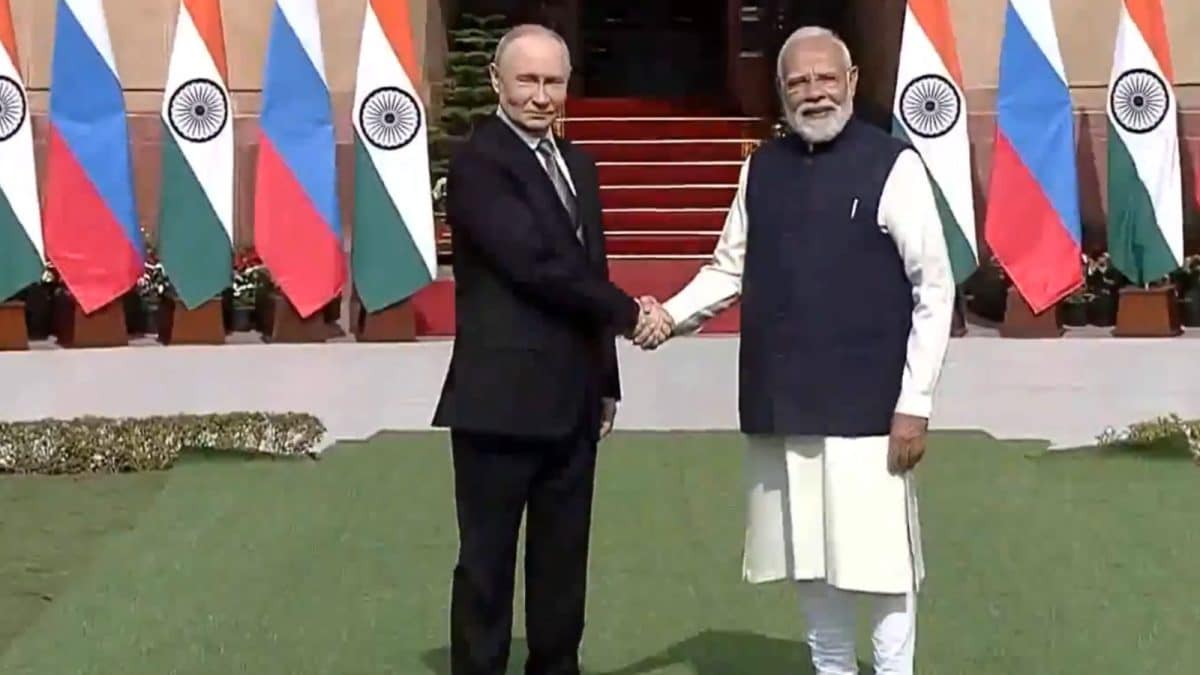 "Putin India Visit LIVE Updates: India and Russia sign Vision 2030 to boost economic cooperation, explore FTA with EEU, says PM Modi")
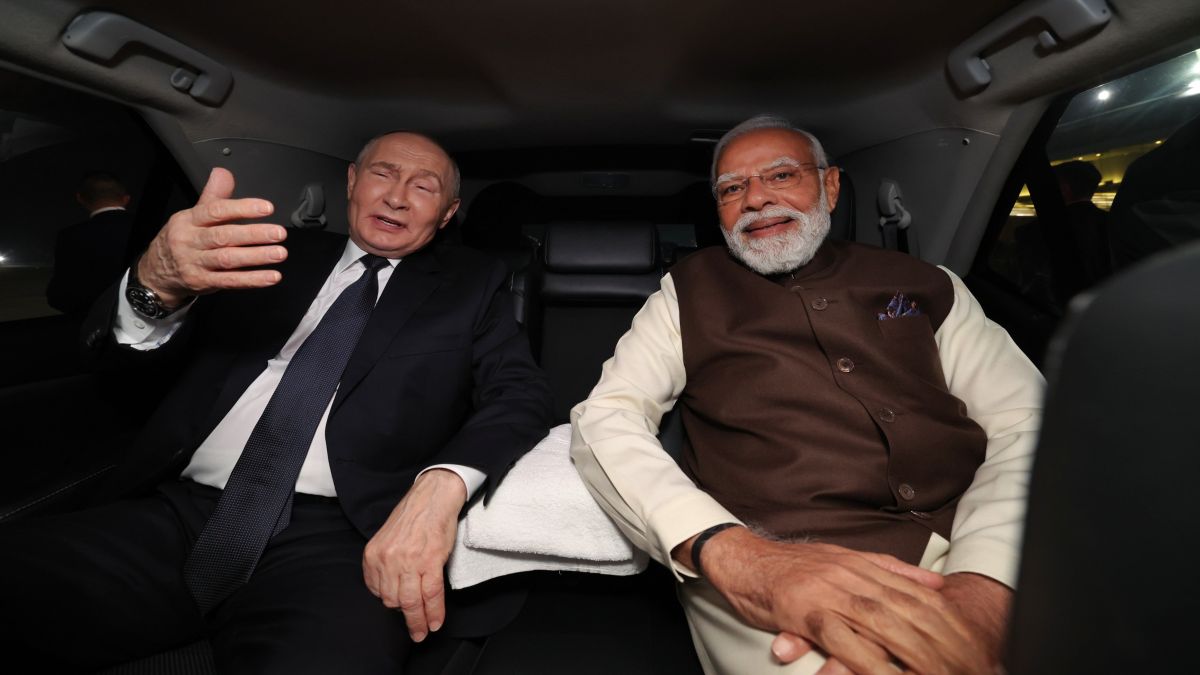 "India, Russia agree to boost trade, investments after Modi-Putin talks")
 "DGCA puts new pilot rest rule behind IndiGo flight cancellations on hold")
 "'India is not neutral...': How Modi's diplomacy has triumphed amid the Russia-Ukraine war")
 "Putin India Visit LIVE Updates: India and Russia sign Vision 2030 to boost economic cooperation, explore FTA with EEU, says PM Modi")
 "India, Russia agree to boost trade, investments after Modi-Putin talks")
 "DGCA puts new pilot rest rule behind IndiGo flight cancellations on hold")
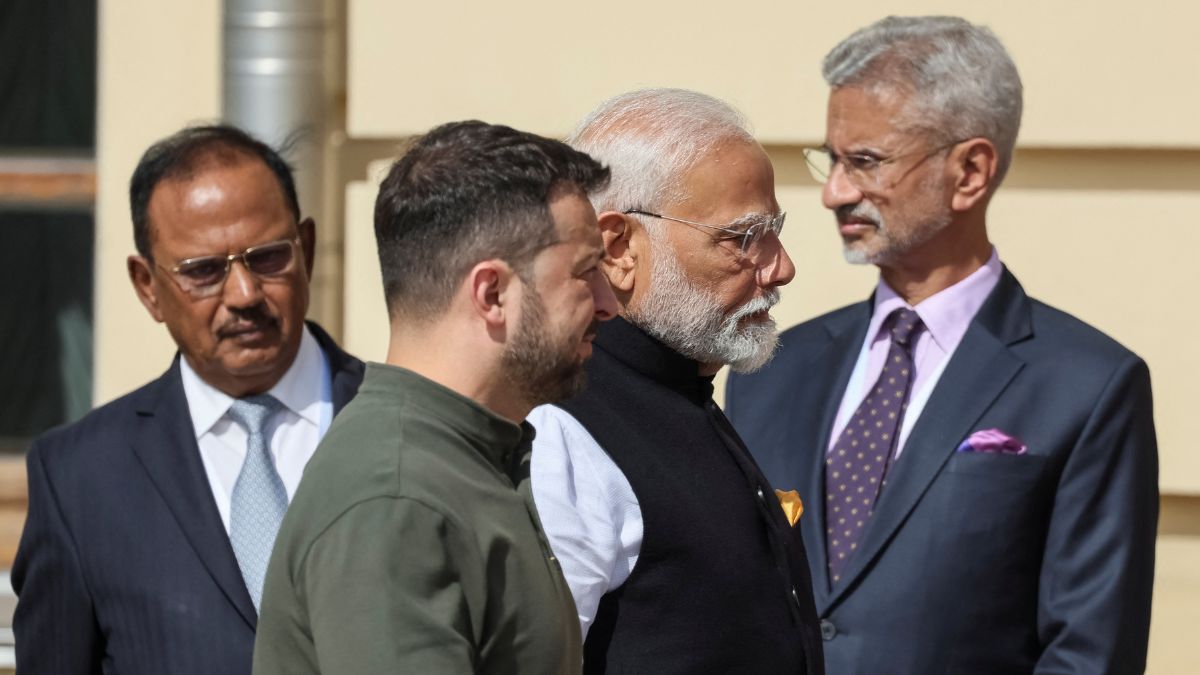 "'India is not neutral...': How Modi's diplomacy has triumphed amid the Russia-Ukraine war")



