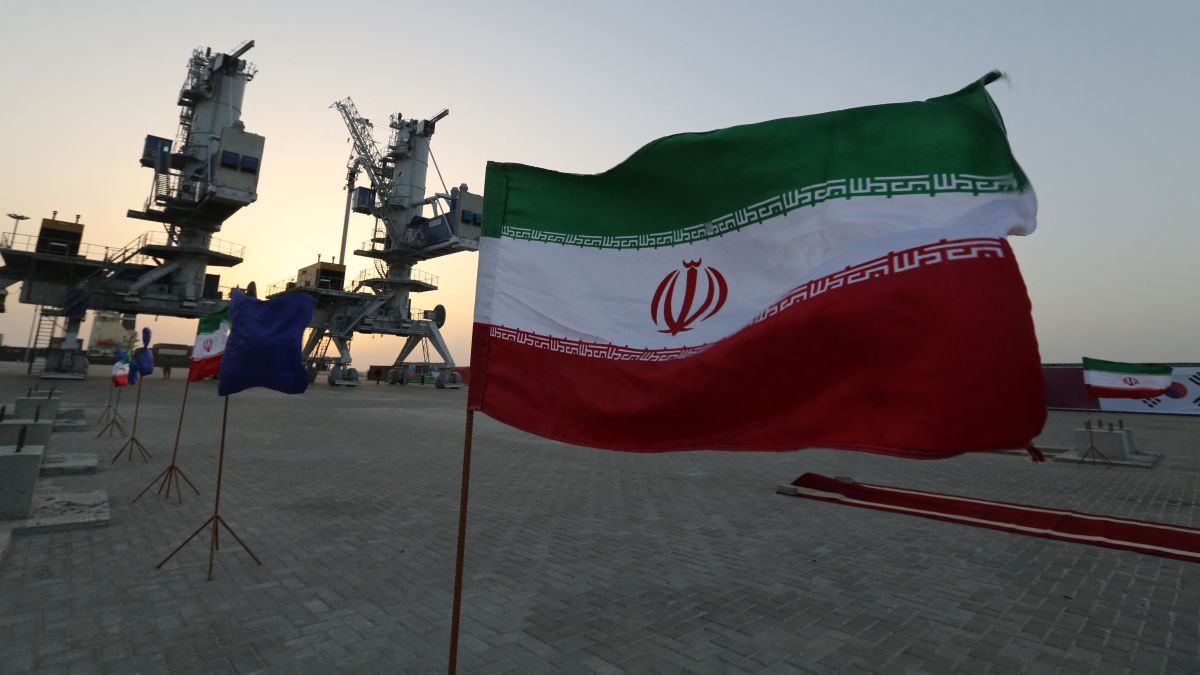
 "The Chabahar route is insulated from Pakistan’s tantrums and opens Afghanistan to broader Eurasian networks such as the International North-South Transport Corridor. Representational image")
Afghanistan is quietly but unmistakably pulling away from Pakistan and moving closer to India in ways that would have been unthinkable even a few years ago. The bridge enabling this shift is Iran’s Chabahar Port, a project India patiently nurtured for over two decades despite sanctions, obstacles and geopolitical turbulence.
Today, that investment is paying strategic dividends. A new India-Iran-Afghanistan trade corridor is taking shape, and it is rapidly rewriting old equations across South Asia. For Pakistan, this is nothing short of a nightmare unfolding before its eyes.
Over the past three months, Kabul has sent an unmistakable signal. The visits of Acting Foreign Minister Amir Khan Muttaqi and Acting Commerce Minister Nooruddin Azizi to New Delhi marked the most significant diplomatic re-engagement between India and the Taliban regime since 2021.
But beyond the optics, the message they carried was blunt: Afghanistan wants more trade with India, less dependence on Pakistan, and a structural shift in its economic orientation.
Azizi’s November 22 arrival in New Delhi made that shift explicit. Across meetings with Indian officials, his refrain remained consistent. Pakistan’s trade routes are unreliable, politically weaponised, and economically suffocating. Kabul wants to pull itself out of Islamabad’s chokehold. And the only partner capable of providing a stable, large and diversified market is India. Azizi openly stated to News18, “We request the government of India to restore the political, trade and cultural relationship that once existed between our two countries.” That is as clear a diplomatic overture as Kabul could make.
What the minister brought to the table was even more consequential. Afghanistan is offering Indian investors five-year tax holidays, free land parcels, fast-track clearances and reduced import duties. It wants Indian firms in mining, pharma, textiles, agriculture, energy, power and construction. In a symbolic but telling move, Kabul has already banned low-quality Pakistani pharmaceutical imports and is seeking Indian suppliers instead. This is economic realignment expressed in the bluntest possible terms.
Quick Reads
View AllAt the centre of this shift lies Chabahar. For Afghanistan, the port has emerged as the most stable, predictable and geopolitically neutral route to access Indian markets. For India, Chabahar was always a strategic project – its gateway to Afghanistan and Central Asia without touching Pakistani soil. Today, it is becoming a geopolitical equaliser.
India’s long-term agreement to operate terminals at Chabahar, backed by a US sanctions waiver, has triggered rapid infrastructure expansion. Warehouses, cold-storage units, multimodal terminals, and expanded berthing capacity are being developed at speed. Shipments from Chabahar to Afghanistan have grown steadily, while air corridors between Delhi, Amritsar and Kabul are being reactivated. Cargo flights, Indian officials say, will resume “very soon”. Dry ports in Nimroz and improved transit through the Zaranj-Delaram highway are tightening the supply chain.
Trade numbers reflect this momentum. Bilateral trade is already above $1 billion in 2024-25 and rising. Afghan exports of dry fruits, saffron, figs, raisins, carpets and herbs are showing a visible uptick in India. Conversely, India is exporting pharmaceuticals, wheat, sugar, machinery, electrical goods and medical equipment. Crucially, all of this is bypassing Pakistan entirely.
For Pakistan, this represents a dramatic erosion of long-held leverage. For decades, Islamabad’s geography gave it the power to dictate the economic lifeline of a landlocked Afghanistan. Border closures at Torkham and Chaman, arbitrary tariffs, harassment of Afghan traders, and frequent political arm-twisting created a relationship defined by dependency and distrust. Tonnes of Afghan goods regularly rotted at border points due to political tensions. The Taliban, despite ideological proximity, has felt the sting of Pakistan’s unpredictability just as acutely as previous Afghan governments.
Azizi confirmed in New Delhi that Pakistan has blocked border trade checkpoints, shut Afghanistan’s access to Karachi port, and halted India-Afghanistan trade through the Wagah border. In simple terms, Pakistan is using trade as a weapon. Kabul is now responding by structurally reducing its reliance on Islamabad. Chabahar is the escape hatch.
India’s investment in the Shahid Beheshti terminal at Chabahar, combined with the Zaranj-Delaram highway it constructed inside Afghanistan, has created a resilient multimodal corridor. Goods move from Indian factories to Chabahar by sea, transit into Afghanistan through Iran, and travel onwards to Kabul, Kandahar and Herat. This route is insulated from Pakistan’s tantrums and opens Afghanistan to broader Eurasian networks such as the International North-South Transport Corridor.
That said, this realignment remains fragile. Chabahar’s operations hinge on periodic US sanctions waivers; the latest, granted in October, covers only six months. Diplomatic engagement with Washington will remain essential. Furthermore, Pakistan is unlikely to accept its diminishing influence quietly. It may weaponise border militias, use proxies or engineer friction within the Taliban power structure to sabotage the trade corridor. The transition from dependency to diversification will not be smooth.
But the underlying shift is undeniable. Both India and Afghanistan are acting out of clear strategic necessity. For Kabul, battered by border clashes and economic strangulation from Pakistan, India is the obvious partner to build a sustainable import-export ecosystem. For New Delhi, re-engaging Afghanistan through trade, infrastructure and humanitarian support enhances regional influence and isolates Pakistan’s leverage.
This moment is significant beyond economics. It represents the re-emergence of an Indo-Afghan partnership grounded in shared interests and historical goodwill, functioning through new geopolitical architecture where Chabahar is the fulcrum. Whether this shift consolidates into a durable strategic realignment will depend on how deftly all sides manage the uncertainties ahead.
But one fact is now clear: Afghanistan is no longer willing to live in Pakistan’s shadow. And India is more than ready to open a door that Islamabad has spent years slamming shut.
(The writer is a techie, political analyst, and author. He pens national, geopolitical, and social issues. His social media handle is @prosenjitnth. Views expressed in the above piece are personal and solely those of the author. They do not necessarily reflect Firstpost’s views.)