

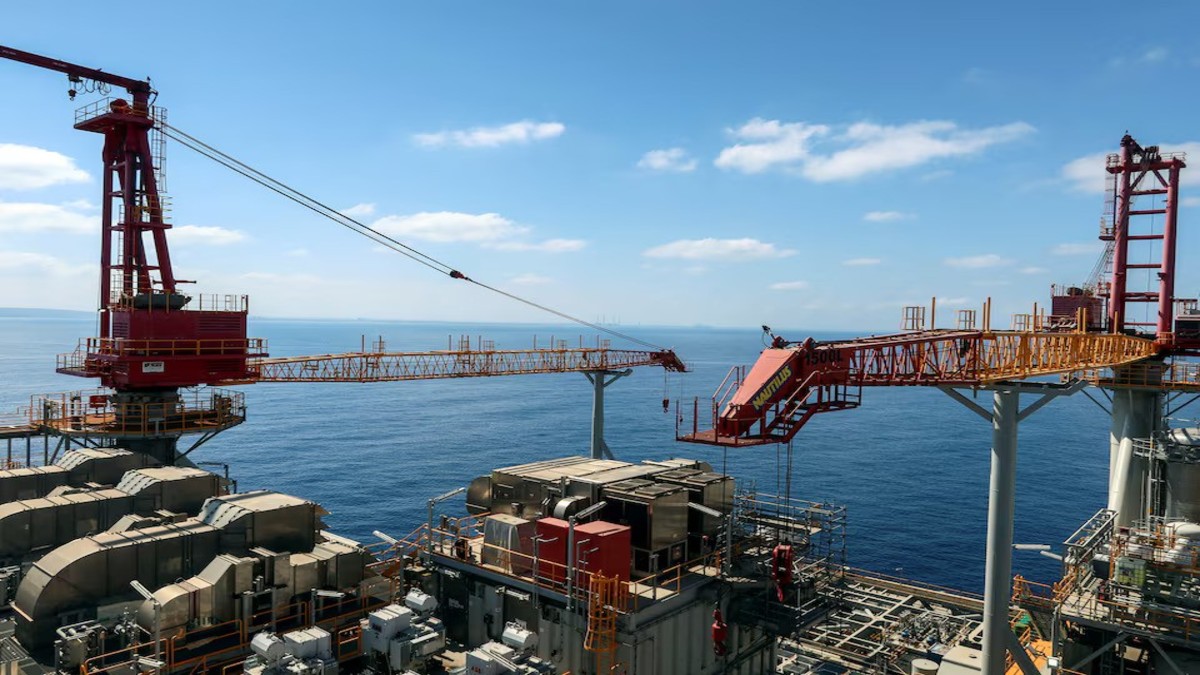
 "How the $35 billion gas deal between Israel and Egypt makes sense for the US")
With the Camp David Accords (1978), Israel bought peace with Egypt, the most-populated Arabised country in the Middle East and North Africa (MENA) region. For this deal, brokered by the then US President, Jimmy Carter, Egyptian President Anwar Sadat and Israeli Prime Minister Menachem Begin received the Nobel Peace Prize; they also signed the Egypt-Israel Peace Treaty (1979).
The accords sparked strong protests across the Muslim world. During a 1981 military parade, Egyptian Islamic Jihad terrorists, who viewed President Sadat as a ‘traitor’ and as a secular pharaoh defying Islamic principles, assassinated him.
The Palestinians, who had rejected the 1978 accord, however, later signed the Oslo Accords (1993) with Israel. Palestine Liberation Organisation (PLO) chief Yasser Arafat, once condemned by the West as a ‘terrorist’, and Israeli Prime Minister Yitzhak Rabin and Foreign Minister Shimon Peres shared the 1994 Nobel for the Oslo Accords. Outraged, Jewish extremists assassinated Rabin in 1995. In 2002, Carter also received the Nobel for his peace efforts.
These peace efforts set off alarms in the Arab-led Muslim world, psychologically ruled by war-mongering Islamic fundamentalists. Under Islamist pressure, Egypt was ostracised and expelled from the Arab League. Arab-Israel relations have since often fluctuated, and shifting peace deals have marked their history of conflicts.
But that was still an ideology-driven era of bipolarity between the US and the USSR.
No longer.
The Abraham Accords
Aware of their interlocked history of some 3,000 years, both Israel and Egypt understand the extreme sensitivity of their bilateral relations. Gradually, however, other Arab countries also improved relations with Israel while the Palestinian question remained orphaned and unresolved.
The Abraham Accords, a series of US-brokered normalisation agreements since 2020, established full diplomatic relations between Israel and some Arab and Muslim nations—the UAE, Bahrain, Morocco, and later Kazakhstan—ending decades of non-recognition and respecting their shared patriarchal figure, Prophet Abraham. Progress on the Palestinian statehood issue, however, still remains a major hurdle for further expansion of the peace deal, especially with Saudi Arabia.
Quick Reads
View AllThe October 2023 Hamas invasion of southern Israel and what followed vitiated Arab-Israel relations again. But war has its own ‘logic’, and business sense.
It is in this backdrop that, in December 2025, Prime Minister Benjamin Netanyahu announced that Israel would sell natural gas worth nearly $34.7 billion to Egypt over the next 15 years (2026-2040); this is Israel’s largest-ever gas deal. The ‘secret’ decision came amid US President Donald Trump-brokered efforts to bring peace to the Gaza Strip—with a business angle, and a potential Nobel Peace Prize for himself in 2026.
Egypt’s Energy Hunger
Unlike other hydrocarbon-rich Arab states, Egypt is energy-deficient. Despite being the most-populated Arab nation, it remains relatively poor and depends on energy imports. Its economy focuses on revenues from agriculture, the Suez Canal, and tourism. Its poverty rate in 2022 was 27.9 per cent, and it ranked 130th out of 180 countries.
It is in this context that this gas deal with Israel, as Egypt’s lifeline, assumes importance—but it also has to deal with realities like Islamic terror, ties with the Palestinians, and relations with other Arabs.
If the gas deal succeeds, Egypt will get nearly 130 billion cubic metres (bcm) of natural gas from Israel’s offshore Leviathan field in the Mediterranean Sea, which is operated by a consortium including the US energy giant Chevron and Israeli partners like NewMed Energy. About 50 per cent of the proceeds ($18 billion) are expected to go to the Israeli treasury, funding sectors like education, healthcare, and security.
Cairo uses the Israeli gas to generate electric power and run factories, and exports some of it to Europe and other destinations through two liquefied natural gas (LNG) terminals on the country’s Mediterranean coast. Chevron, which is now the key player in Israel’s energy industry, may use its position in Israel, Egypt and Cyprus as a regional springboard to become a major gas exporter to Europe, which is trying to reduce dependence on Russian hydrocarbons because of the Ukraine war.
Netanyahu’s announcement came amid strained relations with his Arab neighbours due to the Gaza war. Egypt asserted the deal is “purely commercial”, with no political dimensions. The deal came weeks after Washington’s pressure on Tel Aviv, as the US seeks to reassert control over geopolitics in the MENA region, where China had made inroads during the Joe Biden presidency (2021-25).
Egypt, sharing borders with both Israel and Gaza, has served as a key mediator between the Jewish state and Hamas leading up to the US-brokered ceasefire agreed in October. Cairo has also been a vocal critic of Israel’s counter-offensive after October 2023, which has killed nearly 70,000 Palestinians and caused widespread destruction in Gaza.
But business, after all, is business.
Natural Gas Discovery
Israel discovered significant natural gas fields off its Mediterranean coast in the early 2000s and began exporting gas—first to Jordan and later to Egypt—nearly a decade ago. It signed an export agreement in August 2025 with Chevron and its partners to supply gas worth $35 billion to Egypt from the Leviathan natural gas field. Gas is vital to Israel’s economy as well, accounting for about 70 per cent of electric power generation. Israeli gas accounts for some 15-20 per cent of Egypt’s consumption.
Netanyahu said the gas deal would bolster Israel’s regional position, generate about $18 billion in taxes and other revenue over time, and help to ensure that energy prices remain affordable for Israeli consumers.
“This deal greatly strengthens Israel’s status as a regional energy power and contributes to stability in our region,” he said.
Even amid the ongoing war in Gaza, business talks continued between Israel and Egypt. The owners of the Leviathan gas field—Chevron and NewMed—said in August they had reached an agreement to significantly increase and extend a 2019 deal.
Natural gas from Leviathan, one of the world’s largest deep-water gas discoveries, started to flow to the Israeli domestic market in December 2019. As of September 2025, Leviathan had supplied 23.5 billion cubic metres of gas to Egypt.
Gaza: A Realtor’s Dream
Israel and Egypt both control access to the war-torn Gaza Strip. Trump sees in war-torn Gaza—and Ukraine—a massive ‘redevelopment’ opportunity for American real estate tycoons, including his own family. It was among the reasons that he rushed through and brokered a ceasefire in October 2025 between Israel and Hamas in Gaza with Egypt’s help.
In February 2025, just a month after he returned to the White House for a second term, Trump may have smelt these opportunities. For, he proposed that the US take over Gaza, and permanently relocate more than 2 million residents. He wanted to develop the Palestinian territory, asserting that Gaza could become the “Riviera of the Middle East”.
His plans sparked outrage and swift rejection from Palestinians and their Arab allies in the region; but deft US diplomacy persuaded the Arabs to look at the long-term goals and the larger picture, and cool down, much as Trump arm-twisted and nearly isolated Ukraine likewise.
According to reports, the US had already secured commitments from Egypt, Qatar, the UAE, the UK, Italy and Germany to have their leaders join Trump on the Board of Peace that will oversee the post-war management of Gaza. To keep the Hamas-led Palestinians in the Gaza Strip in check, he may martyr the non-Arab Turkish-Pakistani soldiers as ‘peacekeepers’.
War & Peace: The Big Business
US President Calvin Coolidge said in January 1925: “After all, the chief business of the American people is business. They are profoundly concerned with producing, buying, selling, investing and prospering in the world.”
Exactly a century later, Trump said of himself: “I’m a dealmaker. I’ve made deals all my life. I do really well. I make great deals.”
Overseas wars make gun-manufacturers laugh at home; peace creates redevelopment business overseas.
Bravo!
(The author is a senior journalist. Views expressed in the above piece are personal and solely those of the author. They do not necessarily reflect Firstpost’s views.)

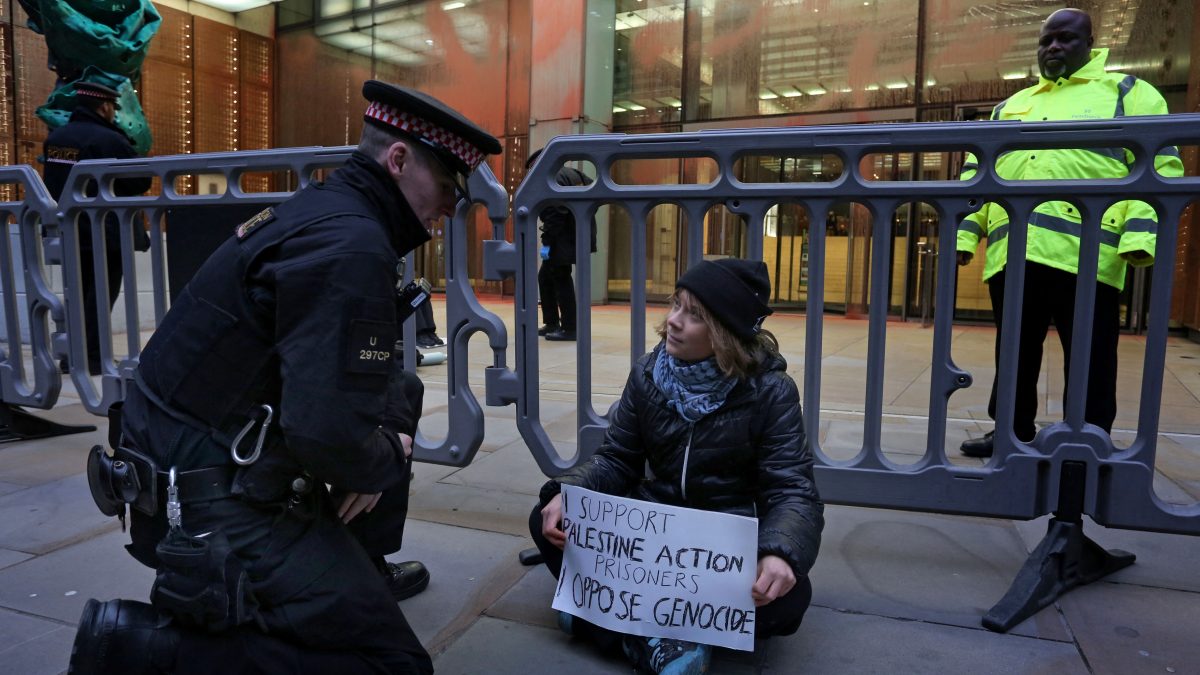 "Swedish activist Greta Thunberg arrested at 'Prisoners For Palestine' protest in London")
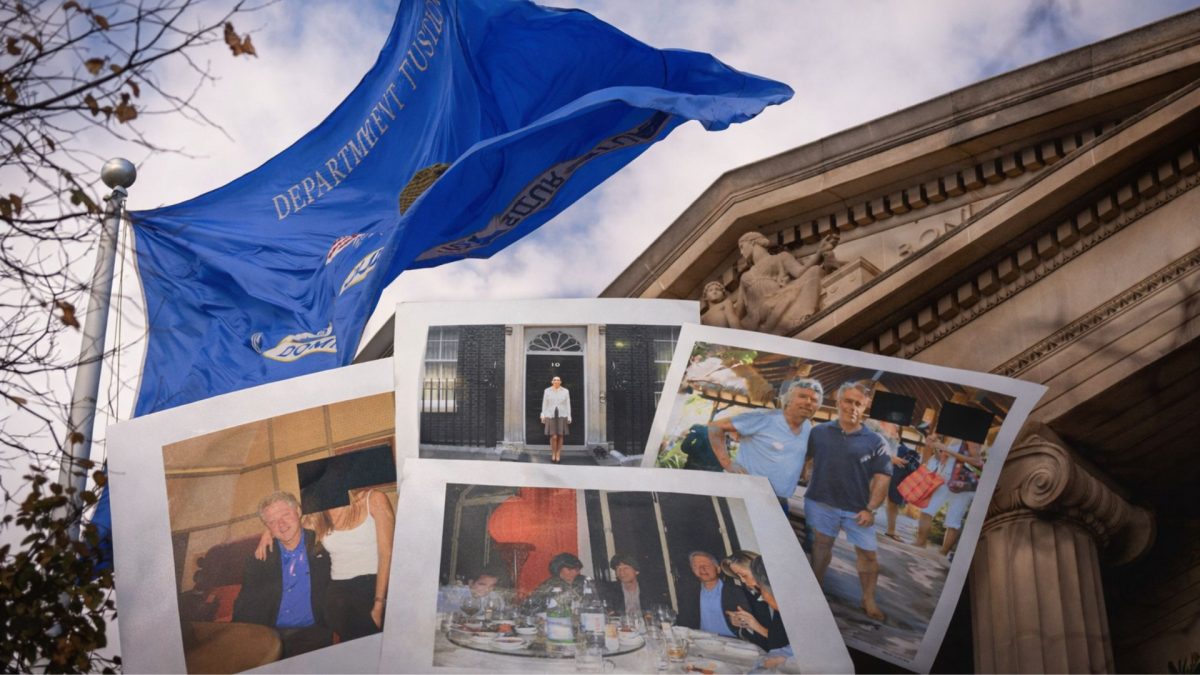 "8,000 new Epstein-linked documents out, DoJ urges caution on Trump references")
 "Why is the New Zealand foreign minister opposing the free trade deal with India?")
 "Ukraine war defence contracts push Russian manufacturers to breaking point")
 "Swedish activist Greta Thunberg arrested at 'Prisoners For Palestine' protest in London")
 "8,000 new Epstein-linked documents out, DoJ urges caution on Trump references")
 "Why is the New Zealand foreign minister opposing the free trade deal with India?")
 "Ukraine war defence contracts push Russian manufacturers to breaking point")



