

 "India’s foreign policy: The unique challenge of Bangladesh")
The act of wait and watch doesn’t hold much attraction to the watchers of foreign policy. However, at times, a nation’s best interest is served by doing nothing. In the post-Sheikh Hasina Bangladesh, New Delhi is faced with a predicament. It cannot oblige the demands of the Interim Government to extradite Hasina. And without resetting the ties, Bangladesh could drift away from New Delhi’s arc of influence. In this context, exercising patience could provide New Delhi with an opportunity to pause, allowing Dhaka to navigate its pressing internal challenges.
Indian concerns
Ever since the collapse of the Awami League (AL) government, the retributive mob consisting of students, extremists, and opportunist criminals targeting the Hindu minorities in Bangladesh who are considered to be supporters of the party, has been criticised by New Delhi. The latter has repeatedly called for their protection, albeit to no avail. A wave of anti-India sentiment has seemingly enveloped Bangladesh. Even the statements of the members of the Interim Government have fanned such sentiments. The Indian Ministry of External Affairs (MEA)’s repeated assurances that it desires “a positive, constructive and mutually beneficial relationship with Dhaka” have few takers in that country.
New Delhi has reasons to believe that attacks on the religious minorities were a byproduct of the larger space now available to the radical Islamists in the country to operate with a sense of impunity. Incidents have ranged from attacks on Hindu places of worship across the country to stopping women from playing a game of football. These indicate that the Islamists, who had been kept under check by the AL government, not only sense an opportunity to advance their agenda, they are doing so under some degree of patronage from the Interim Government. While statements of most of the Interim Government’s advisers have been consistently anti-Hasina, they have remained completely silent on this strengthening of the radicals. The unchecked growth of Islamist radicalism in India’s neighbourhood can be a matter of huge concern.
Further, what also alarms India in the security sphere is the Interim government’s attempts to forge strong ties with Islamabad, reversing the decade-old policy of the AL government. Members of the Interim Government have downgraded the key role India played in Bangladesh’ war of liberation to that of an ally, and nothing more. On the other hand, the Pakistan embassy in Gulshan-II area is abuzz with activity, coordinating several high-profile visits of army, ISI officials and businessmen to Dhaka, and arranging cultural shows of Pakistani artists. India-Pakistan relations in most theatres are a zero-sum game. India’s influence in Dhaka had risen during the AL regime. However, the rapid rise of Islamabad’s profile, even when the opposition Bangladesh Nationalist Party (BNP) isn’t in power, has come as a surprise to New Delhi.
Quick Reads
View AllIndia’s policy
The beginning of India’s predicament in Bangladesh can be traced to the hospitality New Delhi extended to a fleeing Sheikh Hasina. The expectation at that time probably was that India would not be her permanent place of residence. However, negotiations to relocate her to a third country did not materialise. Since then, calls for her extradition to Bangladesh by the Interim Government officials have grown in frequency and shrill. The press secretary to the Chief Advisor has regularly called her using different synonyms of the word ‘autocrat’.
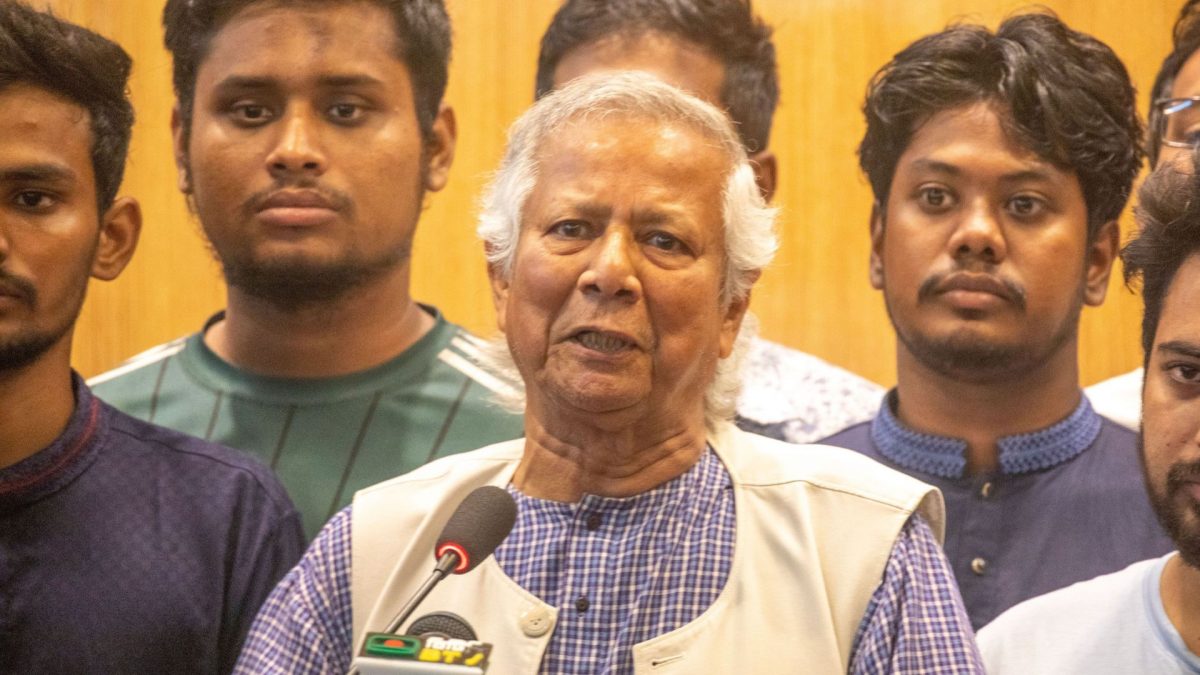
The first phase of New Delhi’s policy was that of outreach. While it seemed to have advised Hasina to keep mum, the Indian ambassador reached out to the Interim Government on multiple occasions. He assured that India, despite providing a shelter to Hasina, stands with the people of Bangladesh and intends to maintain its strong ties with Dhaka. Continuing India’s outreach, India’s foreign secretary visited Dhaka in December 2024, met the Chief Advisor, and reiterated India’s concern about the state of minorities in Bangladesh. In response, Chief Advisor Muhammad Yunus, who described India-Bangladesh relations as ‘strong’, also raised the issue of Hasina’s stay in India.
However, responding to the unceasing attacks on the minorities and Dhaka’s growing proximity with Islamabad, which were interpreted as an undeterred Interim Government unveiling its policies directly challenging India, New Delhi lifted the embargo on Hasina, letting her vent out on online forums. The revised policy probably concludes that India-Bangladesh relations won’t be the same again without the AL at the helm of affairs. Hence, it seeks to use her to activate the persecuted AL cadre base in Bangladesh. Such a policy is fraught with risks, but a gamble New Delhi possibly considers every penny’s worth to force the Interim Government to deal with a country-wide instability.
So far, it has been a game of wits between Dhaka and New Delhi. Hasina’s online speech that targeted the Interim Government was matched by a ‘bulldozer march’ in the heart of Dhaka, which appeared spontaneous, but clearly could not have been organized with the authorities looking the other way. With the security forces choosing to disappear from the scene, ‘agitated students’ gathered in Dhanmondi 32 in front of the house of Bangladesh’s father of the nation and Hasina’s father, Sheikh Mujibur Rahman and used a bulldozer to bring the national monument down. Similar incidents of defacing Mujib’s statues and attacks on the houses of AL leaders were reported from various parts of the country. The Interim Government did little else other than feebly criticising the act, indirectly blaming Hasina for stoking the anger of the people of Bangladesh. While Dhaka summoned India’s deputy chief of mission to object to Hasina’s speech, New Delhi returned the favours by protesting the “persistent negativity” created by the administrative leadership’s statements in Dhaka.
Light at the end of the tunnel
The performance of the Interim Government with Muhammad Yunus at the helm in Bangladesh, which has a self-proclaimed role of reforms without a clear time frame, especially on the law and order front, has been poor. While legal actions have been initiated against the AL leaders and members, and anybody seen as sympathising with the erstwhile Hasina regime, the arsonists, who are mostly the students of various colleges and universities, continue to operate with impunity. The Interim Government, which owes its existence to a violent student movement, feels obliged not just to cater to their demands, but also to ignore their organised acts of violence. In the name of bringing the law and order situation under control, the Interim Government has started a special drive ‘Operation Devil Hunt’ on 8 February 2025. However, the drive is unlikely to target anyone other than the AL members across the country.
Anti-AL sentiments are all pervasive, albeit justifiably. But no attempt is being made to prevent the state of affairs lapsing into a specter of chaos in which anti-Indian Islamists are calling the shots. The Interim Government continuing to link Hasina’s extradition to Bangladesh with improving ties with India makes the bilateral relations a non-starter, to begin with.
In this backdrop, New Delhi’s current options in Dhaka are limited. Neither is it in a position to satisfy the demands of the Interim Government to extradite Hasina, nor is it able to forge ties with any political entity in that country, as long as it hosts Hasina on its soil. Hasina’s statements are likely to further worsen the conditions of anyone in Bangladesh considered to be her ally or sympathiser—be it the AL workers, the religious minorities, or the members of the civil society and the press.
The current bleak situation in Bangladesh does not necessarily mean that the future is hopeless for India. The final endgame in Dhaka is yet to fully unfold. The Interim Government’s eagerness to carry out reforms and postpone elections indefinitely will likely clash with the political ambitions of a restless BNP. As the economy stagnates, both the leaders in Dhaka and the students protesting in the streets will eventually realise the futility of trying to replace India with an economically struggling Pakistan. New Delhi can afford to wait and observe as Bangladesh struggles with its challenges until it reaches a breaking point. The state of turmoil is bound to produce rational leaders in that country who would discover the wisdom of extending a hand of friendship towards New Delhi.
The writer is the Director of Mantraya, a Goa-based research forum and the author of ‘National Security Decision-making in India’. He formerly served as a Deputy Director in the National Security Council Secretariat. He tweets @BibhuRoutray. Views expressed in the above piece are personal and solely those of the author. They do not necessarily reflect Firstpost’s views.

 "UAE to host first 'trilateral' talks between Ukraine, US and Russia, says Zelenskyy")
 "Trump finds new raid target? Report says US actively seeking regime change in Cuba by 2026-end")
 "Power shift in Hanoi: Vietnam party list hints PM and president losing clout")
 "Can Trump’s Board of Peace replace the United Nations?")
 "UAE to host first 'trilateral' talks between Ukraine, US and Russia, says Zelenskyy")
 "Trump finds new raid target? Report says US actively seeking regime change in Cuba by 2026-end")
 "Power shift in Hanoi: Vietnam party list hints PM and president losing clout")
 "Can Trump’s Board of Peace replace the United Nations?")



