"Iran is not fighting for liberalism: How feminism is misreading the moment")
The hijab has become the most overworked symbol in contemporary politics. For the Iranian state, it is authority stitched into cloth. For Western liberals, it is shorthand for freedom denied. For sections of the global left, it is a site to perform anti-imperial virtue. What gets lost in this noisy triangulation is a more unsettling truth: the hijab is not the argument in Iran, it is the instrument.
Iran today is not witnessing a cultural rebellion against religion, nor a straightforward march towards Western liberalism. What is unfolding is a legitimacy crisis inside one of the world’s oldest continuous civilisations, where power has mistaken control for continuity and obedience for belief. Feminism, particularly in its Western and left-liberal forms, has struggled to read this moment because it insists on flattening Iran into ideological categories rather than historical time.
The protests that erupted after the death of Mahsa (Jina) Amini in September 2022 were remarkable not merely for their scale — though conservative human rights estimates indicate that more than 500 people were killed and over 20,000 detained in the months that followed — but for their political clarity. What distinguished this uprising from earlier waves of dissent was the precision of its moral claim.
The slogan “Woman, Life, Freedom” did not articulate a demand for liberal aesthetics or cultural imitation; it functioned as an indictment of a state that had forfeited moral authority over the most ordinary domains of life. Across cities and social classes, participants repeatedly stressed that their mobilisation extended far beyond compulsory dress codes.
What was being contested was a system that reduced citizenship to compliance, dignity to permission, and autonomy to a punishable offence — a sentiment condensed, with striking economy, in the chant that came to define the movement.
To understand why this matters, one must abandon linear thinking. Iran does not move neatly from “religious” to “secular” to “liberal”. It never has. Iranian history oscillates between civilisational memory, foreign humiliation, ideological assertion and internal revolt. The Islamic Republic itself was not born of medieval nostalgia but of modern anger against a Western-backed monarchy, cultural deracination and political subordination. Religion became the language of power because it was the only idiom capable of mobilising mass legitimacy in a society that had seen modernity arrive as domination.
The problem is that revolutions age. What once feels emancipatory can harden into dogma. The Islamic Republic survived its early decades because it retained belief, even among critics. What it faces now is not disobedience alone, but disbelief. A state can survive protest; it cannot survive the evaporation of consent. Iranian women expose this fracture more sharply than any manifesto ever could. Their resistance is not symbolic rebellion; it is political clarity.
This is why the regime reacts with disproportionate force. The morality police are not defending theology; they are compensating for eroding legitimacy. A system confident in its authority does not need to patrol hair strands. A civilisation secure in itself does not need to criminalise choice. Women have become the frontline not because they are vulnerable, but because they reveal the regime’s deepest fear: a society that obeys without believing.
Here is where global feminism falters — not morally, but analytically. Western liberal feminism instinctively frames the Iranian struggle as a fight for secular freedom, often collapsing it into the visual economy of unveiled hair and burning scarves. Left feminism, more cautious, warns against “imperial feminism”, the long history of Western powers instrumentalising women’s rights to justify sanctions, interventions, and moral superiority. This critique is valid. But it has curdled into something else.
In practice, much of left feminism now recognises resistance only when it speaks the correct ideological grammar. It must be explicitly anti-capitalist, suspicious of civilisational identity, and legible to global activist discourse. Iranian women do not comply with this template. Their resistance is rooted not in imported theory but in lived contradiction: educated, urban, digitally connected citizens governed by a clerical elite that no longer reflects social reality. As Iranian sociologist Asef Bayat has noted, these are not revolutionary subjects seeking utopia, but ordinary people demanding dignity.
This creates discomfort. Iranian women refuse to remain symbolic victims, yet they also refuse to perform liberal conversion narratives. They do not ask to be saved by sanctions, nor do they couch their struggle in Western feminist vocabulary. They assert agency on their own terms, inside a civilisation that predates every ideology currently competing to explain them. That refusal breaks the hierarchy.
There is a contradiction at the heart of contemporary left feminism. It claims to oppose power structures, yet quietly enforces one. Resistance is celebrated when it aligns with progressive aesthetics; it is diluted when it threatens deeper structures of authority, identity, or historical continuity. When Iranian women chant against clerical control, they are applauded. When they expose the exhaustion of an entire political system, analysis becomes evasive. This is not solidarity. It is narrative management.
Iran’s crisis, it must be said plainly, is not religious. It is political. Religion does not doom states; illegitimacy does. The Islamic Republic’s failure lies not in being Islamic, but in being unable to renew its claim to govern. Durable civilisations metabolise dissent; brittle systems criminalise it. Iran’s leadership chose the latter. That choice explains why protests recur, why repression intensifies, and why the state looks powerful while feeling increasingly hollow.
Some observers imagine Iran will “return” to its pre-Islamic, Zoroastrian past. Others insist it must become a Western-style liberal democracy to survive. Both are fantasies born of impatience. Iran will not resurrect ancient religion as governance, nor will it become liberal by symbolic defiance alone. What is emerging instead is more unsettling: a post-clerical society, culturally rooted, historically conscious, and deeply sceptical of guardianship, whether imposed by mosque, monarchy, or NGO.
The future Iranian woman is not a liberal mascot or a religious subject. She is a political adult refusing to be managed. That is what frightens the clerical state. It unsettles Western liberals who seek validation of universality. And it troubles left feminists who are uncomfortable with resistance they cannot categorise.
Iranian women are not asking to be saved, sanctioned or symbolised. They are asking to be taken seriously — not as metaphors, but as political actors in a civilisation that has outlived every empire that tried to define it for them. That demand is far more radical than any slogan.
And far harder to control.
(The author, a practising advocate, writes articles on women’s rights, politics and law. Views expressed in the above piece are personal and solely those of the author. They do not necessarily reflect Firstpost’s views)

 "Trump officially launches ‘Board of Peace' in Davos with 19 founding members")
 "Bangladesh T20 World Cup participation LIVE Updates: Bangladesh confirm they will not travel to India")
 "US never owned Greenland. So how did it ‘give it back’ to Denmark as Trump claims?")
 "‘Hold perpetrators responsible’: Indian embassy trespassed in Croatia, MEA seeks strong action")
 "Trump officially launches ‘Board of Peace' in Davos with 19 founding members")
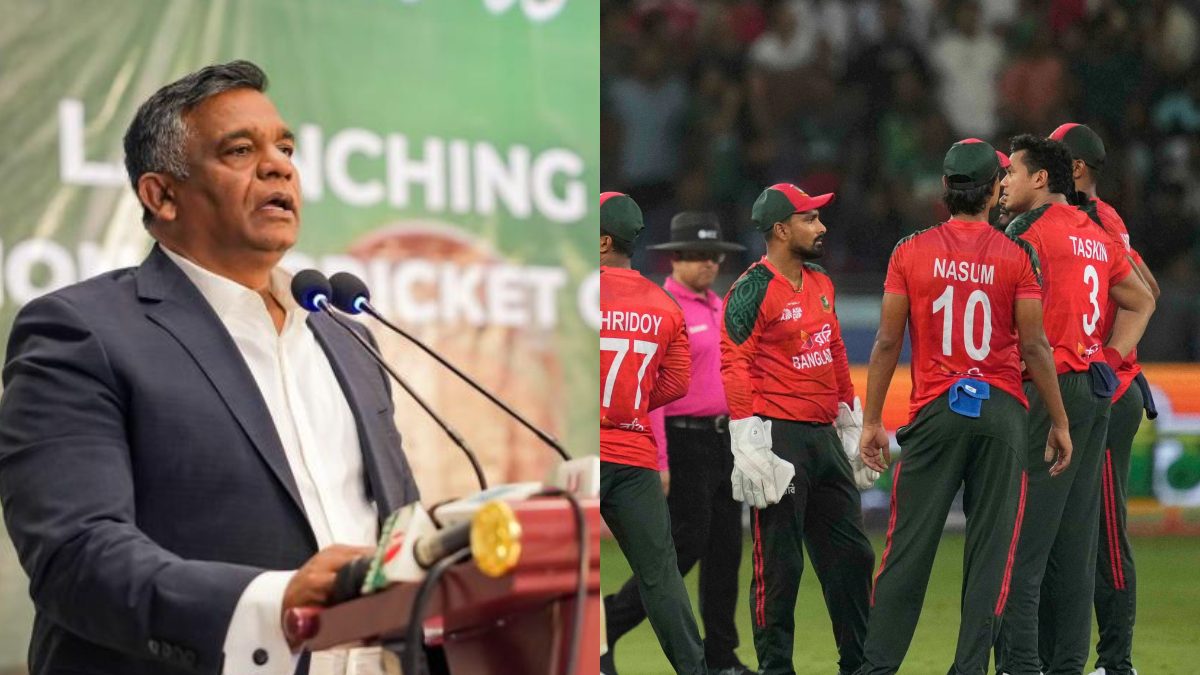 "Bangladesh T20 World Cup participation LIVE Updates: Bangladesh confirm they will not travel to India")
 "US never owned Greenland. So how did it ‘give it back’ to Denmark as Trump claims?")
 "‘Hold perpetrators responsible’: Indian embassy trespassed in Croatia, MEA seeks strong action")