

 "India’s Brics presidency and US chairing G20 will test New Delhi’s diplomatic balancing in 2026")
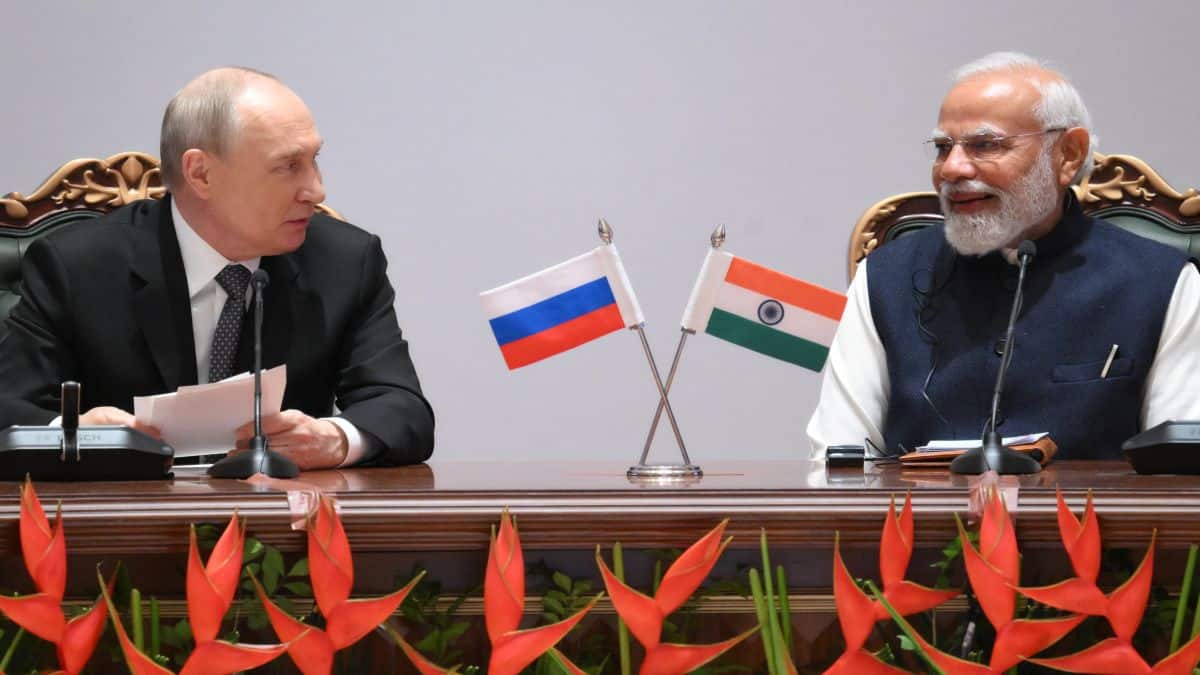
Multilateralism is entering a difficult phase. Power is more diffused, trust is low, and the capacity of large institutions to solve problems has declined. Against this backdrop, 2026 offers an unusual moment. India will chair Brics at a time when the group is trying to redefine itself after expansion. The United States will hold the G20 presidency as it attempts to rebuild confidence in the global economic order. The two presidencies will not compete directly, but they will reveal how countries are trying to shape a system that no longer has a clear centre of gravity.
This convergence also places India in an interesting position. As a country that speaks for the Global South while maintaining deep ties with Western partners, India’s diplomacy in 2026 will be closely watched. The year will show whether parallel platforms can complement each other or drift further apart, making global cooperation even harder.
The contrast between Brics and the G20 is sharper today than when Brics first gained traction in the late 2000s. Brics presents itself as a coalition of emerging powers seeking fairer representation in global institutions. With new members joining, it has started to look more like a political space for the Global South to coordinate positions on development, energy and finance.
The G20, while more diverse than the G7, remains driven by advanced economies seeking to manage global risks through established institutions. India’s task is to operate inside both worlds without being trapped by their contradictions. It has long been argued that multilateralism needs reform, not rejection. This makes it an essential actor in the search for a middle path.
Quick Reads
View AllYet the gap between the two platforms is growing. Brics members increasingly stress strategic autonomy and multipolarity, while the G20 focuses on stability, regulation and rebuilding norms that have weakened over the last decade. India has ties, interests and responsibilities in both directions.
The year 2026 is shaping up to be a crucial period for global governance. India will chair Brics at a time when the grouping has expanded and carries new expectations. The United States will lead the G20 with its own goal to stabilise an international order that has become more fragmented and unpredictable. The two presidencies will run in parallel, and together they provide a window into how multilateralism is evolving amid heightened geopolitical shifts and rising demands from the Global South.
Multilateral institutions are facing pressure from all directions. Major powers disagree on norms, middle powers seek greater voice and influence, and developing countries want reforms that reflect economic realities rather than old hierarchies. India’s Brics chairmanship and the US G20 presidency will highlight these contrasting visions. Brics represents an attempt to reimagine global leadership by giving non-Western voices a central role. The G20, under Washington’s leadership, is likely to promote renewed commitment to collective action on growth, finance, and technology, but with a Western focus.
India is uniquely positioned between these worlds. It has credibility in the Global South but is also deepening strategic ties with Western allies. This dual identity makes 2026 a year of diplomatic balancing for New Delhi. Brics has grown rapidly, welcoming new members with diverse priorities. The grouping is no longer a compact economic club but a broad political coalition with varied interests. This offers both opportunities and risks for India. On one hand, a larger Brics enables India to influence a wide Global South agenda on development, energy, finance, and technology.
On the other, China’s influence within the group remains significant, and New Delhi must ensure that Brics does not shift towards a China-centric platform. India’s core strength is in practical cooperation: strengthening the New Development Bank, encouraging transparent development financing, and facilitating dialogue on digital governance. These fields allow India to take a leadership role without getting caught up in great-power rivalry.
The United States enters the G20 presidency at a time when the institution’s coherence has weakened. Divisions over Ukraine, trade, and technology have made consensus harder. Washington is expected to use its presidency to revive confidence in the G20 as a platform that can deliver. Issues such as global financial stability, debt restructuring and climate financing will dominate, and the United States will try to bring advanced economies and key emerging powers onto a shared agenda.
For India, this is an opportunity to build on its successful G20 presidency in 2023. Many of the priorities New Delhi championed, such as digital public infrastructure, inclusive growth and climate-centric development, are likely to reappear in 2026. India may find room to shape G20 outcomes by coordinating with both developed partners and developing coalitions.
The broader question is what these presidencies say about the global order. The rise of mini-lateral and issue-based coalitions shows that states no longer see large institutions as the only arena for cooperation. At the same time, no single grouping is strong enough to replace them. This creates a patchwork order in which countries navigate multiple platforms based on their interests, not ideology.
India is comfortable in this flexible environment. It is a member of Brics, the Quad, the G20, the SCO and several Indo-Pacific frameworks. Its approach is pragmatic, not doctrinal: work with whoever is necessary to achieve outcomes. In 2026, this pragmatism will be tested as India balances expectations across very different tables.
The coincidence of India leading Brics and the United States leading the G20 makes 2026 a revealing year for the future of multilateralism. It is not simply a story of competition between two platforms. It is a moment that shows how fluid the international system has become and how central middle powers have grown in shaping its direction.
For India, the challenge is to leverage these parallel roles to advance a more inclusive and stable order without being drawn into binary alignments. Its ability to work across divides, build coalitions and deliver practical outcomes will determine how effectively it can shape the next phase of global governance.
(The author is an assistant professor at Bennett University. Views expressed are personal and do not necessarily reflect those of Firstpost.)

 "Thailand launches airstrikes on Cambodia in a setback to Trump's ceasefire deal")
 "'Not hawkish or dovish': 5 key things for Asia in Trump's new national security policy")
 "'With China, it's always we verify': Trump's top aide on trade deal with Beijing")
 "Why the Goa nightclub fire, which killed 25, was so difficult to contain")
 "Thailand launches airstrikes on Cambodia in a setback to Trump's ceasefire deal")
 "'Not hawkish or dovish': 5 key things for Asia in Trump's new national security policy")
 "'With China, it's always we verify': Trump's top aide on trade deal with Beijing")
 "Why the Goa nightclub fire, which killed 25, was so difficult to contain")



