

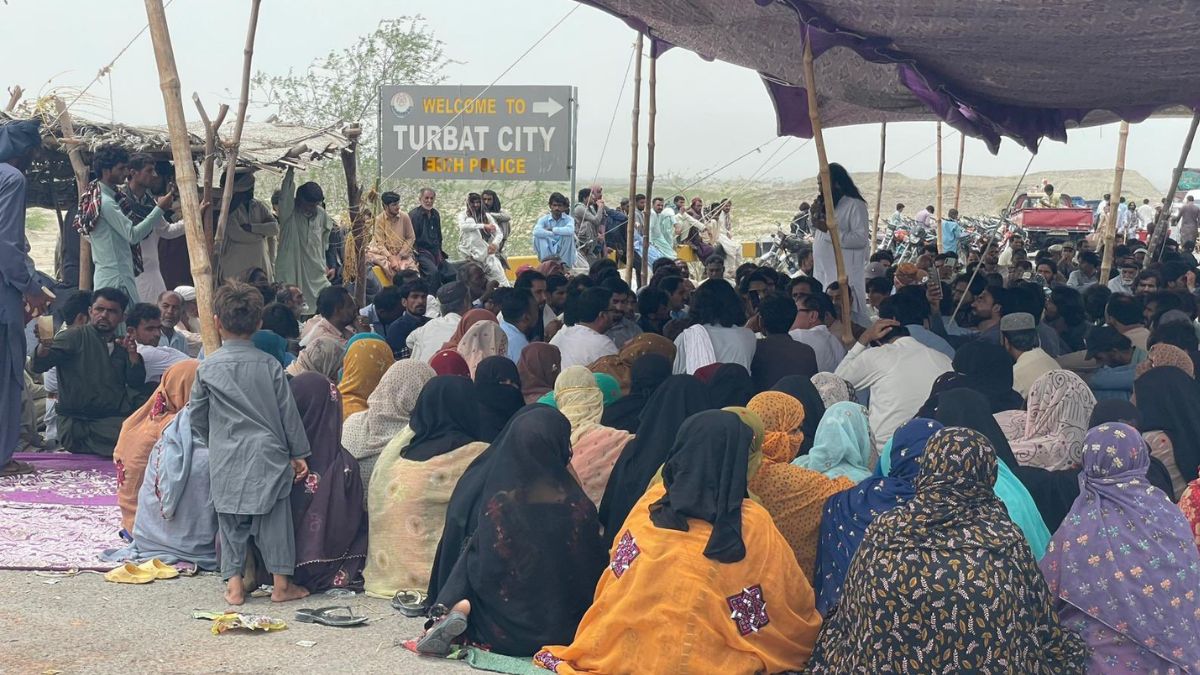
 "New report, old realities: Balochistan remains under Pakistan’s brutal siege")
Balochistan is a state where Pakistan has done violence of the highest level. This assertion, backed by years of field reports, survivor testimonies and human-rights investigations, is once again reaffirmed by the most recent October 2025 findings released by Paank, one of the most active organisations documenting enforced disappearances and extrajudicial killings in the region.
The report describes a continuous, structured and patterned use of force by Pakistani state institutions and armed groups operating under their patronage. What emerges is not a fragmented picture of localised abuses, but the anatomy of a long-running counterinsurgency model that has turned an entire population into a suspect class. The data compiled by Paank throughout 2025 forms an indispensable context to understand the gravity of the October report.
Earlier in the year, human-rights monitors documented 785 enforced disappearances and 121 extrajudicial killings in just the first six months. This rhythm of violence approximates four disappearances per day and at least one killing every twenty-four hours. Such statistics are not incidental, nor are they the by-product of occasional escalations. They reveal a systematic security doctrine in which forced disappearance has become an administrative tool and death an unofficial extension of state authority.
In June 2025 alone, the organisation recorded 84 enforced disappearances and 33 extrajudicial killings across fourteen districts. In many of these cases, the individuals were taken in broad daylight, in front of witnesses, or during raids that lacked legal warrants. Those who returned alive described prolonged interrogations, torture, psychological coercion and indefinite detention in undisclosed facilities.
These testimonies are critical to understanding the socio-political ecology of repression in Balochistan: they reveal a pattern where the state’s violence is not simply about neutralising armed groups but about reshaping the emotional, social and psychological landscape of an entire people.
Quick Reads
View AllMechanisms of Fear and Control
The patterns noted in the October 2025 report reflect a threefold structure of aggression. First is the routinisation of enforced disappearances. Individuals vanish without legal process, without evidence presented against them, and without recourse for their families. Local communities identify these disappearances as the primary tool of domination because they produce permanent uncertainty.
The disappearance of a family member becomes an open wound that cannot heal, a question that disrupts daily life indefinitely. The psychological violence here is almost surgical: it breaks resistance not by overwhelming force alone, but by destabilising the most intimate units of society. Second is the persistent practice of extrajudicial killing, often following a disappearance. Bodies bearing signs of torture, mutilation, or execution-style injuries have been repeatedly found in remote terrains or dumped on roadsides.
For the families, many of whom search for months or years, the recovery of a body ends one agony but begins another. The state’s implicit message in such killings is that it can suspend the law at will and that it can make death appear natural or meaningless. The victims are frequently described in official narratives as militants killed in encounters, yet the observable evidence—wounds indicating prior torture, the absence of weaponry, uniform patterns of abuse—contradicts these accounts.
The October 2025 report continues this line of documentation, presenting further cases where individuals taken by security forces reappear only as corpses. Third is the increasing use of proxy militias, commonly referred to as “death squads”. These groups blur the lines of responsibility, allowing state institutions a degree of plausible deniability while expanding the geography of fear.
The squads often intimidate families seeking the release of disappeared relatives, attack activists, or carry out targeted killings of community leaders, writers and students. Their integration into the counterinsurgency architecture allows the state to operate horizontally as well as vertically; repression becomes decentralised, unpredictable and tailored to local conditions. This diffusion of violence deepens the sense that the state is omnipresent yet unaccountable, a power that can shift identities and operate through multiple bodies.
A Landscape Shaped by Impunity
The October 2025 findings also draw attention to the expansion of violence into new domains. Airstrikes—once rare in the documentation of human rights organisations—are now appearing more frequently in reports. Their use signifies a new escalation, one in which the state deploys heavy firepower in areas inhabited by civilians, often on the pretext of targeting insurgent hideouts. Such operations amplify civilian casualties, destroy homes and livelihoods, and create waves of internal displacement.
The inclusion of airstrikes in this year’s report marks a shift from targeted repressive tactics toward a broader militarisation of entire regions. To understand why such violence persists, it is necessary to examine the historical arc of Balochistan’s relationship with the Pakistani state. Since the early years after Pakistan’s formation, the province has been marked by militarised responses to political dissent.
Each successive phase of the Baloch nationalist movement—whether peaceful or armed—has been met with counterinsurgency policies that prioritise suppression over dialogue. Over decades, this approach has hardened into a security paradigm in which Baloch identity itself is often treated as a security concern.
The October 2025 report does not stand alone; it is part of a continuum stretching back generations, a continuum characterised by cycles of rebellion and repression, negotiation and betrayal, and a deepening gulf between the population and the state. What makes the present moment particularly grave is the institutionalisation of impunity.
Despite numerous commissions of inquiry, public hearings, and promises by successive governments, prosecution of perpetrators remains virtually nonexistent. Families of the disappeared often protest for months, sometimes years, staging sit-ins, hunger strikes and long marches, yet their demands rarely move beyond promises. The state’s refusal to acknowledge its role—combined with the criminalisation of activists, journalists and human-rights defenders—creates a stark imbalance between the powerful and the powerless.
The human consequences are profound. In villages and towns across Balochistan, people alter daily routines to minimise exposure to checkpoints, patrols or raids. Students curtail political discussion, fearing surveillance and targeting. Mothers keep their children close, afraid that a simple journey to school might result in disappearance. Communities that once relied on oral tradition, poetry and collective memory now find these cultural practices endangered, as those who articulate political identity risk becoming targets.
The cumulative effect is a quiet, pervasive suffocation of social life. Economically too, the violence extracts a heavy toll. Enforced disappearances remove breadwinners from households, and the accompanying fear stifles local economies.
Development projects touted by the state often proceed without consultation and become militarised spaces, heightening tensions rather than addressing the underlying political grievances. The narrative that such violence is necessary for security or development collapses in the face of this reality: for the people of Balochistan, security becomes synonymous with occupation rather than protection.
The October 2025 report forces a deeper reflection on how states justify violence against their own citizens. Counterinsurgency, when stretched beyond the frameworks of law and accountability, becomes a tool of domination rather than security. The state begins to treat entire populations as suspect and reshapes both territory and society to meet militarised objectives. In Balochistan, this logic has persisted for so long that it now appears to many residents as a permanent condition rather than a temporary emergency. The violence is not episodic; it is structural. Any meaningful resolution requires acknowledgement of this structure.
The state must recognise enforced disappearance as a crime, not a counterinsurgency tactic. It must dismantle the parallel networks of militias, prosecute perpetrators, and allow international and independent investigators to access affected regions. Without transparency, the cycle will persist, generation after generation.
For the families waiting for their disappeared loved ones, justice is not an abstract principle; it is a necessity for survival, dignity and closure. The October 2025 findings underscore a truth long voiced by Baloch activists and scholars: the crisis in Balochistan is not merely political or military—it is deeply human. It is inscribed in lost lives, shattered families, scarred landscapes and a people’s long struggle to affirm their dignity in the face of overwhelming force.
Any academic examination of the region must begin with this recognition. Violence here is not incidental; it is systemic, structured, and historically produced. To ignore this is to ignore the lived reality of those who endure it daily.
(The writer is a Research Fellow at the International Centre for Peace Studies (ICPS), New Delhi. Views expressed in the above piece are personal and solely that of the author. They do not necessarily reflect Firstpost’s views.)

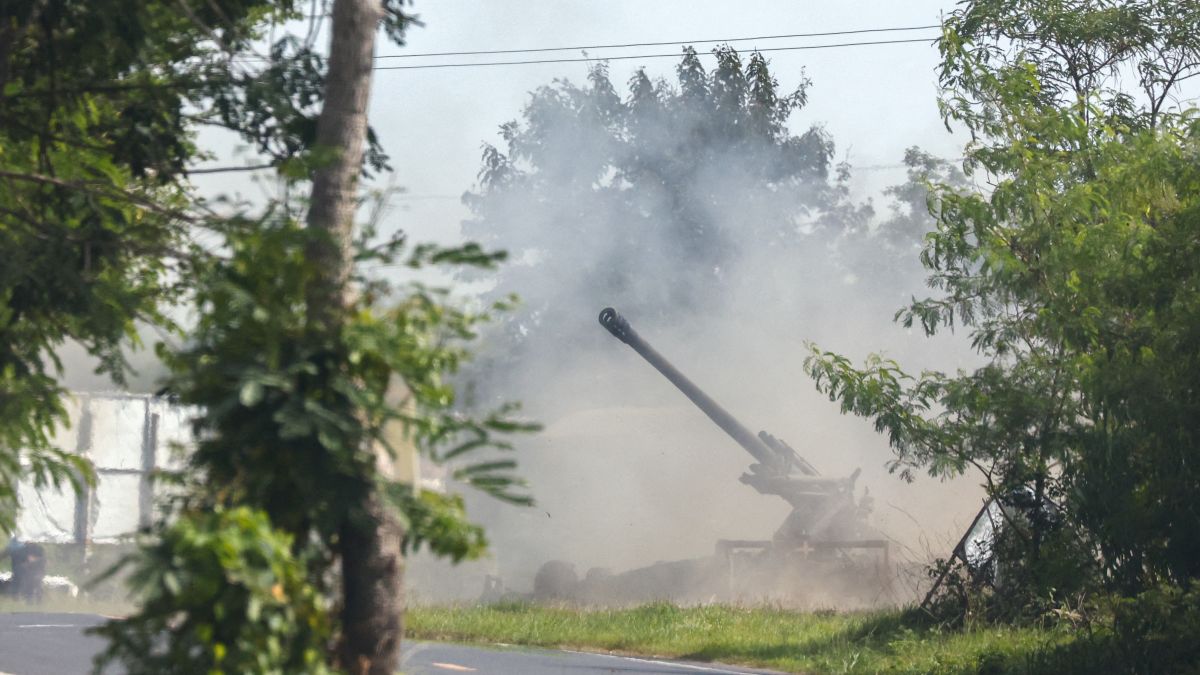 "Thailand launches airstrikes on Cambodia in a setback to Trump's ceasefire deal")
 "'Not hawkish or dovish': 5 key things for Asia in Trump's new national security policy")
 "'With China, it's always we verify': Trump's top aide on trade deal with Beijing")
 "Why the Goa nightclub fire, which killed 25, was so difficult to contain")
 "Thailand launches airstrikes on Cambodia in a setback to Trump's ceasefire deal")
 "'Not hawkish or dovish': 5 key things for Asia in Trump's new national security policy")
 "'With China, it's always we verify': Trump's top aide on trade deal with Beijing")
 "Why the Goa nightclub fire, which killed 25, was so difficult to contain")



