

 "How the idea of ‘Core Five’ is a mirage in present-day geopolitics")
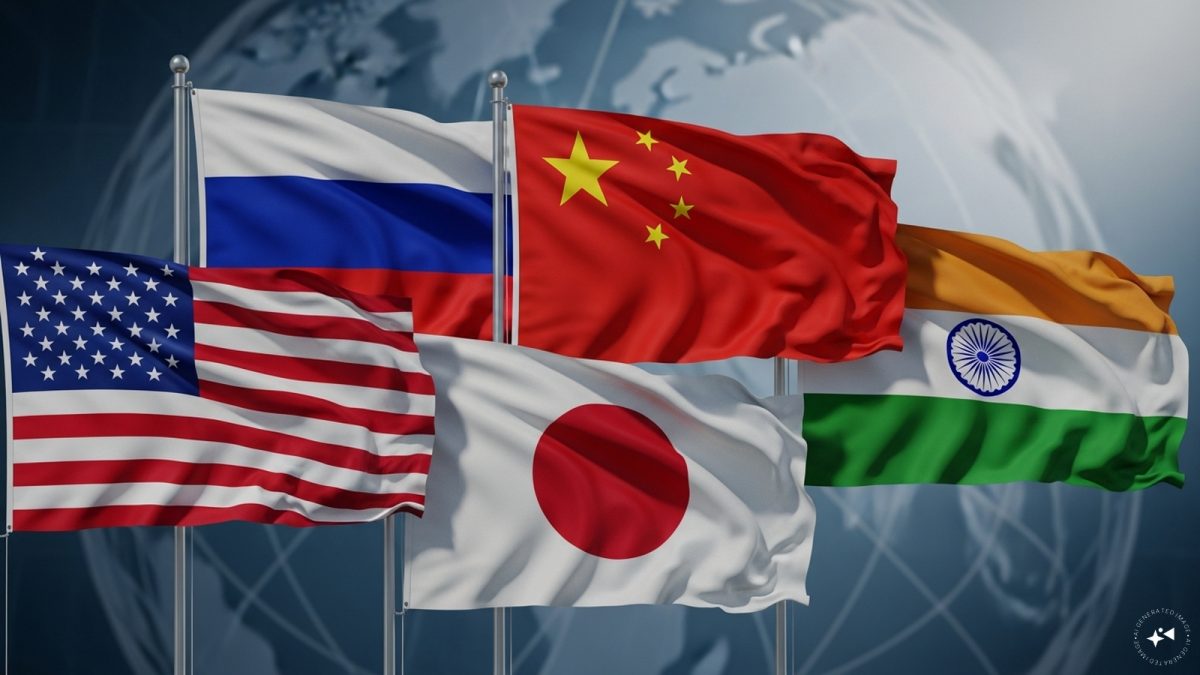
Some analysts are now arguing that a so-called “Core Five” (C5)—bringing together the United States, China, Russia, India, and Japan—could offer a pragmatic way to manage what they describe as a fragile global systemic transition. Prominent proponents of this idea suggest that regular consultations among these five powers could reduce the risk of ‘uncontrollable systemic instability’ and function as an informal, Asian-centric alternative to a gridlocked UN Security Council. The conspicuous exclusion of the European Union, experts argue, reflects a hard-headed recognition that Europe has become ideologically driven, procedurally cumbersome, and strategically ineffective.
At first glance, the argument appears seductive. In a world marked by paralysis at the UNSC, widening great-power rivalry, and institutional fatigue, a small, focused steering group seems efficient. But on closer examination, the C5 proposal reveals deep conceptual flaws and geopolitical blind spots that risk exacerbating global fragmentation rather than managing it.
The first loophole lies in the assumption that efficiency flows from exclusion. The idea that global governance can be streamlined by sidelining the EU ignores a basic structural reality: Europe is not merely another regional bloc but a central node in global trade, finance, regulation, climate policy, and technology standards.
From sanctions enforcement to carbon markets, from digital regulation to development finance, the EU already shapes outcomes that no great-power forum can simply ‘set the agenda’ for. Excluding Europe does not make governance leaner; it creates a parallel process that lacks implementation power.
The critique that the EU “rarely gets anything of importance done nowadays” confuses political theatrics with structural capacity. Europe’s regulatory and economic machinery continues to shape global behaviour. A C5 that discusses Middle East security, financial stability, or climate transitions without the EU would be making decisions in a vacuum, hoping that others will later operationalise them. That is not pragmatism; it is strategic wish-casting.
Quick Reads
View AllSecond, the C5 rests on an unrealistic reading of great-power convergence. The proposal assumes that the US, China, Russia, Japan, and India can set aside their deepest disputes in the interest of the greater good. But these disputes are not peripheral irritants; they define each country’s core security calculus.
US-China rivalry is structural, not episodic. Sino-Indian tensions are unresolved and periodically volatile. Russia’s confrontation with the West is not contingent solely on Ukraine but on competing visions of European and global order. Japan’s security posture is increasingly anchored to deterrence against China.
To imagine that these fault lines can be bracketed within a five-power consultative club is to underestimate how deeply they shape strategic behaviour. The UNSC is dysfunctional not because it is too inclusive, but because power politics intrude when interests diverge. A smaller table does not eliminate that problem—it merely concentrates it.
Third, the C5 risks instrumentalising India rather than empowering it. Korybko, one of the more prominent proponents, cites the idea that India would act as a “balancer” between a de facto Sino-Russo and US-Japanese axis. But this framing reduces India to a swing state in someone else’s geometry rather than an autonomous pole with its own priorities. India’s strategic value lies precisely in its ability to work across multiple forums—Quad, Brics, G20, SCO—without being locked into an exclusive directorate.
An informal “Asian UNSC” risks pulling India into a structure where it is expected to smooth contradictions it did not create, while bearing reputational costs for outcomes it cannot control. Worse, it could constrain India’s ability to engage Europe, the Global South, and middle powers—relationships that are central to India’s long-term influence and economic strategy.
Fourth, the C5 misunderstands how legitimacy works in global governance. The UNSC’s crisis is not only about veto power; it is about representation and legitimacy. A self-selected group of five, operating outside any treaty framework, risks being seen as an elite cartel rather than a stabilising mechanism. The exclusion of Africa, Latin America, Southeast Asia, and Europe would reinforce the perception that global rules are once again being written by a few, for a few.
Ironically, this could make global instability worse. States that feel excluded from agenda-setting tend to hedge, free-ride, or obstruct implementation. In an era already marked by institutional erosion, legitimacy is not a luxury—it is a stabiliser.
Fifth, the claim that the C5 would complement existing institutions glosses over institutional cannibalisation. If the C5 is meant to set the agenda for the G7, G20, Brics, and others, it effectively becomes a shadow directorate. This raises an obvious question: why would excluded actors invest political capital in forums whose priorities are pre-decided elsewhere? Far from revitalising global governance, the C5 could hollow it out.
Finally, the proposal rests on a speculative political precondition: a US-Russia ‘New Détente’. This is not merely uncertain; it is structurally fragile. Basing a new architecture on such a narrow and reversible alignment is risky statecraft. Durable institutions are built to absorb shocks, not to depend on best-case scenarios.
In the end, the C5 reflects a recurring temptation in periods of global flux: the belief that smaller clubs can substitute for inclusive governance. History suggests otherwise. Stability does not emerge from elegant geometry but from messy, overlapping, and inclusive arrangements that align power with legitimacy.
The real challenge is not to invent a new core but to repair trust between existing ones—and to adapt institutions so that rising powers, middle powers, and implementation hubs like the EU all have a stake in outcomes. Anything less risks turning the promise of pragmatism into yet another layer of global disorder.
(Shishir Priyadarshi is President of Chintan Research Foundation (CRF), New Delhi. Views expressed in the above piece are personal and solely those of the author. They do not necessarily reflect Firstpost’s views.)

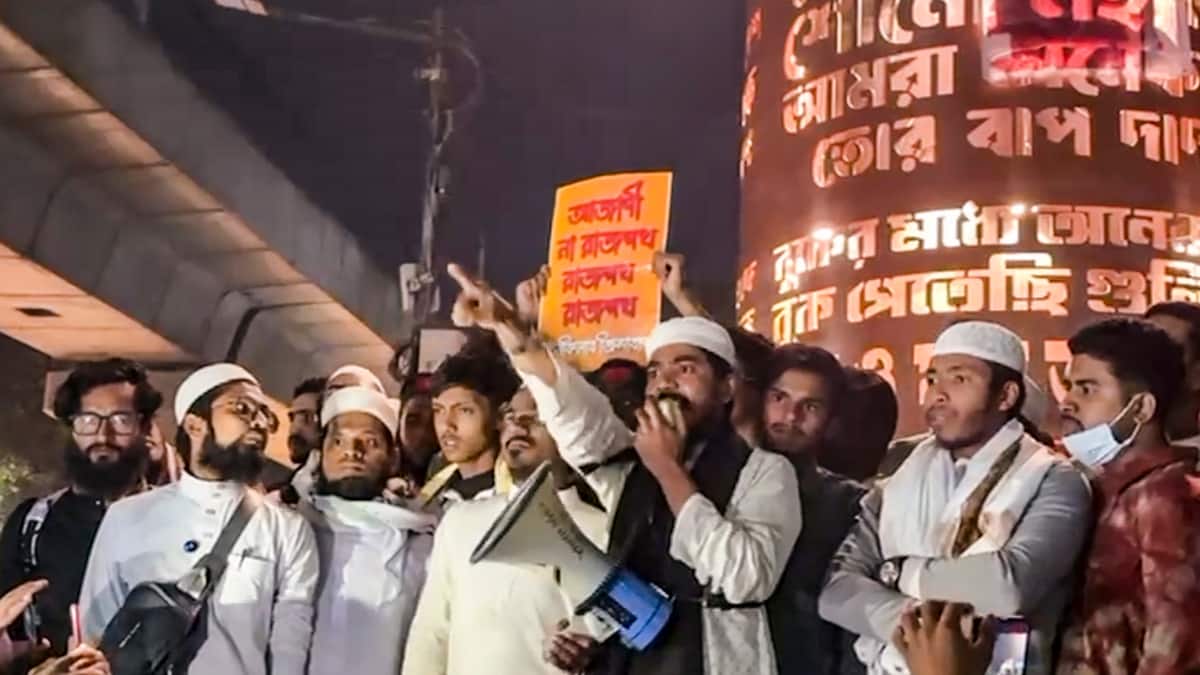
 "‘Bangladesh’s Yunus govt failed to control ‘mobocracy’’: BNP leader on attack on Indian mission")
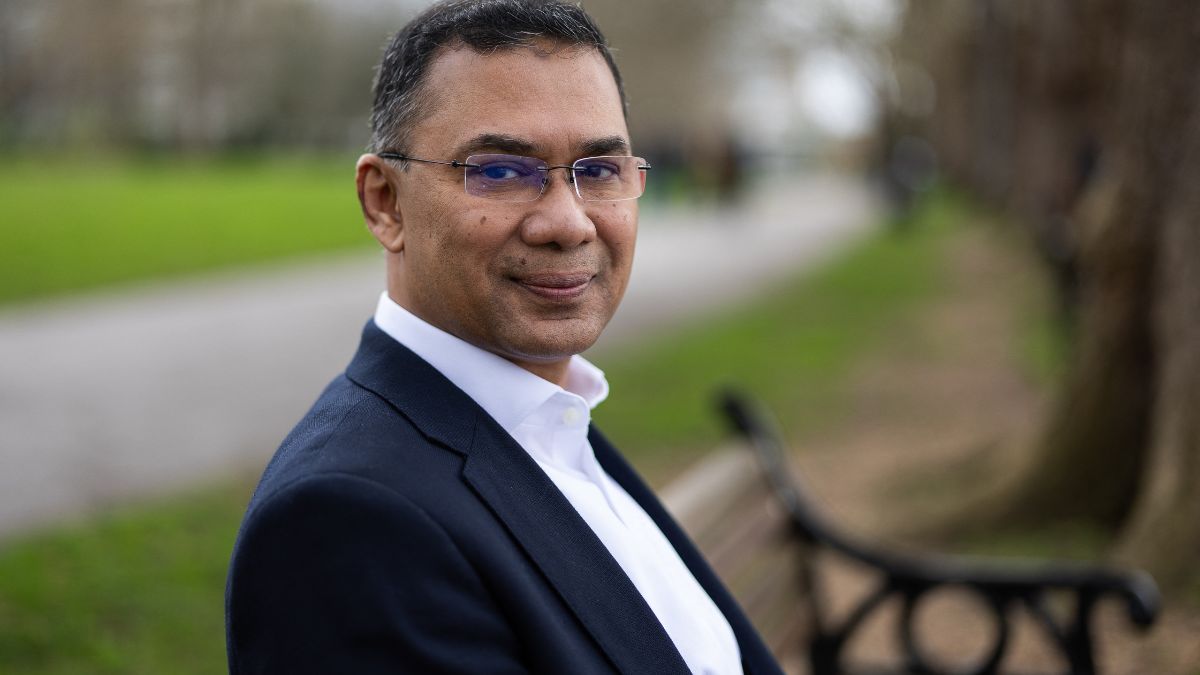 "Tarique Rahman to return to Bangladesh after 17 years: Can Khaleda Zia’s son influence February elections?")
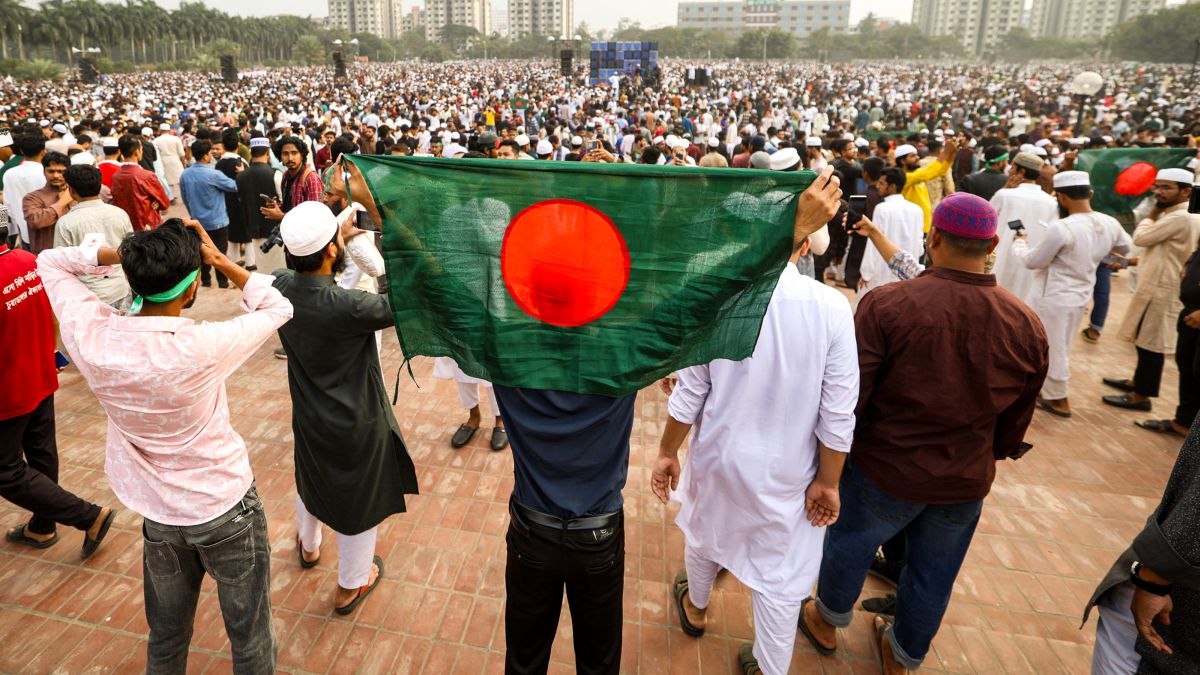 "US Congressmen raise alarm over anti-Hindu violence in Bangladesh")
 "‘Time to Kash out’: Why Kash Patel’s choice of new wheels has sparked a row")
 "‘Bangladesh’s Yunus govt failed to control ‘mobocracy’’: BNP leader on attack on Indian mission")
 "Tarique Rahman to return to Bangladesh after 17 years: Can Khaleda Zia’s son influence February elections?")
 "US Congressmen raise alarm over anti-Hindu violence in Bangladesh")
 "‘Time to Kash out’: Why Kash Patel’s choice of new wheels has sparked a row")



