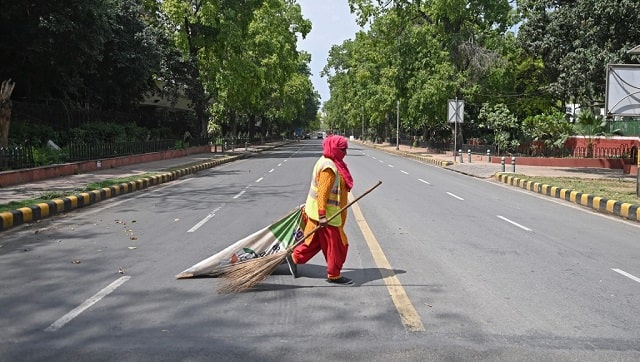
 "City-wide inclusive sanitation: Why it is pathway to scaling sustainable and safe sanitation systems")
Universal access to safely managed sanitation is a human right. It’s also a core public service, critical to building resilient cities and empowering communities. However, 3.6 billion people globally lack access to safely managed sanitation services. This exposes them to increased health risks and gendered violence.
In 2002, the UN’s Millennium Development Goal 7 aimed to halve the population without access to basic sanitation services by 2015. This target was missed by a margin of nearly 700 million.
In India, the Swachh Bharat Mission (SBM), launched in 2014, accelerated our journey towards safe sanitation. Now, we have progressed to SBM 2.0, for which safely managed sanitation is a priority.
The next milestone in India’s sanitation journey: City-wide inclusive sanitation
Over the past few years, significant progress has been made towards approaches focused beyond infrastructural sanitation goals, towards the more sustainable approach of City-Wide Inclusive Sanitation (CWIS). CWIS stands on the key principles of ensuring all citizens have access to services targeted at safely managing human waste.
India is home to four out of eight CWIS cities in the world – Narsapur, Trichy, Wai and Warangal. In Trichy, CWIS is being implemented by the Indian Institute for Human Settlements (IIHS), a national education institution committed to the equitable, sustainable and efficient transformation of Indian settlements.
Quick Reads
View AllAround 81 per cent of households in Trichy currently have individual toilets, and 33 per cent have underground drainage connections. It has 54 desludging operators (DSOs), who own a total of 72 cesspool trucks. There’s one sewage treatment plant with 88 MLD capacity. These interventions focus on improved desludging services, the safety and rights of sanitation workers, and dignified livelihood opportunities.
Enabling equitable and sustainable service delivery for urban poor communities
Ensuring toilet access and improving sanitation services for low-income communities emerged as a priority in Trichy. Recognising the need for the fair distribution of quality services to marginalised communities, the Tiruchirappalli (Trichy) City Municipal Corporation (TCC) identified 1,900 households with space available to construct Individual Household Latrines (IHHL) under SBM-Urban.
TCC further implemented initiatives such as installing Community and Public Toilet (CT/PT) features like sanitary pad vending machines and incinerators for the safe disposal of menstrual waste. Social audits and periodic O&M assessments were introduced to ensure that services are gender-friendly and reach the most vulnerable. Septic tanks with improved treatment systems and an earthworm-based bioreactor effluent treatment were also piloted in a few community toilets to identify the maximum acceptable load for safe containment, thereby promoting safe Faecal Sludge and Septage (FSSM) practices.
TCC is now in the process of scaling such technical solutions across the city. Trichy also addressed unsafe disposal practices through the Standard License Agreement, which enabled smooth and improved functioning of desludging operations. It mandated load disposal only at prescribed decanting stations, initiated annual license renewal, and allowed only TCC-licensed DSOs to operate desludging trucks.
Nurturing a dignified workplace for service providers
The city of Trichy identified the crucial need to recognise, empower and establish safer working conditioners for sanitation workers. To promote equity and safety of sanitation workers, awareness campaigns detailing sanitation workers’ entitlements were held, and mechanisation of services was promoted to ensure that they are not exposed to hazardous situations.
Informal sanitation workers were registered under the Tamil Nadu Manual Workers Welfare Board under the Labour department and Sanitation Workers Board under Tamil Nadu Adhi Dravidar Housing and Development Corporation (TAHDCO), an initiative that established them as sanitation “professionals.” Based on key learnings from the Occupational Health and Safety (OHS) study conducted by IIHS, appropriate safety tools and equipment, emergency protocols, and gender-differentiated PPE kits were developed.
Customised first-aid training for sanitation workers and DSOs, including sensitisation sessions on the safe disposal of fecal sludge, were also conducted to build capacity and increase the uptake of safety measures amongst service providers. A Memorandum of Understanding (MoU) was signed among urban local bodies and private sector charitable hospitals which institutionalised health camps for sanitation workers and their families. These initiatives directly impact the lives of sanitation workers and enable the growth of a dignified workplace for service providers.
Solutions to integrate gender mainstreaming in service delivery
Gender mainstreaming in sanitation services emerged as a priority area for the city, with focus on enabling women sanitation workers.
In an effort to mainstream and empower women sanitation workers as entrepreneurs and service providers, IIHS-led CWIS built the capacities of 50+ women on entrepreneurial skillsets that enabled them to identify business opportunities in the sector, and trained them in services which improve menstrual product disposal.
To further scale socio-economic development opportunities, 550+ informal women sanitation workers across 57 self-help groups were trained on group dynamics, record keeping, revolving fund handling and enterprise development, and linked with the National Urban Livelihood Mission (NULM).
CWIS efforts have also made huge strides towards inclusive sanitation for trans communities. This was done by creating exclusive facilities for trans people, sensitising caretakers of CT/PTs and concerned officers from TCC to ensure that trans people can access sanitation facilities as per the gender they identify with, and also appointing trans persons as caretakers in some CT/PTs.
Implementation of CWIS practices in Trichy has resulted in sanitation services reaching the most marginalised and vulnerable communities and creating safer service delivery by widening the focus from infra delivery to service delivery. It has also emerged as a multi-dimensional approach that enabled solutions required to solve for rapid urbanisation and to empower service providers, i.e., sanitation workers. The learnings and challenges from Trichy can be utilised to further scale CWIS practices across India, build resilient cities and accelerate India’s contribution towards SDG Goal 6 of sustainable and safe sanitation.
IIHS is a member of the National Faecal Sludge and Septage Management (NFSSM) Alliance, a collaborative body driving the discourse of Faecal Sludge and Septage Management (FSSM) in India.
Niladri Chakraborti is a Senior Lead in Practice at IIHS and heads the City-Wide Inclusive Sanitation Program (CWIS) in Trichy. Sugantha Priscilla is a senior specialist in social development at IIHS with extensive experience in promoting economic empowerment of women and inclusive growth of societies. Views expressed are personal.
Read all the Latest News, Trending News, Cricket News, Bollywood News,
India News and Entertainment News here. Follow us on
Facebook,
Twitter and
Instagram.


 "'Indian food, our pride': $200k settlement in Palak Paneer case a moral victory against racism in the west")
 "India’s air dominance in Operation Sindoor forced Pakistan to seek ceasefire, European report says")
 "How Pakistan’s support may have led Bangladesh towards a very costly mistake")
 "India vs New Zealand Live Score 3rd T20: Kishan, Abhishek tee off after Samson bowled on first ball")
 "'Indian food, our pride': $200k settlement in Palak Paneer case a moral victory against racism in the west")
 "India’s air dominance in Operation Sindoor forced Pakistan to seek ceasefire, European report says")
 "How Pakistan’s support may have led Bangladesh towards a very costly mistake")
 "India vs New Zealand Live Score 3rd T20: Kishan, Abhishek tee off after Samson bowled on first ball")