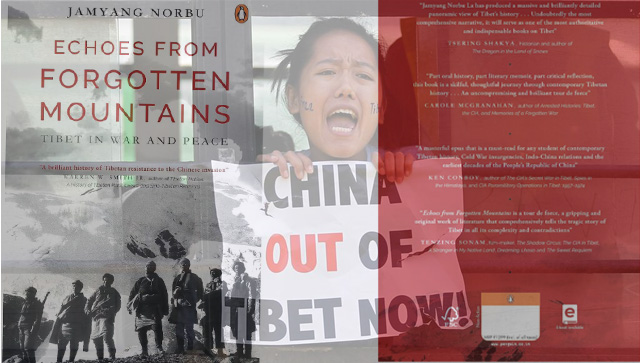
Tibet has been in the news recently, which is significant because India once had a long peaceful boundary with the Roof of the World. Unfortunately, this is no longer the case and the world should understand why. On 23 August, Beijing released the 2023 edition of the ‘Standard Map of China’ which included Taiwan, the South China Sea, Arunachal Pradesh (called Southern Tibet by China) and the Aksai Chin as Chinese territories. New Delhi had to lodge a strong protest. A few days later, Xinhua News agency reported that President Xi Jinping in a letter addressed to ‘2023 Forum on the Development of Xizang’ had validated the change of name of India’s northern neighbour from ‘Tibet’ to ‘Xizang’. The forum itself was called: “New Era, New Xizang, New Journey: New Chapter in Xizang’s High-quality Development and Human Rights Protection.” That says it all. The human rights website Bitter Winter wrote: “Xizang: China Insists on Depriving Tibet of Its Name.” It quoted Beijing saying: “Calling Tibet ‘Xizang’ is needed to establish China’s dominant position in the international discourse.” Then, the US Secretary of State Antony Blinken announced sanctions against Chinese officials responsible for the forcible separation from their parents and indoctrination of one million Tibetan children. The State Department had decided to impose visa restrictions on China “for their involvement in the forcible assimilation of more than one million Tibetan children in government-run boarding schools. These coercive policies seek to eliminate Tibet’s distinct linguistic, cultural, and religious traditions among younger generations of Tibetans”. Social media has also been abuzz when former Army Chief Gen MM Naravane reacted to a multicolored map showing several regions of China as ‘occupied’; it included Tibet, Eastern Turkestan (Xinjiang), Inner Mongolia and Manchuria. Gen Naravane shared the map on X (formerly Twitter) and commented, “Finally someone has got the map of China as it really is.” Recording the history In these circumstances, the publication of Echoes from Forgotten Mountains - Tibet in War and Peace written by Jamyang Norbu , is reminding us about what actually happened to Tibet. Norbu’s new book is a detailed and accurate record of the Tibetan resistance against Communist China from the first months of 1950, when Tibet was invaded by the Chinese Army. In the epigraph, Norbu quotes Milan Kundera, the Czech author, who recently passed away: “The struggle of man against power is the struggle of memory against forgetting…”. It set the tone for the book. Today, Beijing’s propaganda would like us to believe that Tibet has ‘since immemorial times’ been part of the Middle Kingdom. Here lies the Norbu’s life mission. He brilliantly narrates that the Tibetans were not always colonized and when the Communists invaded their country, the Dalai Lama’s countrymen fiercely resisted against the occupation of their fatherland (Tibetans called Tibet, ‘phayul’ or ‘fatherland’). Norbu candidly notes: “Tibetans are still not a very modern people, and many of them retain their native ability to recall their past in accurate and vivid detail. I have spent a considerable period of my life interviewing people for their personal stories. My inquiries also extended to less-private areas: music, dance, opera, costumes, ceremonies, crime, jurisprudence, rituals and especially travel. I heard accounts of yak-caravan expeditions on the Northern Tea Road, which, starting from Dartsedo in the far east, headed across the vast northern grasslands to the trade centre of Jyekundo, then swung south to Lhasa; of pilgrim treks and arduous full-prostration journeys to Mount Kailash, the centre of the Bon, Hindu and Buddhist cosmos …and of the journey to Lhamo Latso, the lake of visions.” For decades, the author also recorded “stories of gods (lha), ghosts (dre), oracles (lhaba), wraiths (yidag), witches (dunmu), imps (theurang), naiads (lu) and demons (du). …the naive, supernatural aspects of folklore and traditional beliefs perhaps give us access to the often overlooked, and once in a while, subliminal, areas of a culture that somehow elude us in more straightforward academic studies.” This makes the Echoes far richer, in fact, it reads like a novel. For a nation to continue to survive despite the odds of the present day, ‘memory’ is crucial. Norbu’s life purpose has been to record the memory of his people and he has done it brilliantly. Just reading the titles of some of the 40 chapters is a thrill in itself: The Ghosts of Chamdo, Seventeen Point Swindle, Requiem, Nest of Spies, March Winds, A Crane from Lithang, Wind and Wildfire, The Man Whose Luck Dried Up, The Golden Throne or Four Rivers Six Ranges… First and foremost, the Echoes portrays the resistance against the Communist indoctrination, which started long before Beijing began to speak of the ‘sinization of Tibetan Buddhism’. Does the young generation of Tibetans know enough about the glorious past of their nation? Do they realise that they belong to a race of warriors? Did not their great King Songtsen Gampo conquer a large part of Asia? Norbu is from a martial family. His grandfather, Gyurme Gyatso was one of the five young officials who, while serving the 13th Dalai Lama, volunteered to fight the Chinese at the beginning of the 20th century. This aspect of the Tibetan people has today been forgotten, with the West propagating the myth of Tibet as the most peaceful and compassionate nation on earth. The latter may be true, but the Tibetans also knew how to fight. Through his own experience, as well as countless interviews of freedom fighters, soldiers, farmers or traders, Norbu has reconstituted (in nearly 900 pages) the ‘lost history of the Tibetan struggle’. Norbu’s work helps readers to understand the complexity of Tibet’s modern history from the time Mao’s troops entered Eastern Tibet, to the first uprisings in Kham and Amdo provinces and then the creation of the Four Rivers Six Ranges Resistance Force and the March 1959 Uprising of the entire population of Lhasa. The fact that Norbu served in the Mustang Guerilla Force sponsored by the CIA in northern Nepal adds interest to his first-hand account. Norbu makes an interesting remark, he observes: “It must be acknowledged that in recent years the culture of victimhood has gained a hold in the exile Tibetan society, especially within the leadership, but most of the Tibetans whose lives I recorded over the years did not see themselves as victims. No matter how outnumbered or powerless, they had done something about their fate. They had not accommodated themselves to their oppressor. They had not allowed themselves to be led tamely like sheep to the labor camps or the execution grounds. They had fought, often to the last bullet and even after that, had kept up their opposition to Chinese rule in whatever way they could, even if that defiance might sometimes appear irrational or ineffectual to the progressive or the realist.” This is important to remember this when one wants to understand modern Tibet. Norbu’s book also makes you aware that there is no dichotomy between being a Buddhist and a warrior. Speaking of the Tibetans fighting guerilla warfare in Mustang (Nepal), Norbu writes: “But the men were also devout in their Buddhist belief and practices. Quite a few of them had been monks earlier in their lives but had given up their vows to fight for their country and their faith. Every evening before sunset, many of them would walk around the temple and spin the prayer wheels mounted in recesses in the walls. By the side of the paths winding throughout the camp and the school, cairns of stones had been piled to honor the Buddha and the gods of Tibet. …Sometimes when the men talked about the Chinese they had killed, they would conclude their accounts with an invocation to the Bodhisattva of Compassion, in effect a prayer for the better rebirth of their victim.” They fought so that the Dharma could eventually prevail. It is important to remember. Jamyang Norbu’s book is a work of love, the result of a lifelong commitment to collect the ‘echoes’ of those who fought for a free Tibet. The writer is Distinguished Fellow, Centre of Excellence for Himalayan Studies, Shiv Nadar Institution of Eminence (Delhi). Views expressed in the above piece are personal and solely that of the writer. They do not necessarily reflect Firstpost_’s views._ Read all the Latest News , Trending News , Cricket News , Bollywood News , India News and Entertainment News here. Follow us on Facebook , Twitter and Instagram .
Book Review | Tibet's forgotten struggle finds a place in Jamyang Norbu's echoes from the mountains
Claude Arpi
• October 2, 2023, 12:15:47 IST
Norbu’s work delves into Tibet’s modern history, from Mao’s troops entering Eastern Tibet to the formation of the Four Rivers Six Ranges Resistance Force and the March 1959 Lhasa Uprising, providing a deep understanding of its complexities
Advertisement
 "Book Review | Tibet's forgotten struggle finds a place in Jamyang Norbu's echoes from the mountains")
End of Article