

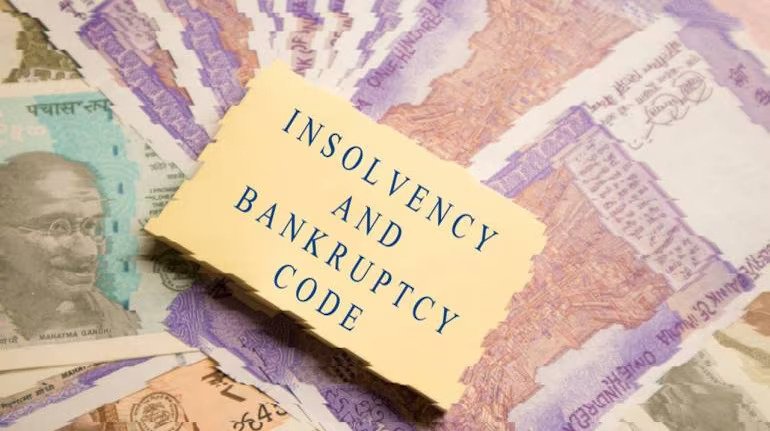
 "Book excerpt | Defaulter's Paradise Lost: Demystifying the Insolvency and Bankruptcy Code")
Below is an excerpt from Anant Merathia’s book Defaulter’s Paradise Lost: Demystifying the Insolvency and Bankruptcy Code, 2016 **** Financial defaults are not a new phenomenon in the Indian banking sector. Against this background, the Government has introduced strong legal remedies from time to time for lenders against defaulting companies. In a democracy as large as India, where many times shelter was taken under the principles of natural justice by borrowers, it wasn’t a simple task for the bankers, Non-banking Financial Companies (NBFCs) and other lenders to prosecute and hold accountable the defaulters, especially those doing so at the cost of public money given the not-so-satisfactory performance of the legal recourses available to them. Proceeding under the Securitisation and Reconstruction of Financial Assets and Enforcement of Securities Interest (SARFAESI) Act, before the Debt Recovery Tribunals (DRTs), restructuring of companies before the Board for Industrial and Financial Reconstruction (BIFR) and money recovery suits had their own challenges, especially with respect to the time taken. The other challenges included stringent criteria for the detection of financial sickness and excessive emphasis on revival under the Sick Industrial Companies Act (SICA) of 1985, lack of powers and facilities and the overlapping of laws among others. This allowed defaulters to take legal pleas against lenders, such as ‘forum shopping’, when the lenders exercised more than one of their legal options. The winding up of companies under the Companies Act, 1956, for companies unable to pay their debts, was to some extent an effective measure bringing the defaulting accounts to some logical conclusion by way of either winding up the company and liquidating its assets or possibly the company coming to negotiate with the lenders. This, although not very fast, was relatively more effective than other alternatives. Although restructuring of debt and one-time settlement offers by companies under the Recovery of Debts Due to Banks and Financial Institutions (RDDBFI) Act, 1993, and the SARFAESI Act cannot be completely discounted in this area until 2016, statistics show that the performance was poor in terms of ultimate results and recovery for the bankers. [caption id=“attachment_13045262” align=“alignnone” width=“435”] Defaulter’s Paradise Lost: Demystifying the Insolvency and Bankruptcy Code, 2016. Author: Anant Merathia[/caption] Efficacy of earlier regimes and problems faced In the year 2000, a High-Level Committee on Law Relating to Insolvency of Companies was established by the then Department of Company Affairs to examine and provide recommendations on insolvency law in India. According to its Report,9 the main drawback of SICA was that it leaves the debtor company in possession of the assets, which creates an imbalance between the debtor company and its creditors. Further, the Committee strongly urged to consider the possibility of making a recommendation for the replacement of SICA by a reformed and improved statute that would provide for an alternative Tribunal and a more effective mechanism for a faster revival of sick and potentially sick companies. Hence, the need for IBC, 2016, and a specialized tribunal such as the National Company Law Tribunal (NCLT) was envisaged as early as 2000, but it took 16 years to see the light of day. When it came to RDDBFI and SARFAESI, the recovery action by creditors through these legislations, has not had desired outcomes, and it resulted in bad debts of banks and financial institutions, mounting everyday. The performance of SARFAESI in enabling recovery of banks’ secured dues was promising at first but worsened over time. The deceleration in recovery was mainly due to a reduction in recovery through the SARFAESI channel by 52% from ₹ 256 billion in 2014–2015 to ₹ 131.79 billion in 2015–2016. The sale of NPAs by the banks to Asset Reconstruction Companies (ARCs) also remained stagnant. However, in comparison, the average recovery through IBC at least in the initial years appeared to be greater than under the RDDBFI and SARFAESI routes, but it remains to be seen if this trend sustains. Liberalisation, Privatisation and Globalisation and the ‘boom’ and ‘dip’ in Indian economy Post-liberalization in 1991, the Indian economy saw an exponential growth because of the entry of several foreign companies, which resulted in the opening up of various sectors for foreign and private businesses and the rise in loans by banks and financial institutions on various parameters. However, the lending got out of control mostly because the said parameters were not adhered to in addition to a lapse in due diligence. This was also coupled with zealous ambitions of businessmen as well as banks. How did this happen? The fact remains based on historical evidence that many such loans given for expansion purposes went red, and the banks were compelled to choose multiple restructuring proposals by these companies whereby the trap for the lenders only got deeper. Even the Indian businesses got themselves in a situation where technically they had entered a point of no return as far as their debt exposures were concerned. Legal lacunae and lags in litigations The enforcement of security under the SARFAESI and RDDBFI Acts was time-consuming, and loopholes enabled multiple layers of appeals up to the Hon’ble Supreme Court (SC), which protected the debtors to the detriment of the lenders. A study conducted by the National Institute of Public Finance and Policy in 2014 showed that cases under DRT went on for about 2.7 years on average varying from as low as 5 months to as high as 7.5 years. Civil suits were no better in terms of the time taken. On an average, civil suits take 5 to 20 years17 taking into consideration the steps involved right from the issuance of notice to passing a decree and the same being challenged before the SC. Furthermore, the time taken and the challenges faced in execution proceedings were a different story altogether. Eventually, even the option of winding up became unattractive because of the time factor involved, and BIFR started providing a shelter for companies in default rather than providing a rehabilitation plan to these companies, which was the original intent. The seed for the inception of the code It is evident from the above discussion that in the first decade of the new millennium the Indian banking sector was headed towards a problem possibly beyond its control and that it needed some extraordinary measures for recovery. It is obvious that certain loans provided were not purely based on merit but had certain other parameters known to the reader. It was time for the Government to revamp and introduce something to take care of this large and mounting problem that would have oth- erwise engulfed the system and eaten into the reserves of most banks. Thus, the first version of the IBC was introduced on 4 November 2015. Subsequently, a modified version after incorporating the public opinion was tabled, and a Joint Committee on the Insolvency and Bankruptcy Code18 was set up to further work on it. It was finally approved by both houses of the Parliament and got the presidential assent in the year 2016. IBC, 2016, proved to be a landmark legislation since its inception and also a subject of debate and controversy. Just as every coin has two sides, this law did receive an overwhelming response from the banking sector and lenders. However, it posed a set of concerns and challenges for operational creditors and other stakeholders given how the distribution of assets was structured in the framework and more so for the promoters due to its “creditor in control” model. Views expressed in the above piece are personal and solely that of the author. They do not necessarily reflect Firstpost_’s views._ Read all the
Latest News **,**
Trending News **,**
Cricket News **,**
Bollywood News **,**
India News and
Entertainment News here. Follow us on
Facebook**,**
Twitter and
Instagram**.**
The average recovery through IBC, at least in the initial years, appeared to be greater than under the RDDBFI and SARFAESI routes, but it remains to be seen if this trend sustains
Advertisement
End of Article

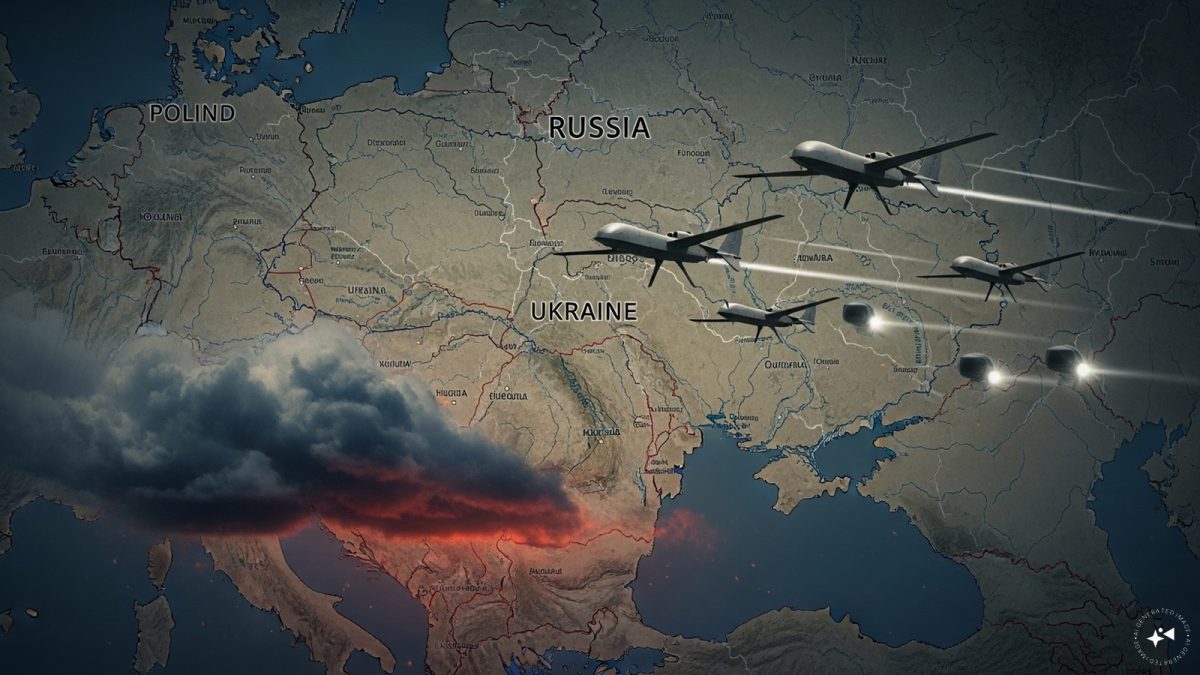 "Russian drones over Poland: Trump’s tepid reaction a wake-up call for Nato?")
 "As Russia pushes east, Ukraine faces mounting pressure to defend its heartland")
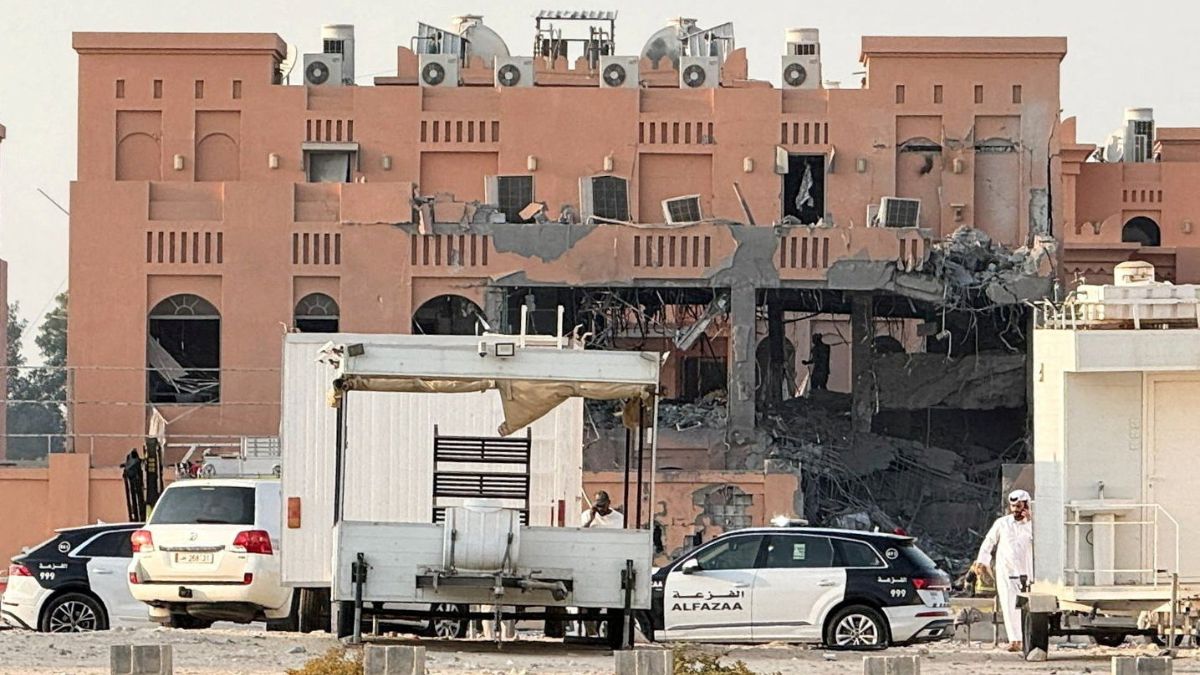 "Why Mossad was not on board with Israel’s strike on Hamas in Qatar")
 "Turkey: Erdogan's police arrest opposition mayor Hasan Mutlu, dozens officials in corruption probe")
 "Russian drones over Poland: Trump’s tepid reaction a wake-up call for Nato?")
 "As Russia pushes east, Ukraine faces mounting pressure to defend its heartland")
 "Why Mossad was not on board with Israel’s strike on Hamas in Qatar")
 "Turkey: Erdogan's police arrest opposition mayor Hasan Mutlu, dozens officials in corruption probe")



