

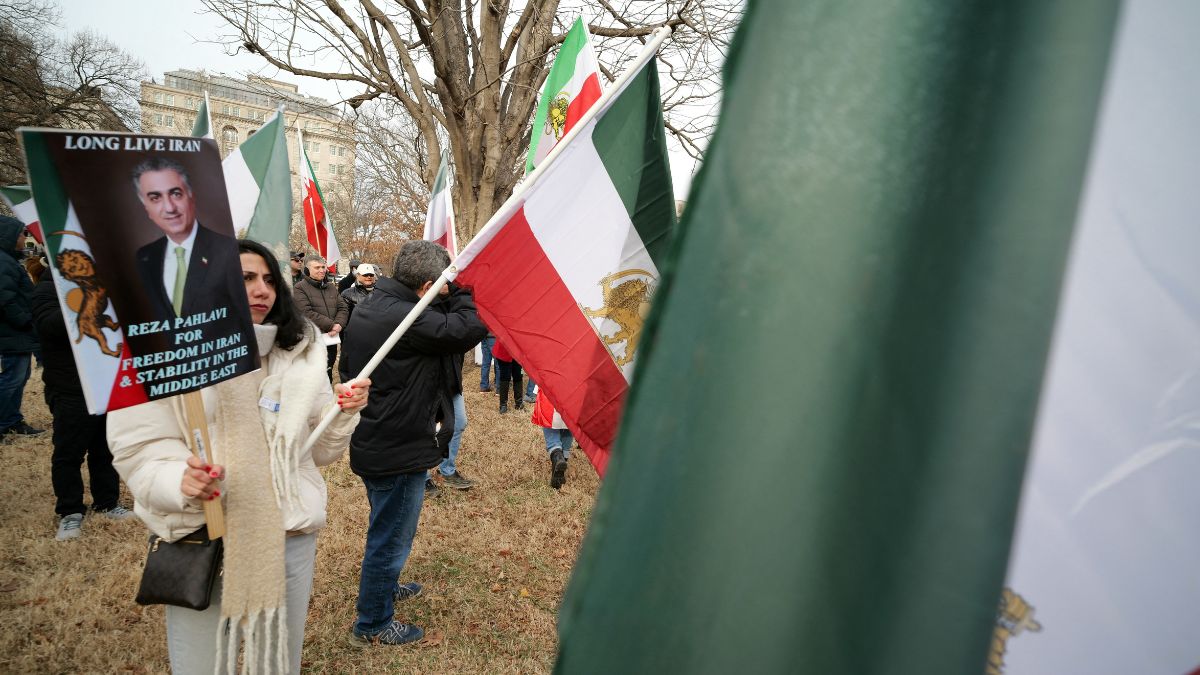
 "Beyond regime change: Is Iran rewriting its civilisational story?")
Those who view the ongoing unrest in Iran as a routine geopolitical regime-change attempt should think again. Unlike Bangladesh, Venezuela et al, Iran is an ancient civilisation, likely passing through painful phases of de-Islamisation.
It may even return to its roots in Zoroastrianism, the way Spain and Portugal did during the 15th-century Reconquista (Reconquest), leading to the de-Islamisation of the Iberian Peninsula and its re-Christianisation. The Reconquista inspired Europe to recolonise and Christianise the world, discover America—and Donald Trump!
Officially, Shia Iran and Israel may be ‘enemies’, but they are civilisational allies; the first two Muslim countries to recognise modern Israel were Turkey (1949) and Iran (1950). They share a long memory.
In the sixth century BC, Iran’s Zoroastrian emperor Cyrus the Great liberated the Jews from Babylonian Captivity (597-538 BC), a fact the grateful Jews recorded multiple times in the Old Testament.
Now it may be payback time for Israel. Prime Minister Benjamin Netanyahu has directly addressed the Iranian masses at least five times since 2013, reminding them of historical ties. In 2013, he sought rapprochement with Tehran; in September 2024, he told Iranians that the fall of their rulers was nigh; in November 2024, he said that the “tyrants of Tehran” fear their own people more than they fear Israel; in June 2025, after a major military strike, he addressed the “proud people of Iran”, saying their leaders had lost a “12-day war” and urged them to “take to the streets”; and in August 2025, he highlighted the internal collapse of Iran’s infrastructure and criticised the regime for funding terrorist groups at the expense of Iranians’ welfare.
Israel—and by extension America and Europe—see the la affaire Iran differently from other countries. It is an internal clash of civilisation—between Iran and Persia, and between Islam and modernity.
Quick Reads
View AllIran to Persia
How did Iran become Persia?
The Greek and Roman empires (490 BC-476 AD) named the land Persia, after Fars Province in today’s south-west Iran, known for its rich culture and history.
After the advent of Islam (620–632), the Arabs vanquished Persia by exploiting the Sassanid Empire’s exhaustion after decades of war with the Christian Byzantines (now in Türkiye). This broke the Persian army and led to the empire’s collapse (633–651). Gradually, it resulted in the Islamisation of a majority of Persians. Islamised Arabs copied dynasticism and the women’s purdah from Iran.
After a millennium of Zoroastrianism, however, Iran witnessed a second golden age as an Islamic empire. The Arabs were great warriors, but lacked civilisational heft. Iran provided this imperial, cultural, and civilisational muscle to Islam, profoundly transforming Islamic civilisation. Eventually, Shia Islam became Iran’s state religion under the Safavids in the 16th century, creating the foundation for modern Iranian identity. Persian administrative systems and culture were integrated by early Caliphates, while Persian language and scholarship flourished across vast regions.
That was when post-Crusade Europe re-entered the Middle East and North Africa (MENA), recolonised it, and began challenging the Ottoman Caliphate, whose after-effects of the First World War (1914-18) buried it in 1924.
With the collapse of the Caliphate, which had Islamised Persia, Iran began to reassert its ancient identity, and its slow de-Islamisation began.
Persia to Iran
The ancient name Iran was derived from the word “Aryan”—the Land of the Aryans. It was used by Iranians for millennia, who traced its roots back to Zoroaster (c. 1000 BC) or even earlier. It appears in the Zoroastrians’ holy book, the Zend Avesta, as ‘Airyanem Vaejah’ (Land of the Aryans) or ‘Airyoshayana’ (Iranian lands). In 1935, its new monarch, Reza Shah Pahlavi, a former military officer, renamed his country Iran to reflect this deep historical identity.
The Pahlavi dynasty he founded lasted only 54 years. Reza Shah (1925-41) and his son Shah Mohammad Reza Pahlavi (1941-79), despite being Shia Muslims, actively promoted a strong Iranian national identity rooted in pre-Islamic Zoroastrian history, secularised the nation, and modernised it; but they also created tension with the theocratic Shia establishment.
Reza Shah established the Trans-Iranian Railway and invited industries. During the Second World War (1939–45), he was forced to abdicate by Allied forces in 1941 due to his perceived ties with Nazi Germany. His son Mohammad Reza, the last Shah, launched the White Revolution (1963), a series of rapid socio-economic reforms, including land redistribution and women’s enfranchisement, which alienated the clergy and feudal landowners. His increasingly autocratic rule and its infamous secret police, SAVAK, fuelled widespread public discontent.
In 1965, Mohammad Reza took the title Aryamehr or Aryamihir (Sun of the Aryans) to underline his Zoroastrian ancestry, idealised pre-Islamic history, and emphasised the nation’s Aryan heritage. The title was intended to foster a strong, anti-clerical Iranian nationalism that looked back to the ancient Achaemenid and Sassanian empires as a golden era, and connect a modern, prosperous Iran to the world during this “Age of the Aryamehr”. Prominent national landmarks and institutions were named after his title, such as Aryamehr University of Technology (now Sharif University of Technology) and Aryamehr Stadium (now Azadi Stadium).
In October 1971, Iran celebrated 2,500 years of the Zoroastrian Empire, honouring Cyrus the Great and showcasing modern Iran under Shah Mohammad Reza Pahlavi.
During his rule, the UK- and US-backed coup (1953) overthrew Prime Minister Mohammad Mossadegh after he nationalised the oil industry and reinstated the Shah’s absolute authority. The West continued to play its power games for decades. Amid mounting and widespread discontent, exiled Ayatollah Ruhollah Khomeini (whose grandfather had migrated to Iran from Kintoor, Uttar Pradesh, in the 1830s) returned from France to launch the Islamic Revolution in 1979. He forced the Shah into exile in January 1979, ending the Pahlavi monarchy.
After the Shah’s death in 1980, his eldest son, Crown Prince Reza Pahlavi, heads the House of Pahlavi, living in exile in the United States. Today, he is leading Iranian dissidents and calling for a secular democracy.
A New Iran
The 2022 death of Mahsa Amini, an Iranian-Kurdish woman, in police custody for ‘improperly’ covering herself triggered a widespread women’s movement against the theocratic regime, leading to the killing of over 600 women. But their slogan—Woman, Life, Freedom—endured.
The latest season of this ‘Iranian Spring’ began on 28 December 2025, when highly influential merchants of Tehran’s Grand Bazaar—who once opposed the Pahlavis and supported the Ayatollahs—revolted against the Iranian rial’s crash, hyperinflation, and a proposed 2026 budget featuring a 62 per cent tax hike.
Unlike other countries, Iran’s bazaars are far more than marketplaces; they are historical engines, pushing Iran in one direction or another.
The ongoing anti-Ayatollah movements, aided by angry students—who played a central role in the Islamic Revolution of 1979—and Gen Z, as elsewhere, converged with the markets as force multipliers in the current nationwide unrest.
On 1 January 2026, Reza Pahlavi called for the “birth of a New Iran” and an end to 46 years of “terror and chaos” under the Islamic Republic. “The current regime has reached the end of the road… The growing protests show this year will be the definitive moment for change,” he wrote on X.
Protesters are recalling the Pahlavi dynasty’s ‘golden period’ and urging Reza to return. Their slogan is Javid Shah (Long Live the Shah)! It is a sign that anger has moved beyond dissatisfaction with economic policies or personalities and towards a likely rejection of the Islamic Republic itself.
Irate crowds are chanting: “This is the final battle! Pahlavi will return,” and “The Shah will return to the homeland, and Zahhak (despot) will be overthrown,” invoking the mythological tyrant of Persian lore. “Death to the Dictator” (Ayatollah Syed Ali Khamenei) and “Mullahs Must Return” are the flavour of this protest season. This is unprecedented: the Ayatollah is Imam—the top spiritual leader of the Shias, their own “Caliph”.
The West-led build-up against the Islamic regime accelerated after the Gaza war.
In June 2025, Reza called for regime change, condemned the Ayatollahs, and—crucially—laid out core principles for a post-Islamic Republic Iran: territorial integrity, equality of all citizens, individual liberties, and the separation of religion and state.
He described the build-up as Iran’s “Berlin Wall moment”, signalling a psychological break from the past rather than an imminent seizure of power—something more than mere regime change: de-Islamisation? He also declared that he would not accept the Peacock Throne unless chosen through a democratic vote.
De-Islamisation?
The eminent Sufi poet and mystic Ahmad-e-Jam famously wrote:
Kushtagan-e-khanjar-e-taslim raa,
Har zaman az ghaib jaan-e-digar ast.
(For those struck by the dagger of submission, a new soul comes from the unseen every moment.)
It reads like the Hindu doctrine of rebirth.
Across centuries, this couplet inspired Iranians and turned them into hardened war machines. In recent years, they fought through the Iraq-Iran War (1980-88), lost over a million people, yet continued to develop nuclear capabilities. In June 2025, Israel and the US bombed Iranian nuclear installations, but carefully avoided targeting civilian populations, subtly turning them against the Ayatollah regime.
So where can Iran possibly go from here?
Like the Iberian Peninsula, Iran may look back to Zoroastrianism. Already, there is growing cultural and nationalistic interest in Iran’s pre-Islamic Zoroastrian heritage; some are even converting to this ancient faith privately, often as a form of cultural identity or resistance to the current government. Many Iranians view the pre-Islamic ‘golden era’ with pride, considering it their original, ‘authentic’ culture. Ancient festivals such as Nowruz (New Year) and Yalda, both of Zoroastrian origin, are widely celebrated as national holidays. Many shops and establishments across Iran have been renamed after Zoroastrian heroes or events.
Recent online surveys, according to media reports, suggest a notable percentage of Iranians identifying as Zoroastrians (one 2020 survey reported 7.7 per cent), although this is more indicative of nationalistic or cultural realignment than strict religious adherence.
Zoroastrianism remains a recognised minority faith in the Iranian Constitution, alongside Christianity and Judaism, and has a dedicated seat in parliament. However, the community faces discrimination, and official population numbers remain low (around 23,000, according to a 2018 census).
If Iran, the world’s first superpower, returns to Zoroastrianism, what will happen to the Arab and Muslim world?
Postscript: Pakistan’s military dictator Pervez Musharraf, although a Sunni, was deeply influenced by Zoroastrianism. Even his first name, Pervez (meaning “Victorious!”), is of Iranian origin.
(The author is a senior journalist. Views expressed in the above piece are personal and solely those of the author. They do not necessarily reflect Firstpost’s views.)

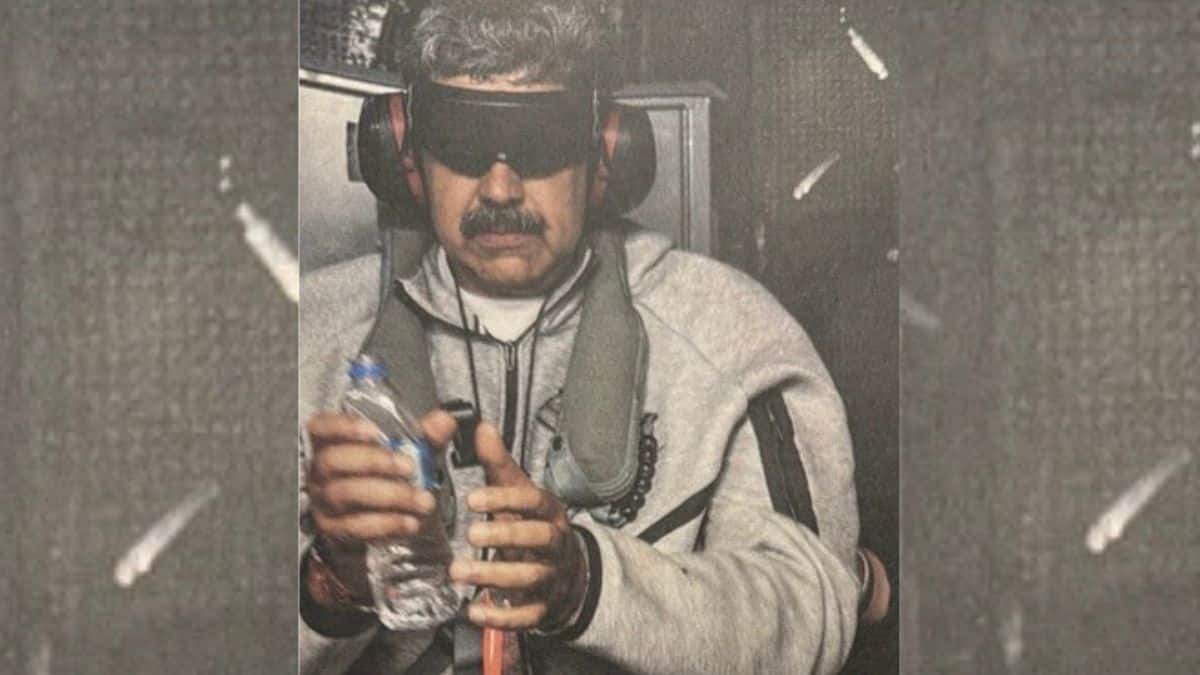
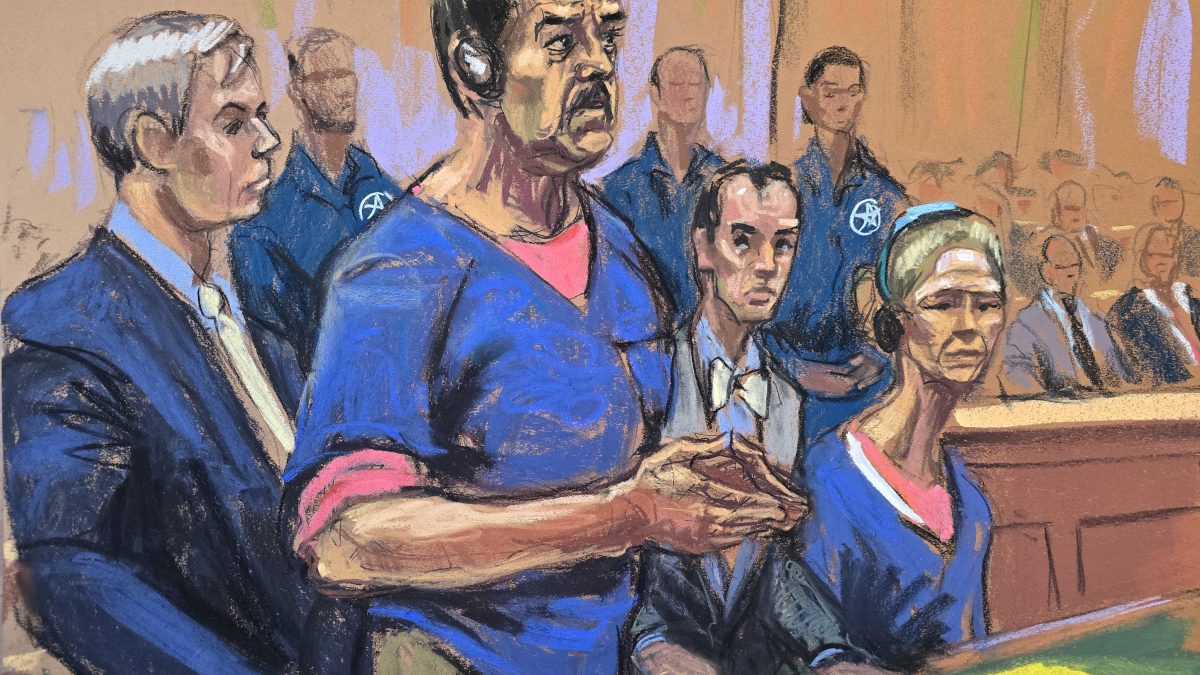 "US-Venezuela Tensions Live Updates: Maduro's next hearing date set for March 17")
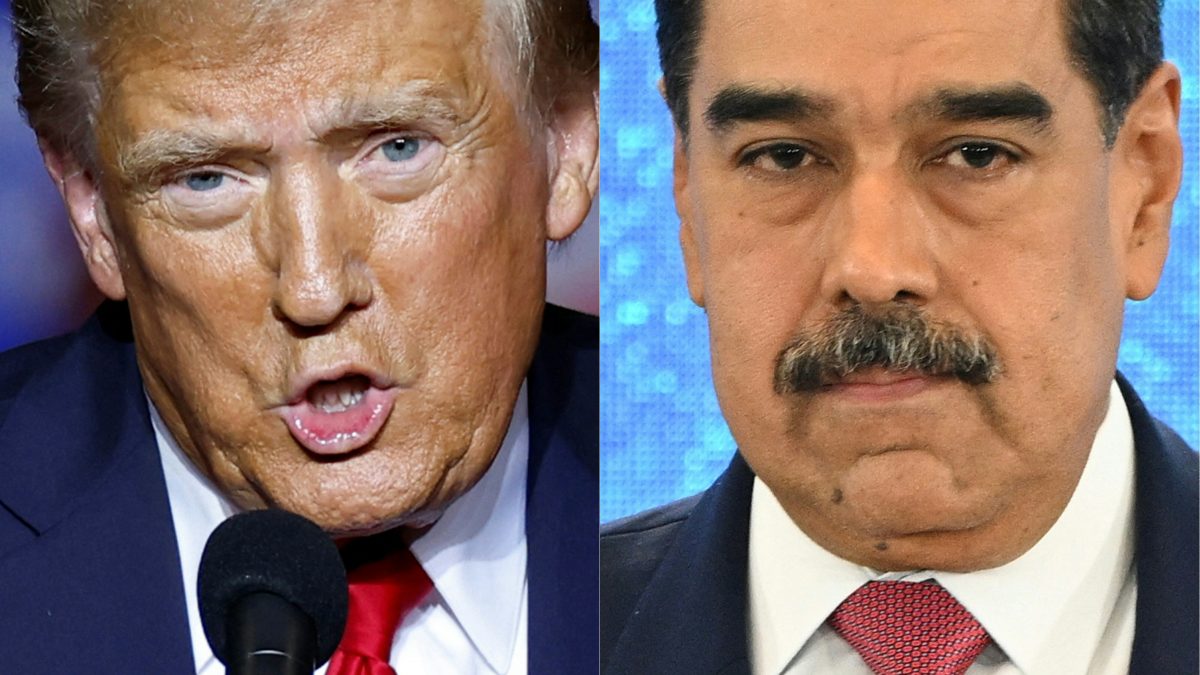 "Anything but 'war': The words America uses to sanitise its Venezuela-like operations")
 "A Polymarket trader made over $400,000 after Maduro’s fall: Did they have insider info?")
 "‘States must not use force’: UN says US raid in Venezuela violated international law")
 "US-Venezuela Tensions Live Updates: Maduro's next hearing date set for March 17")
 "Anything but 'war': The words America uses to sanitise its Venezuela-like operations")
 "A Polymarket trader made over $400,000 after Maduro’s fall: Did they have insider info?")
 "‘States must not use force’: UN says US raid in Venezuela violated international law")



