

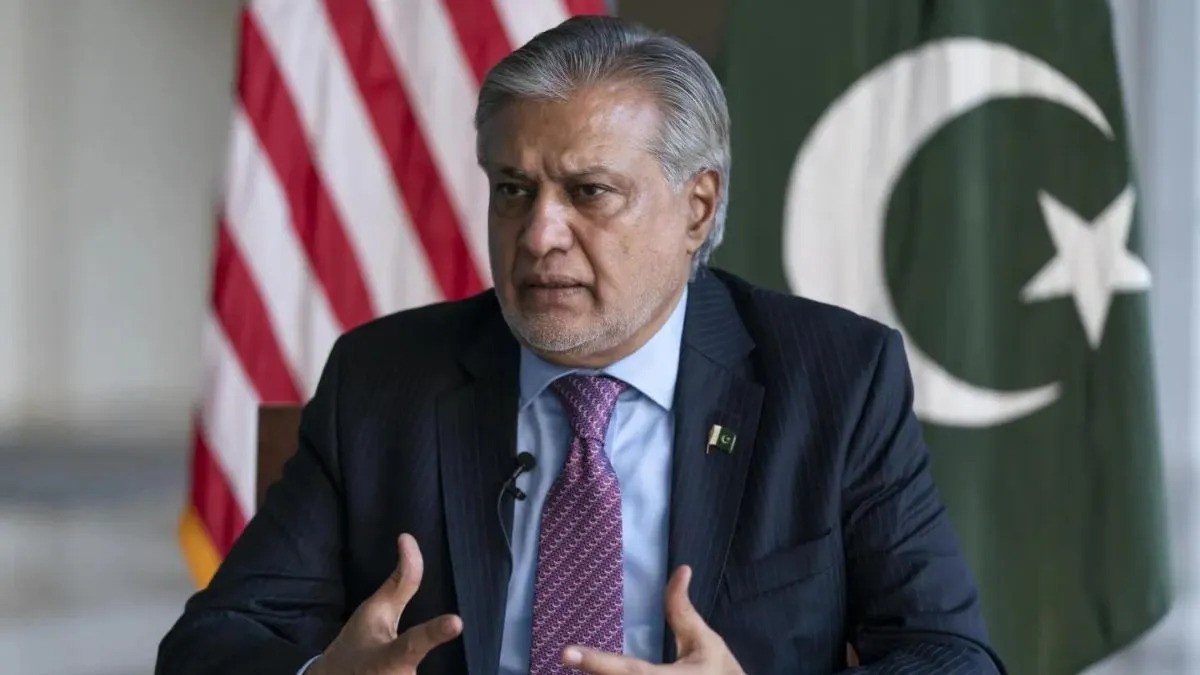
 "Before pursuing South Asia, Pakistan must fix itself: Regional cooperation is impossible without India")
Pakistan’s Deputy Prime Minister Ishaq Dar recently floated the idea of a new regional body to replace the long-dormant South Asian Association for Regional Cooperation (Saarc), a suggestion made against the backdrop of steadily escalating India-Pakistan tensions.
At first glance, the proposal may appear to be a routine diplomatic thought exercise; however, before one begins to speculate on the feasibility of any framework for South Asian cooperation that either sidelines or excludes India altogether, it is essential to carefully unpack the statement itself, the political moment in which it was made, and the contradictions it reveals.
Much like Pakistan’s earlier rhetorical interventions on regional and global platforms, Dar’s remarks raise fundamental questions not about institutional design, but about intent, credibility, and Islamabad’s long-standing discomfort with a regional order it can neither dominate nor destabilise at will.
Dar argued that South Asia could no longer afford to remain trapped in what he described as “zero-sum mindsets, political fragmentation and dysfunctional regional architecture”, while pitching Pakistan’s vision of “open and inclusive regionalism”. The irony of this claim is difficult to miss. A state that routinely invokes Kashmir as a convenient scapegoat for its own economic collapse and governance failures is in no position to sermonise others on zero-sum thinking.
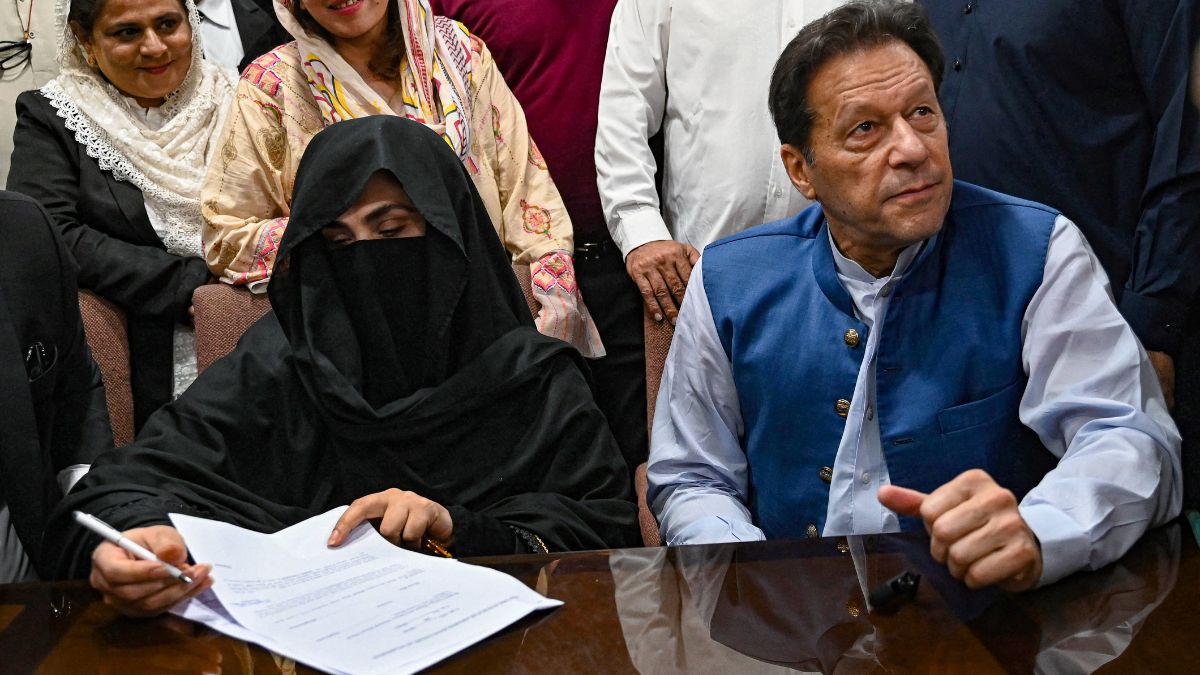
More importantly, Pakistan’s moral authority to lecture the region on political fragmentation is virtually non-existent. Since its inception, no Pakistani prime minister has completed a full term in office, with leaders either imprisoned, exiled, or executed, a grim tradition that now extends to the prolonged solitary confinement of Imran Khan.
Quick Reads
View AllAs for dysfunctional architecture, Islamabad’s own record is instructive. Having borrowed tens of billions of dollars from China under the banner of the China–Pakistan Economic Corridor, Pakistan failed to deliver promised outcomes and now oscillates between Beijing and Washington in a desperate search for economic lifelines. For such a state to position itself as a champion of regional coherence is not merely ironic; it is a textbook case of diplomatic delusion.
Dar’s invocation of “open and inclusive regionalism” is even more hollow when measured against Pakistan’s own conduct within its borders and beyond. If Islamabad is sincere about inclusivity, it should begin by addressing the fate of countless Baloch activists and fighters who have either been killed in security operations or have simply vanished, leaving families waiting indefinitely for answers.
An open and inclusive regionalism would mean granting Balochistan its fair share of state revenues, control over its resources, and the political rights routinely denied to it. It would also require ending the repression of the people of Kashmir in the territory Pakistan continues to illegally occupy, where dissent is criminalised and democratic expression tightly controlled.
Most crucially, any credible commitment to inclusive regionalism would demand the abandonment of Pakistan’s long-standing practice of orchestrating terror attacks against India at regular intervals. Until these realities change, Islamabad’s rhetoric remains just that: lofty words divorced entirely from ground truth.
Dar further claimed that Pakistan enjoys support for emerging multilateral platforms outside Saarc and spoke of a South Asia where cooperation replaces divisions, economies grow in synergy, disputes are resolved peacefully in accordance with international legitimacy, and peace is maintained with dignity and honour.
While the sentiment, in isolation, is unexceptionable, it loses all credibility when articulated by Pakistan. It is difficult to take seriously invocations of “peaceful dispute resolution” and “international legitimacy” from a state that has consistently been the primary source of division, friction, and instability in South Asia.
From sponsoring cross-border terrorism to derailing every meaningful attempt at regional cooperation, Pakistan’s actions have stood in direct opposition to the very principles the honourable Deputy Prime Minister is now trying to proclaim.
As for the much-advertised “support” for alternative platforms, it largely amounts to Islamabad mortgaging its strategic autonomy to China, binding itself to Beijing’s geopolitical ambitions while hoping to extract tactical leverage against India. What is presented as regional outreach is, in reality, a narrow and transactional alignment driven less by cooperation and more by resentment.
Pakistan’s sudden enthusiasm for reimagining South Asian cooperation rests on a convenient amnesia about why Saarc became defunct in the first place. The regional bloc did not collapse due to institutional fatigue or India’s alleged rigidity; it stalled because of Pakistan’s own actions.
Saarc last held a summit in 2014, and the subsequent meeting scheduled for 2016 in Islamabad was cancelled after the Uri terror attack, carried out by the Pakistan-based militant group Jaish-e-Muhammad. In response, India, followed by several other member states, refused to participate, rendering the summit untenable.
In other words, Saarc did not fail despite Pakistan, but because of it. For Islamabad to now propose a new regional architecture that pointedly excludes India, while making veiled references to obstructionism and lack of cooperation, is a striking inversion of facts. A country that repeatedly weaponised terrorism, paralysed an existing multilateral forum, and made normal regional engagement impossible cannot credibly claim to be the victim of South Asia’s fractured cooperation.
And above all, no, it’s not going to work. India is far too large, consequential, stable, and institutionally credible to be wished away from any South Asian collaboration bloc worth its salt. No regional framework can claim relevance while excluding the region’s biggest economy, principal security provider, and most trusted partner for development and connectivity. China, Pakistan, and now Bangladesh under Muhammad Yunus may be attempting to assemble an alternative arrangement on the margins, but such efforts are structurally doomed.
China’s reputation as a debt-trap-inducing power with opaque strategic motives is well established across the developing world, Pakistan remains internationally identified as a sponsor of terrorism and a serial violator of regional trust, and Bangladesh is presently grappling with deep political uncertainty and fragile governance under Yunus’s leadership.
A coalition built on instability, dependency, and resentment cannot substitute for a regional order anchored in scale, credibility, and consistency. South Asian cooperation, if it is to mean anything, cannot be constructed by excluding the very country that makes cooperation viable in the first place.
A closer look at South Asia itself makes the impracticality of such a bloc even more apparent. Sri Lanka, having narrowly escaped economic collapse, has learnt at great cost the dangers of opaque Chinese lending and is now recalibrating towards India-backed recovery and IMF-led transparency, making it unlikely to sign up for another Beijing-centric experiment.
Nepal’s economic lifelines, energy trade, and employment prospects remain deeply intertwined with India, and Kathmandu has consistently avoided antagonising New Delhi in favour of uncertain alternatives. Bhutan has built its development model almost entirely around stable cooperation with India, particularly in hydropower and security, and has little incentive to dilute that partnership.
The Maldives, despite episodic political flirtations with China, remains structurally dependent on India for security, disaster response, and essential supplies, a reality that repeatedly asserts itself during crises. Afghanistan, meanwhile, remains locked in persistent tensions with Pakistan over border management, militant sanctuaries, and political interference, while simultaneously seeking closer developmental and diplomatic engagement with India as a stabilising partner.
Even Bangladesh, cited as a potential participant of this imagined bloc, has historically prospered through economic integration with India and now faces internal volatility that makes long-term strategic realignments risky. In sum, beyond Pakistan’s rhetoric, there is no South Asian consensus, economic logic, or political appetite for a bloc defined more by exclusion and grievance than by stability and mutual trust.
In conclusion, the idea is not only hypocritical and misplaced but also practically impossible. What makes it even more tragic is that it did not come from a fringe commentator or an academic seminar, but from Pakistan’s Deputy Prime Minister, who simultaneously serves as the country’s foreign minister.
A state that has placed its most recent former prime minister in prolonged solitary confinement, that repeatedly survives on IMF lifelines to avoid economic collapse, and that continues to treat terrorism as an instrument of foreign policy is in no position to fantasise about reshaping South Asian cooperation.
Pakistan’s immediate and overwhelming challenge lies not in designing new regional architectures, but in confronting its own internal political fragmentation, restoring civilian credibility, and learning the basic grammar of cooperation within its own borders before attempting to prescribe it to the region.
(The writer takes special interest in history, culture and geopolitics. The views expressed in the above piece are personal and solely those of the author. They do not necessarily reflect Firstpost’s views.)

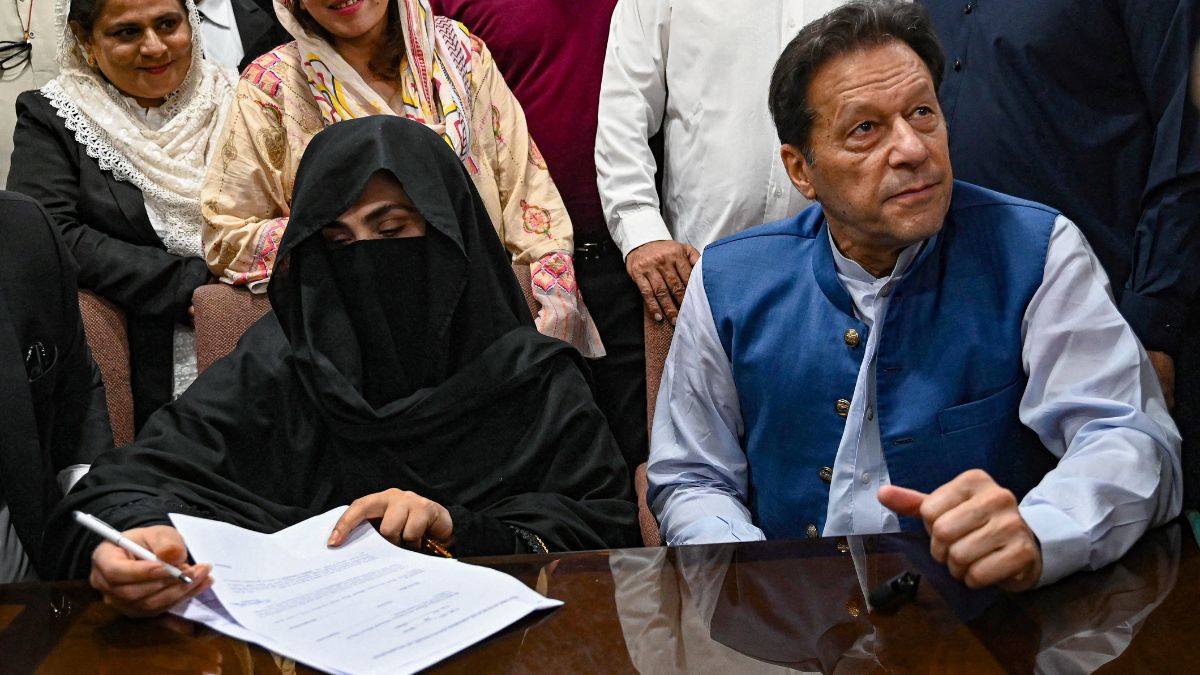 "Ex-Pak PM Imran Khan, wife Bushra Bibi, sentenced to 17 years in prison in Toshakhana case")
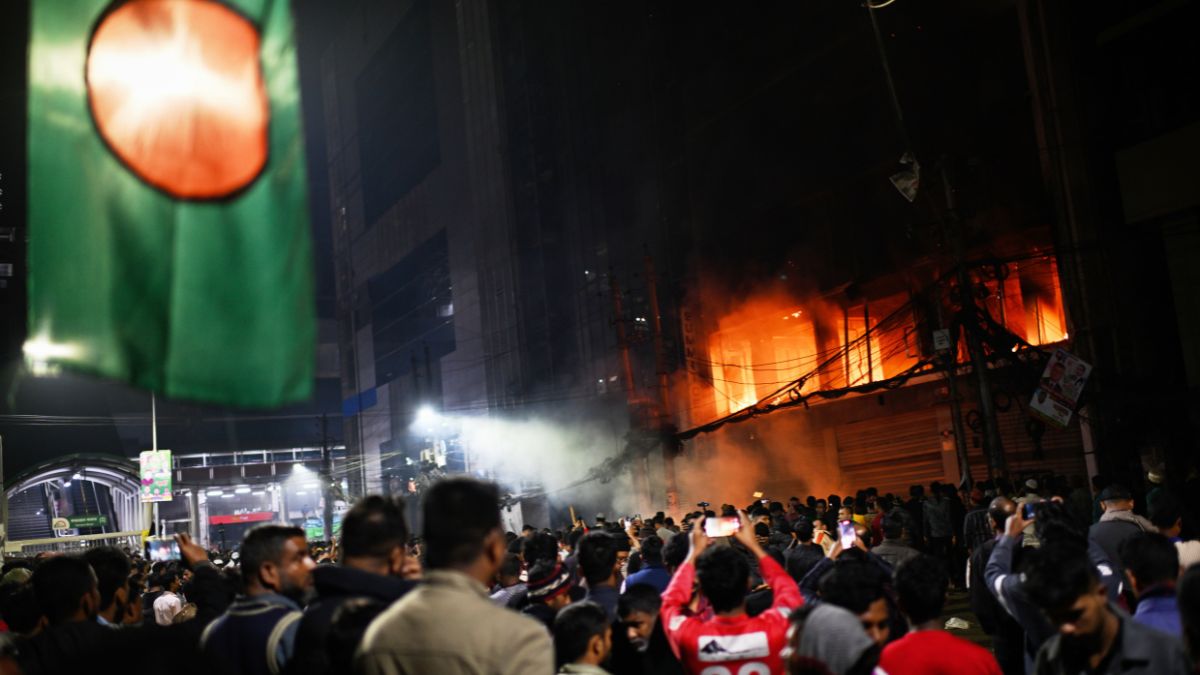 "Why Bangladesh unrest is a big worry for India")
 "Chief selector Agarkar, captain Surya explain Gill's absence from India's T20 World Cup squad: ‘Someone has to miss out’")
 "India T20 World Cup 2026 Squad Announcement LIVE Updates: Ishan Kishan reacts to his inclusion")
 "Ex-Pak PM Imran Khan, wife Bushra Bibi, sentenced to 17 years in prison in Toshakhana case")
 "Why Bangladesh unrest is a big worry for India")
 "Chief selector Agarkar, captain Surya explain Gill's absence from India's T20 World Cup squad: ‘Someone has to miss out’")
 "India T20 World Cup 2026 Squad Announcement LIVE Updates: Ishan Kishan reacts to his inclusion")



