

 "US religious freedom report: Limited use and unintended consequences")
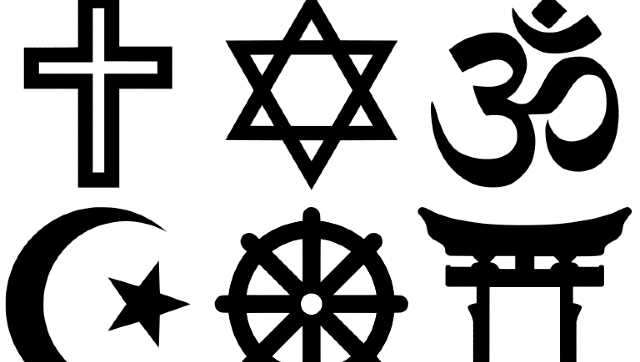
Every year the US Commission on International Religious Freedom brings out a report on the status of religious freedom in hundreds of countries. If it is for the use of the US government for formulating and implementing the country’s foreign policy, it is understandable. However, the report is released to the global public and it has several unintended consequences. Those who prepare the report do so by adopting meticulous research methodology. But admittedly there is no analysis or opinion of the Commission. It is bland compilation of data from governmental and non-governmental sources of the respective countries. In the absence of any examination of those data and verification of their reliability and motivations, if any, the reports in a way cast aspersions on the other societies. It also judges the state of religious freedom by using the American standard rather than on the basis of local history, customs, traditions and religious beliefs. And when the State Department accepts the report in its present form and bases its policies or responds to religious practices in other countries, it does create misunderstanding between the US and its allies and partners; and political confrontation between the US and its adversaries. For the last several years, the US reports on religious freedom in India, for instance, have created certain bad blood between New Delhi and Washington. The Government of India has sharply reacted to allegations by the State Department officials of violation of religious freedom in India based on the reports by USCIRF. When Secretary of State Anthony Blinken remarked in early June 2022 that there were rising instances of attacks on religious freedom in India and said that minorities in India were “under threat due to rising attacks on places of worships”, India’s reaction was sharp. Worse, US ambassador at large for International Religious Freedom Rashad Hussain accused that some officials in India “were ignoring and even supporting rising attacks on people and places of worship.” The Ministry of External Affairs responded by saying that comments by senior State Department officials constituted direct attack and were “ill-informed” and urged that “assessments based on motivated inputs and biased views be avoided”. India reminded the US about gun violence, racism and hate crimes in American society, simultaneously underscoring incredible religious tolerance practiced by people in India for centuries. Publishing such reports, including the Human Rights reports by the State Department for academic purposes or even some basic inputs for policy deliberations are acceptable, but when the high officials of the administration use it in conduct of bilateral relations, its outcome is invariably negative. It is important to note that the report on religious freedom is based on inputs given by US Embassy top officials and staff, who in turn interact with the local government officials, NGOs, civil society, media etc. to collect information. Bare facts without the background knowledge of local social, economic and political environment and practices cannot be taken as final truth. One wonders if the United States would allow embassies of all countries in Washington to indulge in similar activities and comment on the state of religious freedom in the United States. The US is an open society and scholars of other countries have access to all kinds of information in that country. It is truly laudable. But will the US government allow embassies of other countries to do so officially? Will the US, for instance, permit the Chinese government to use its embassy in Washington to prepare a report on religious freedom and then advise the US on how to protect religious freedom? In fact, the International Religious Freedom Reports and Human Rights Reports released by the US State Department are highly condescending and are increasingly resented by the international community. It is also noteworthy that such reports do not include the state of human rights practices in the United States or even the state of religious freedom exercised by the minority groups in American society. Religious freedom is one of the most significant parts of the First Amendment to the US Constitution. And, one of the vital components of it is separation between the State and the Church. If that is the case, why should the US State Department prepare a report on religious freedom in other countries? If it does, why not include a chapter on its domestic human rights and religious freedom practices as well? It is widely reported in the US media how “right-wing Christians” have been filing “religious freedom” cases in Courts that can give them leeway to “discriminate against members of the LGBT+ community.” What would Ambassador Hussain say on such attempts to weaponise “religious freedom”? According to a study, religion contributes about $1.2 trillion annually to the socio-economic value of the US economy. Another report, published in 2019, underlined how faith-based volunteer support groups that sought to address substance abuse and its recovery contributed more than $300 billion to the economy. There are concerns in the US about decline of religion and more and more people abandoning their religious identity and how it would cause mental health problems. Why then politicise “religion” in other countries? And as far as the state of religious freedom is concerned, the US should practice at home before promoting it abroad. As Rick Plasterer has pointed out: “The US became the only nation in the world with an Ambassador-at-Large for International Religious Freedom, with all American embassies required to report on the state of religious freedom in their particular country, with recommendations for improvement. Such commitment to religious freedom internationally is only possible with a culture of religious freedom domestically, which must be maintained against erosion and attack.” And a report, published in the Christian Post, points out that most States in the United States have “inadequate religious liberty protections”. It would perhaps be in the best interest of India-US strategic partnership that the top US State Department officials refrain from publicly commenting on the state of religious freedom in India. There should be bilateral dialogue on this issue where the American and Indian interlocutors can clarify “religious freedom” issues in their respective countries. This can avoid further politicisation of this issue and prevent disruptions in bilateral political ties. Such reports, in ultimate analysis, have limited use, but the unintended consequences of such reports do create hurdles in friendly relations between nations. The writer is editor, ‘Indian Foreign Affairs Journal’, founder and Honorary Chairperson of Kalinga Institute of Indo-Pacific Studies, and formerly professor of JNU. Views expressed are personal. Read all the Latest News , Trending News , Cricket News , Bollywood News , India News and Entertainment News here. Follow us on Facebook, Twitter and Instagram.
It would perhaps be in the best interest of India-US strategic partnership that the top US State Department officials refrain from publicly commenting on state of religious freedom in India
Advertisement
End of Article


 "Russian drones over Poland: Trump’s tepid reaction a wake-up call for Nato?")
 "As Russia pushes east, Ukraine faces mounting pressure to defend its heartland")
 "Why Mossad was not on board with Israel’s strike on Hamas in Qatar")
 "Turkey: Erdogan's police arrest opposition mayor Hasan Mutlu, dozens officials in corruption probe")
 "Russian drones over Poland: Trump’s tepid reaction a wake-up call for Nato?")
 "As Russia pushes east, Ukraine faces mounting pressure to defend its heartland")
 "Why Mossad was not on board with Israel’s strike on Hamas in Qatar")
 "Turkey: Erdogan's police arrest opposition mayor Hasan Mutlu, dozens officials in corruption probe")



