

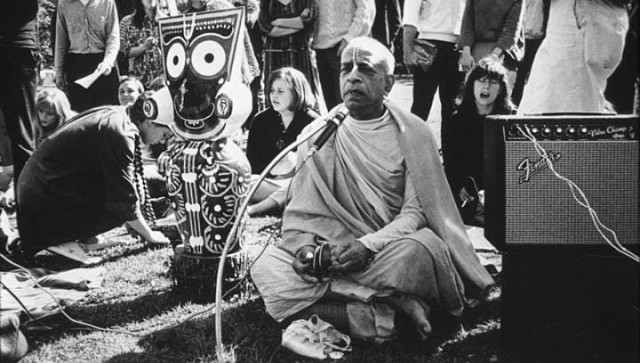
 "Right Word | How Srila Prabhupada, the founder of ISKCON, built a global spiritual movement from nothing")
On 16 November 1977, two days after he breathed his last at the holy city of Vrindavan in India, The New York Times paid a tribute in glowing terms to AC Bhaktivedanta Swami Srila Prabhupada, the founder of International Society for Krishna Consciousness (ISKCON), the biggest global Hindu spiritual movement started in the 1960s when the means of communication and transport were far and few especially for those spiritual masters who wanted to take the message of the East to the West. The NYT’s tribute gives a glimpse of the untold story of this great Master: “Swami founded the International Society for Krishna Consciousness in New York in 1965, shortly after he arrived in the city from Calcutta with $50 in rupees and a pair of cymbals: His aim was to spread the teachings of Lord Krishna, a Supreme deity in Hindu faith.” It further added, “The Swami set up 108 temples in major cities around the world. Estimates of the number of his followers vary from relatively few to hundreds of thousands.” Today the number of Temples have increased manifold and there is hardly a country on this earth where you don’t hear the chant of Mahamantra (Hare Krishna Hare Krishna, Krishna Krishna Krishna Hare Hare/ Hare Rama Hare Rama, Rama Rama Hare Hare) — a flagship and signature hymn of the Hare Krishna movement propelled by Prabhupada and ISKCON. One of the lesser known revolutions brought by ISKCON is in the field of publishing as it had sold more than half a billion books by 2014 itself (a major chunk of them comprises Srimad Bhagavad Gita and Srimad Bhagavatam). Srila Prabhupada himself wrote and published over 80 volumes of spiritual literature which includes one of the most authentic interpretations and commentaries on Srimad Bhagavad Gita and Srimad Bhagvatam. ISKCON is also known for running some of the biggest social welfare projects and a significant number of their full-time monks, especially in India, are alumni of premier institutes such as IITs and IIMs. Another section of monks comprises those who left everything when they were on the top of the corporate ladder and devoted themselves for the cause of raising and spreading Krishna Consciousness that forms the core of Prabhupada’s teachings as well as ISKCON’s functioning. However, the skill set of these top experts turned monks gets amply reflected in the way they run mega social welfare projects as well as carry out all other activities with a surgical precision. To cite an example, ISKCON Bengaluru runs ‘Akshaypatra’ the biggest mid-day meal programme ever in world history serving more than two million children quality and hot meals every day in addition to running multiple kitchens for the poor and the needy across the globe including many major cities in the developed world. While speaking at Stanford in 2005, Steve Jobs, the late founder of Apple, had recounted how he survived in his early days: “I didn’t have a dorm room, so I slept on the floor in friends’ rooms. I returned Coke bottles for the 5-cent deposits to buy food with. And I would walk the seven miles across town every Sunday night to get one good meal a week at the Hare Krishna temple. I loved it.” But behind this pan-global movement and highly motivational set of monks lies an almost unbelievable story of how Prabhupada, a 69-year-old monk from Bharat, reached almost empty handed in the US in 1965. By the time he had reached the US on a ship, he had two heart-attacks. And then he went on to set up major temples and a dedicated and international band comprising millions of followers of Lord Krishna across the globe within a span of 11 years. Being a septuagenarian didn’t stop him from traversing the whole globe 14-times during this short period of time to establish the Hare Krishna movement. This is a story about which our present and future generations should know. But ironically, they hardly know much about Srila Prabhupada and how he built a global spiritual movement from almost nothing! Let us try and take a look at some interesting nuggets of information that should give a glimpse of the feat accomplished by Prabhupada, who was born as Abhay Charan De on 1 September 1896 to a Hindu Vaishnav family in Calcutta. In 1922 he met Srila Bhaktisiddhanta Sarasvati, a spiritual master in the Gaudiya Vaishnava denomination who asked him to take the teachings of Lord Krishna to the English-speaking world. Abhay, later known by the honorific A.C. Bhaktivedanta Swami Prabhupada, spent the next 32 years preparing for his journey to the West. The first stop for Prabhupada when he landed in the US was Butler, Pennsylvania, the place known for the invention of the famous vehicle of the US army — ‘Jeep’. Interestingly, a local newspaper, Butler Eagle, was the first US publication to notice him. In a featured article, it wrote: “A slight brown man in faded orange drapes and wearing white bathing shoes stepped out of a compact car yesterday and into the Butler YMCA to attend a meeting. He is A. C. Bhaktivedanta Swamiji, a messenger from India to the peoples of the West.” The article referred to Śrīmad-Bhāgavatam as “Biblical literature” and to Śrīla Prabhupāda as “the learned teacher.” It also carried a picture of Prabhupada standing in the living room of an apartment holding an open volume of Śrīmad-Bhāgavatam. The caption read, “Ambassador of Bhakti-yoga.” However, his struggle had just begun. And it wasn’t about money only as depicted by one of the letters he wrote to Sumati Morarji, the owner of the shipping company in India which provided him a free berth and other support to reach the US in their ship ‘Jaldoot’. Prabhupada wrote, “When I was in Butler, Pennsylvania, about five hundred miles from New York City, I saw there many churches, and they were attending regularly. This shows that they are spiritually inclined. I was also invited by some churches and church governed schools and colleges, and I spoke there, and they appreciated it and presented me with some token rewards. When I was speaking to the students, they were very eager to hear about the principles of Srimad Bhagwatam. But the clergymen were cautious about allowing students to hear me so patiently. They feared that the students might be converted to Hindu ideas — as is quite natural for any religious sect. But they do not know that devotional service of the Lord Sri Krishna is the common religion for everyone.” After arriving in New York City in September 1965, Prabhupäda struggled alone for the first year to establish his movement. He lived simply, lectured whenever and wherever he got the opportunity, and gradually began to attract a handful of followers. In July of 1966, while still working alone from an obscure storefront on New York City’s Lower East Side, he founded ISKCON. At the time of its incorporation, he had neither the money nor even a single committed follower. Undeterred, he enlisted volunteers from a small group of those who attended his lectures regularly. They were the first trustees of ISKCON. It was just a matter of time before his magnetic personality started attracting the Who’s Who of the western world and that included the iconic band ‘Beatles’. The band in fact came out with an album on the ‘Hare Krishna MahaMantra’. George Harrison later recalled in a 1980 interview, “I remember singing it (the Hare Krishna mantra) just for days, John (Lennon) and I, with ukulele banjos, sailing through the Greek islands. (For) like six hours we sang, because you couldn’t stop once you got going. You just couldn’t stop. It was like as soon as you stopped, it was like the lights went out.” Allen Ginsberg, the author of ‘Howl’, was another ardent admirer of Prabhupada. He recalled the struggle of Prabhupada: “Usually all the gurus lived on the rich part (of New York] and were sponsored by the rich, but (Prabhupada) moved to the Lower East Side… where the hippies, acid-heads, freaks, amphetamine-heads, and the meth monsters were… It was a stroke of brilliant social judgment on his part.” It’s ironical that while millions of devotees across the world are carrying forward their spiritual journey under the aegis of ISKCON and large sections of society are getting benefited by their social welfare projects cutting across caste, creed, religion and nationalities, the story of its founder AC Bhaktivedanta Swami Srila Prabhupada is yet to reach most of the people in his own country!
The writer, an author and columnist, has written several books. He tweets @ArunAnandLive. Views expressed are personal.
Read all the Latest News , Trending News , Cricket News , Bollywood News , India News and Entertainment News here. Follow us on Facebook, Twitter and Instagram.

 "Russian drones over Poland: Trump’s tepid reaction a wake-up call for Nato?")
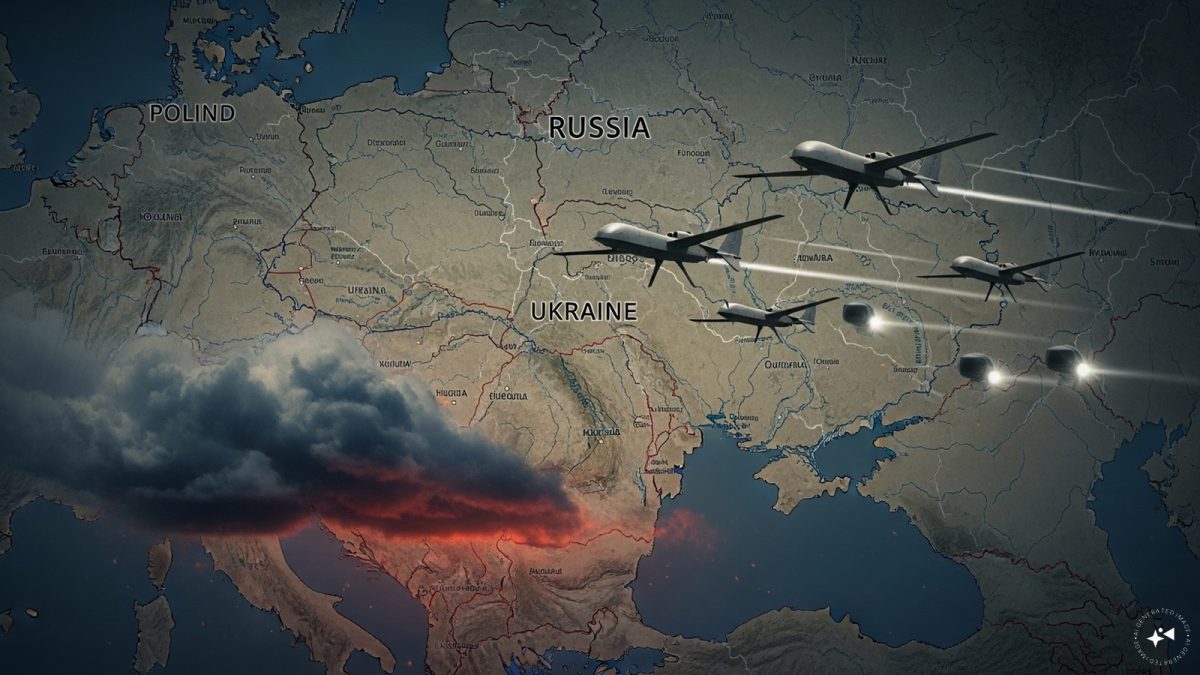
 "As Russia pushes east, Ukraine faces mounting pressure to defend its heartland")
 "Why Mossad was not on board with Israel’s strike on Hamas in Qatar")
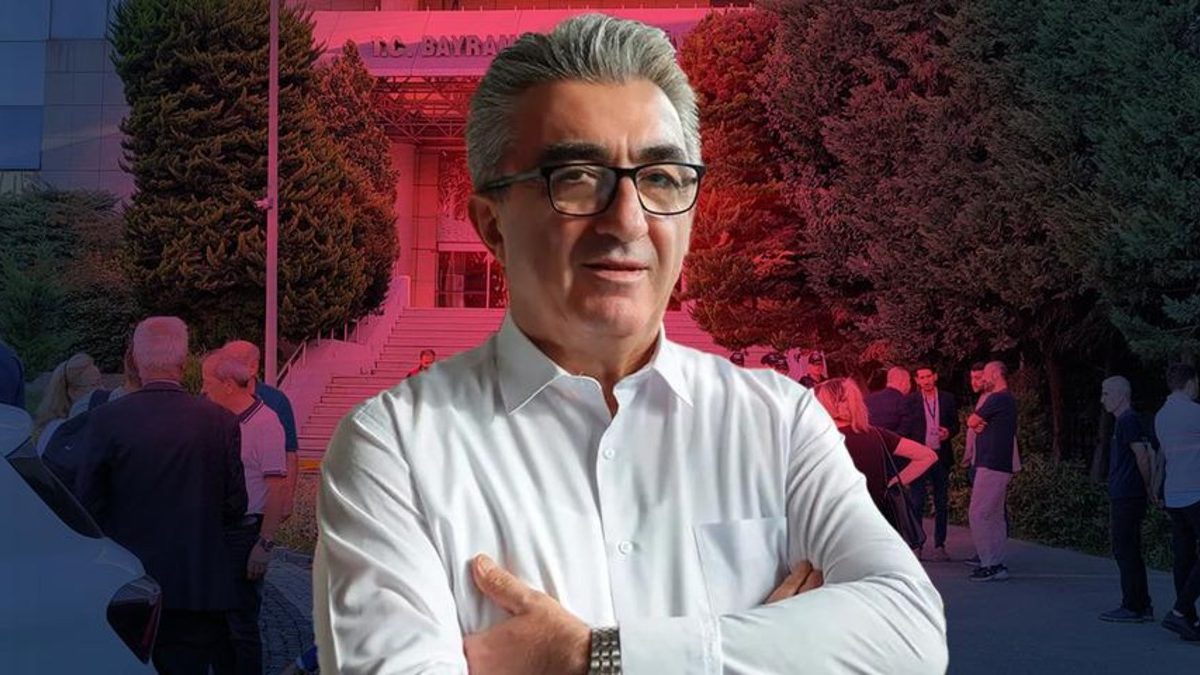 "Turkey: Erdogan's police arrest opposition mayor Hasan Mutlu, dozens officials in corruption probe")
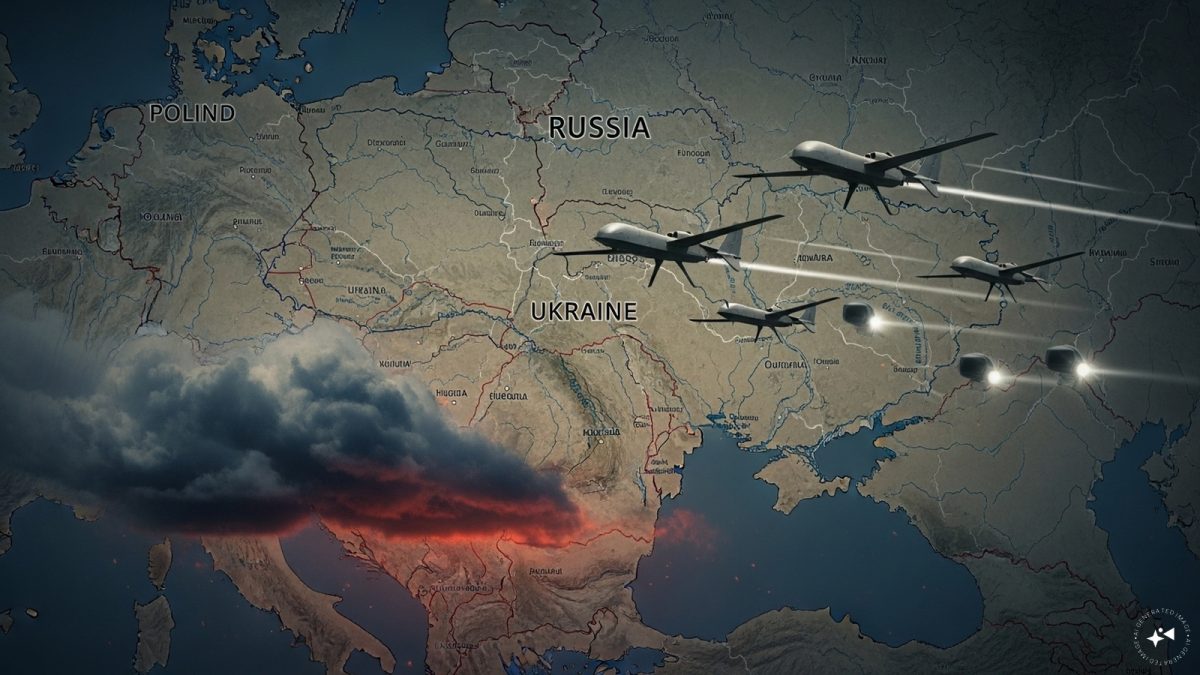 "Russian drones over Poland: Trump’s tepid reaction a wake-up call for Nato?")
 "As Russia pushes east, Ukraine faces mounting pressure to defend its heartland")
 "Why Mossad was not on board with Israel’s strike on Hamas in Qatar")
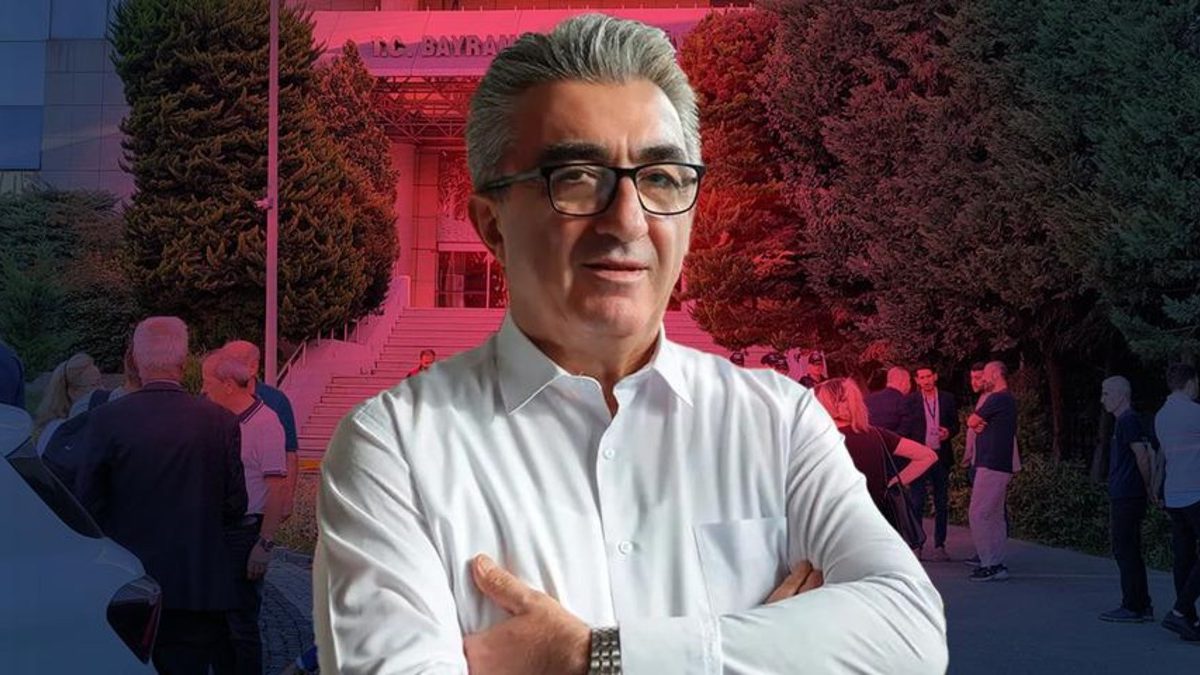 "Turkey: Erdogan's police arrest opposition mayor Hasan Mutlu, dozens officials in corruption probe")



