

 "Edtech for the future: Why having content for synchronous and asynchronous classes is crucial")
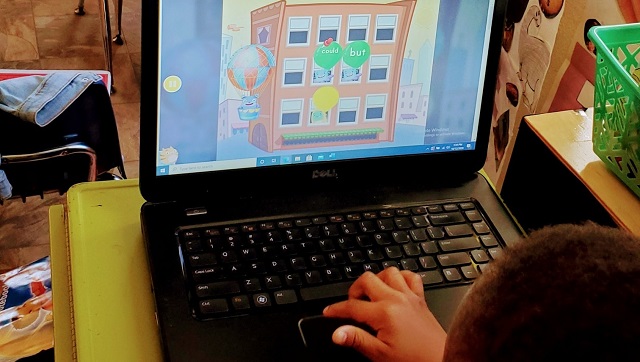
It is helpful to underpin education reforms, strategies and roadmaps in the objectives and values of education. While objectives may be universal and timeless, decadal shifts and innovations will require changing goal posts. Education thinkers from John Dewey, J Krishnamurthy, Aurobindo, MK Gandhi, Thich Naht Hahn, Vygotsky, Reggio Emilia, Kunskapsskolan, Piaget, Brofenbrenner and many other renowned philosophers, theorists and practitioners influencing education beliefs and practices pre and post-Independence, have stressed on the importance of holistic development, character building and nation building as the driving tenets for education practice. (How we measure up against these goals is not the space nor objective of this opinion piece, although it begs our never flagging attention). Emerging from these ideals is the economic and social value of education which we encounter daily in the real world, and is the driver of our daily chase – how should education help increase earning power, and how should education enable the socialization of our young for supportive behaviours? Increasingly the idea of “Future Makers” argued by Peter Ellyard – simply pondering probabilities and projecting ‘futurism’ is distinct from charting change and making the future, is finding expression in modern enterprises and innovations. To this extent how are our classrooms, which are at the frontlines of seeding this change, able to harness the virtues of Edtech solutions? How can digital solutions shape the course of how education is delivered? How can digital solutions shape the thinking power of students and teachers and develop higher-order thinking skills? For the last two decades or so, technology has struggled desperately to penetrate our classrooms with mixed results. Are we resistant to change or can we not comprehend the uses or advantages of technology in our education practices? Or is it that the digital industry is not able to make the leap and transform classrooms transcending barriers of curriculum, content, concepts, creativity, capacities, and cost? A mass scale shift to digital learning will bring about often not discussed, related developments. Exposure to edtech in the classroom will influence the technology quotient (TQ) of young people who in some sense are ‘digital natives’ more than their parents. Moreover, if students can learn the way they socialise – on the ether and with devices, this will not only help develop their TQ but may bring about gains in learning outcomes enabling the young with assisted learning or even help them to learn at their own pace. Edtechs have surely increased their footprint globally especially during Covid-19. However, we can expect a reversal to old practices, and so to ensure a more permanent disruption and to support the goals of education as stated above, solving for some challenges is a given. We throw the spot-light on some much needed inclusions: One of the major successes of edtechs has been that it has been able to provide edtech experience to students in Tier 2 and Tier 3 cities, which was earlier restricted to Tier 1 cities only. Thus, it is now important for edtechs to focus their attention on rural and underserved areas, where more than 60% of the population resides, and teachers to improve the quality of education, supplement the government education systems and provide feasible and economical education to socio-economically disadvantaged groups. Following from the above is the question of equity in edtech, around lack of availability and access of devices, internet connectivity, and the opportunity to use them in meaningful ways – for both students and teachers. This inequity in provision and usage has created a deepening divide. To ensure the benefits of edtechs for children from economically weaker sections and make use of digital technology for quality education, it might be relevant that state and central government can build long-term partnerships to cater to government schools and government-aided schools. Essentially increasing the reach for edtechs and democratising education. Thus, it follows that edtechs would need to vernacularise their content to reach a wider public. This will not only help in increasing their foothold but also serve to preserve the languages in the country. And while this is in line with the government’s national education policy 2020, gaps in vernacular content across subject streams especially in STEM, remain. The focus of the edtech industry has been on digital products and not on the accompanying pedagogy of technology aided learning. Factors like teacher’s lack of domain knowledge or lack of understanding of the anatomy of learning or integration with learning theories prevent content creators and teachers/users from navigating the curriculum with the help of technology. Many times, the fault lies not only in teachers’ understanding and capacity to use tech tools, but also in the way digital content is created. Teachers expect technology tools to aid in the visualization of concepts and when technology doesn’t further learning outcomes it results in sub-optimal treatment and ends up doing more harm than good – as student comprehension remains a gap or leads to more confusion and doubts. Most edtech start-ups are focused on the same K-12 and test-prep segment of the market, leading to competition which is made fierce due to the lack of differentiation. Lack of differentiation not only dilutes the brand presence for users but also negatively impacts profitability and the opportunity to scale the business. Lack of using predictive technologies and analytics in assessments to create learning pathways is one such required technology use case which is conspicuous by its absence – thus more computers-based tests for personalised adaptive learning need to be introduced. For government school systems this inclusion will enable the shift from NAS to universal assessment (all schools, all grades, all classes and all subjects), and will enable teachers to provide directed remediation to each student. This will also enable government systems to have a disaggregated data pool to plan for academic provision. The edtech market reserves the potential for exponential growth and tapping on its value can be extremely helpful for equitable, quality and inclusive education. Yet, given the organized chaos in the edtech space, a mechanism for regulating quality and standards is fast becoming a need. While this may sound counter intuitive but bringing about some order in edtech products and services, may increase traction and increase opportunities and ease of use. Finally, it may be said that a learning challenge arises from sporadic intersections of technology aided classrooms with traditional classrooms, which results in a fragmented learner experience lacking a closed loop learning process, learning continuity and concept unity. Instead, what is required are viable learning systems designed for processes to impart understanding. Edtech will only get implanted in the DNA of learning when teachers and students can access services with ease and start focussing on learning. Online learning will only report successes when content can be designed for independent learning and for synchronous and asynchronous classes. Authors Charu Malhotra is Co-Founder and MD, Primus Partners; Sayantani Chatterjee is AVP- Public Policy, Primus Partners and Nikhita Jindal is Senior Consultant- Research, Primus Partners. Views are personal. Read all the Latest News , Trending News , Cricket News , Bollywood News , India News and Entertainment News here. Follow us on Facebook, Twitter and Instagram.
The edtech market reserves the potential for exponential growth and tapping on its value can be extremely helpful for equitable, quality and inclusive education
Advertisement
End of Article


 "Russian drones over Poland: Trump’s tepid reaction a wake-up call for Nato?")
 "As Russia pushes east, Ukraine faces mounting pressure to defend its heartland")
 "Why Mossad was not on board with Israel’s strike on Hamas in Qatar")
 "Turkey: Erdogan's police arrest opposition mayor Hasan Mutlu, dozens officials in corruption probe")
 "Russian drones over Poland: Trump’s tepid reaction a wake-up call for Nato?")
 "As Russia pushes east, Ukraine faces mounting pressure to defend its heartland")
 "Why Mossad was not on board with Israel’s strike on Hamas in Qatar")
 "Turkey: Erdogan's police arrest opposition mayor Hasan Mutlu, dozens officials in corruption probe")



