

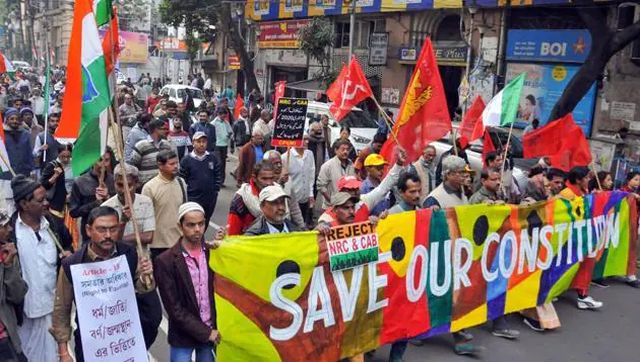
 "Confuse, if you cannot convince: Standard toolkit of CAA opposition")
The partition of India into two sovereign states in 1947 led to a huge displacement of the population. It led to the largest forced migration in the history of mankind. While the larger part of the Hindu population living in Pakistan chose to switch borders following the partition, there were some who were compelled to stay back for a host of reasons; a decision which led to a never-ending saga of persecution and atrocities. The Hindu population since independence has been facing persecution in Pakistan and Bangladesh—part of Pakistan till 1971, in spite of a mutually consented agreement between India and Pakistan’s first prime ministers Jawaharlal Nehru and Liaquat Ali Khan respectively. In the agreement, known as Nehru-Liaquat Pact, both states agreed that “The Governments of India and Pakistan solemnly agree that each shall ensure, to the minorities throughout its territory, complete equality of citizenship, irrespective of religion, a full sense of security in respect of life, culture, property and personal honour, freedom of movement within each country and freedom of occupation, speech and worship, subject to law and morality.” While India honoured the agreement in the letter and spirit, to an extent of appeasement, evident from the fact that former prime minister Manmohan Singh in 2006 declared that minorities, particularly Muslims, must have the “first claim” on resources so that benefits of development reach them equitably. However, this appeasement, part of Congress and Nehruvian leadership were never matched, in the smallest measure by Pakistan as state-sponsored persecution of non-Muslim people, especially Hindus is a stark reality even today. When Bhartiya Janta Party (BJP) formed the government in 2014, led by Prime Minister Narendra Modi, it decided to bring in an amendment to the existing citizenship act that would provide comparatively easy and quick citizenship to the persecuted religious minorities from Afghanistan, Bangladesh, and Pakistan that includes Hindus, Sikhs, Buddhists, Jains, Parsis or Christians. The Citizenship (Amendment) Act was passed by the Parliament and assented to by the President of India in December 2019 and came into force in January 2020. Since then, the lobby of self-acclaimed human rights activists, motivated groups of intelligentsia and media, and opposition parties have opposed CAA on grounds of being discriminatory against Muslims. The bogey of secularism and equality has been raised to derail a genuine attempt to correct a historical wrong in some measure. Home Minister Amit Shah while introducing the CAA bill in Parliament in 2019 had said that Muslims could not have been brought under the ambit of the legislation because they are not minorities in the three Islamic countries and had highlighted the fact that while the Muslim population of India had increased in last seven decades, the Hindus population in Pakistan and Bangladesh had declined drastically. The fact that the CAA intends at providing relief to persecuted minorities in three Islamic countries, has not convinced the detractors of the CAA. They keep on putting forward one or the other argument opposing the act with the sole aim of derailing the implementation of the amended act. Now Dravida Munnetra Kazhagam (DMK) which is one of the 200 petitioners who have challenged the CAA in court had filed an affidavit in the Supreme Court alleging that the exclusion of Tamil refugees from Sri Lanka from the CAA makes CAA a discriminatory act. As reported by Live Law the Affidavit filed by DMK’s organising secretary, RS Bharathi states that the CAA is arbitrary as it relates to only three countries, that is Pakistan, Afghanistan and Bangladesh and confined to solely only six religions i.e., Hindu, Sikh, Buddhist, Jain, Parsi and Christian community and expressly excludes Muslim religion. Even while considering religious minorities, it keeps such Tamils of Indian origin who are presently staying in India as refugees after fleeing from Sri Lanka due to persecution. Commenting upon the entire issue, noted author and Supreme Court lawyer J Sai Deepak says, “The manner in which Article 14 is applied to the CAA by its detractors is fundamentally flawed because it loses sight of the context of the CAA. First, Bharat does not have a sui generic refugee law. Therefore, an amendment to the CAA is a via media to provide for accelerated access to Bharatiya citizenship under the Citizenship Act itself. Second, the inclusion of specific groups from specific countries which have a shared problem doesn’t translate to exclusion of other groups such as Sri Lankan Tamils. After all, the CAA is an inclusionary legislation, not an exclusionary one.” He adds, “Third, matters of treatment of refugees require several security related considerations which are not amenable to judicial review. Fourth, if the Government is of the view that the position of Sri Lankan Tamils has improved and is not the same as it was a few years ago, there is no need to provide them with the same accelerated access to citizenship. In any case, the standard route to Bharatiya citizenship is still available to all those interested. Fifth, the CAA doesn’t in any way alter the fundamentals of vestation of Bharatiya citizenship in any way. Clearly, the detractors of the CAA have not thought through their position.” The issue is straightforward. Because India does not have a separate refugee law, the citizenship act provides for refuges related accommodation. What India does is that it makes certain amendments to its existing citizenship act to accommodate refugees coming from other countries. In the current scenario, India was obligated to protect the rights of those minorities who were Indian citizens before 1947 but were compelled to become part of Pakistan when India was divided. While India protected the rights of Muslims who chose to stay back in India, Pakistan failed to do so. So India had to take the charge and make a route for easy accommodation of these minorities who were forced to flee Pakistan in wake of persecution and are living the life of refugees. So, talking about Hindu refugees from Pakistan, Bangladesh, and Afghanistan does not mean that the Indian government tends to exclude anyone. Sri Lankan refugees was not taken into consideration because it is not the case of persecuted Hindu refugees in the context of Islamic republics. Moreover, it is neither required or expected, nor it is a constitutional obligation that each and every community has to be included while granting relief to the refugees. In the current context providing relief to the persecuted minorities from the three Islamic countries is both a moral and constitutional obligation as they were left at the mercy of circumstances at the time of partition. Including others is the prerogative of the Indian state that is well within its sovereign rights to grant or deny any outsider rights to citizenship. Those raising the bogey of equality should understand that even fundamental rights guaranteed by the Indian constitution are not for everyone. Certain fundamental rights have been accorded exclusively to citizens. It is also important to understand that refuge policy is part of such exclusive powers of the India State where any interference becomes very difficult because there are security and foreign policy considerations on the basis of which the Indian government decides who will be allowed and who will be not given the citizenship rights. So, comparing such an issue with the citizenship rights of India becomes extremely problematic. Currently limiting the relief to persecuted minorities from the three countries does not mean that it is excluding anyone or everyone else. Assuming this is like considering the absence of denial as consent. Yes, if CAA takes this position that in the future also other groups cannot be included apart from the current one then it can be argued how the government has closed this door. But, that argument will also hold little water as governments have their own reasons backed by the security and diplomatic considerations to accord or deny any outsider citizenship rights. So if the government decides that they will not allow Rohingya Muslims citizenship then that is the prerogative of the government. Opposing this prerogative can be based only on appeasement and protection politics. Reiterating what J Sai Deepak pointed out, it needs to be understood that CAA is positive legislation and not exclusionary legislation. It is talking about including some groups and not about excluding or disowning others. CAA does not change the fundamentals of the acquisition of Indian citizenship. At most what it does is that it reduces the waiting period for a certain group from 11 years to six years. Apart from this, these groups are not getting any other special treatment that other groups are deprived of. CAA does not close the regular way of acquiring citizenship. It is just providing an accelerated track in cerian cases. As for the case of Sri Lankan refugees, it can be assumed that the Indian government believes that Sri Lankan minorities and refugees are not facing persecution as is the case with the Hindu minorities from Bangladesh and Pakistan. If at any point in time the Indian government feels that Sri Lankan Tamils are being targeted and facing persecution and the situation is adversarial for them as it was during time times of civil war, it can always reconsider its position with respect to including them in groups being granted relief under CAA. So, making this non-issue an issue is just at the behest of vested interest groups who are hellbent on weakening India’s sovereign powers and putting India in the dock. Question Indian government prerogative in this particular context is akin to telling a sovereign nation that it does not even have the right to decide on its own who can come here and stay within its borders. It is like expecting a sovereign to overlook its security considerations and its national interest in exchange for being accorded the badge of being a secular, just, and fair state. The fact is that India currently shares a good relationship with Sri Lanka. The end of the civil war in Sri Lanka brought stability to the country fraught with sectarian violence for decades. One needs to ask in the last five years what sort of atrocities and persecution Sri Lankan Tamils had faced. It needs to be asked what human rights violation has taken place in Sri Lanka. This is a refugee policy and till someone comes under the category of refugee for unavoidable reasons they cannot be given relief. At this juncture including Sri Lankan minorities in CAA would mean that India is trying to send a message to Sri Lanka and the international community that it believes that the situation in Sri Lanka is not good and it is ready to play the role of a saviour which at any cost will not be appreciated by any sovereign nation. Yes, for India it becomes important to take a stand in the context of Pakistan and Bangladesh because Hindus are still facing atrocities there. News of rioting, murders, and rapes of Hindus in Bangladesh is reported on a regular basis. So, for India to accord the minorities an escape route is expected and desired. To ask for the same treatment for all is an act of great magnanimity that no modern state can afford to perform. It is as simple as that. And CAA protesters know this, but they also know if they cannot convince by facts, at least they can confuse by rhetoric. The writer is a journalist and researcher based in Delhi. He has worked with The Indian Express, Firstpost, Governance Now, and Indic Collective. He writes on Law, Governance and Politics. Views expressed are personal. Read all the Latest News , Trending News , Cricket News , Bollywood News , India News and Entertainment News here. Follow us on Facebook, Twitter and Instagram.
CAA protesters are well aware that if they cannot convince by facts at least they can confuse by rhetoric
Advertisement
End of Article

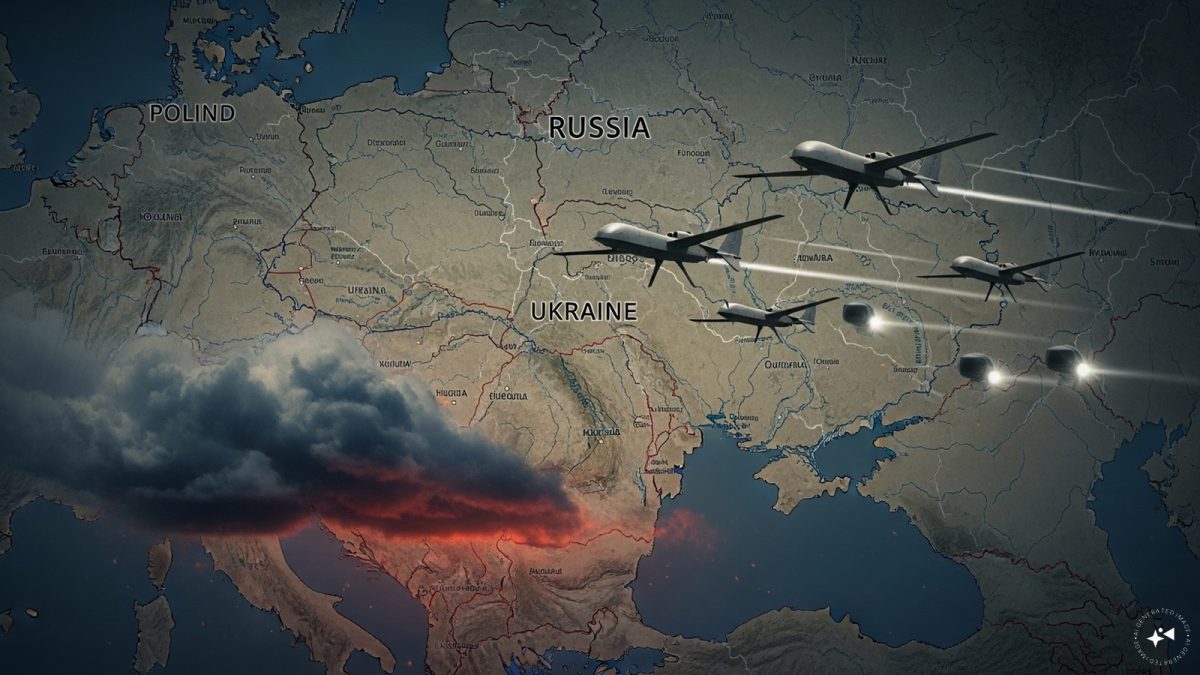 "Russian drones over Poland: Trump’s tepid reaction a wake-up call for Nato?")
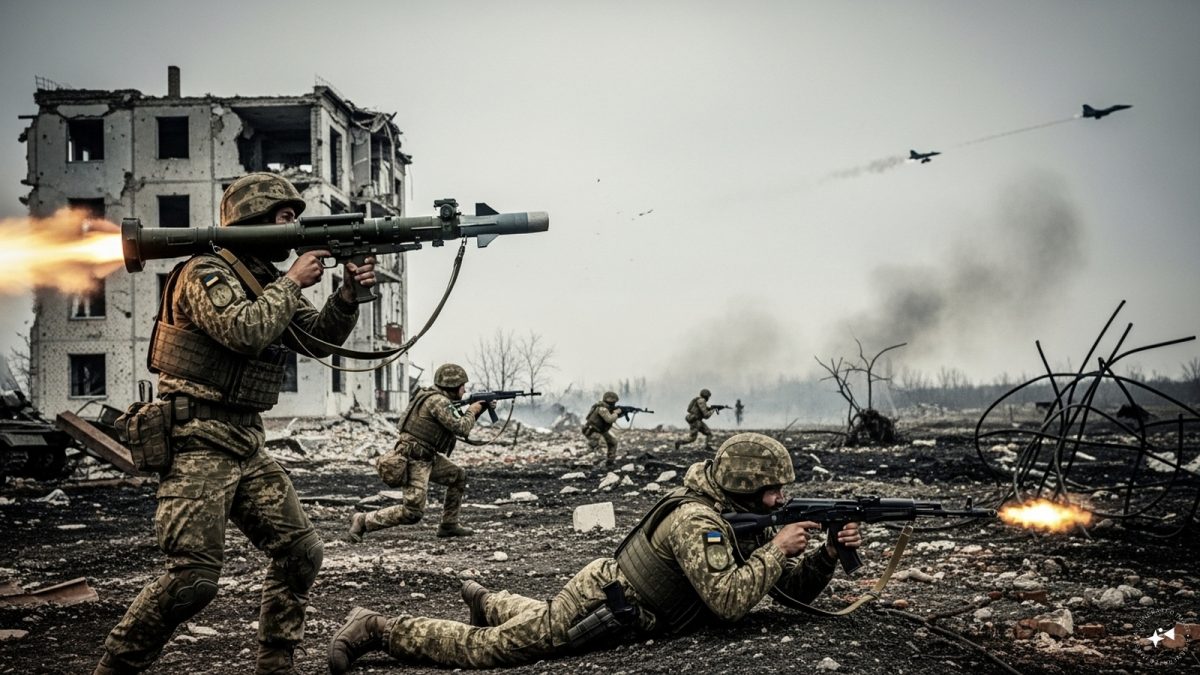 "As Russia pushes east, Ukraine faces mounting pressure to defend its heartland")
 "Why Mossad was not on board with Israel’s strike on Hamas in Qatar")
 "Turkey: Erdogan's police arrest opposition mayor Hasan Mutlu, dozens officials in corruption probe")
 "Russian drones over Poland: Trump’s tepid reaction a wake-up call for Nato?")
 "As Russia pushes east, Ukraine faces mounting pressure to defend its heartland")
 "Why Mossad was not on board with Israel’s strike on Hamas in Qatar")
 "Turkey: Erdogan's police arrest opposition mayor Hasan Mutlu, dozens officials in corruption probe")



