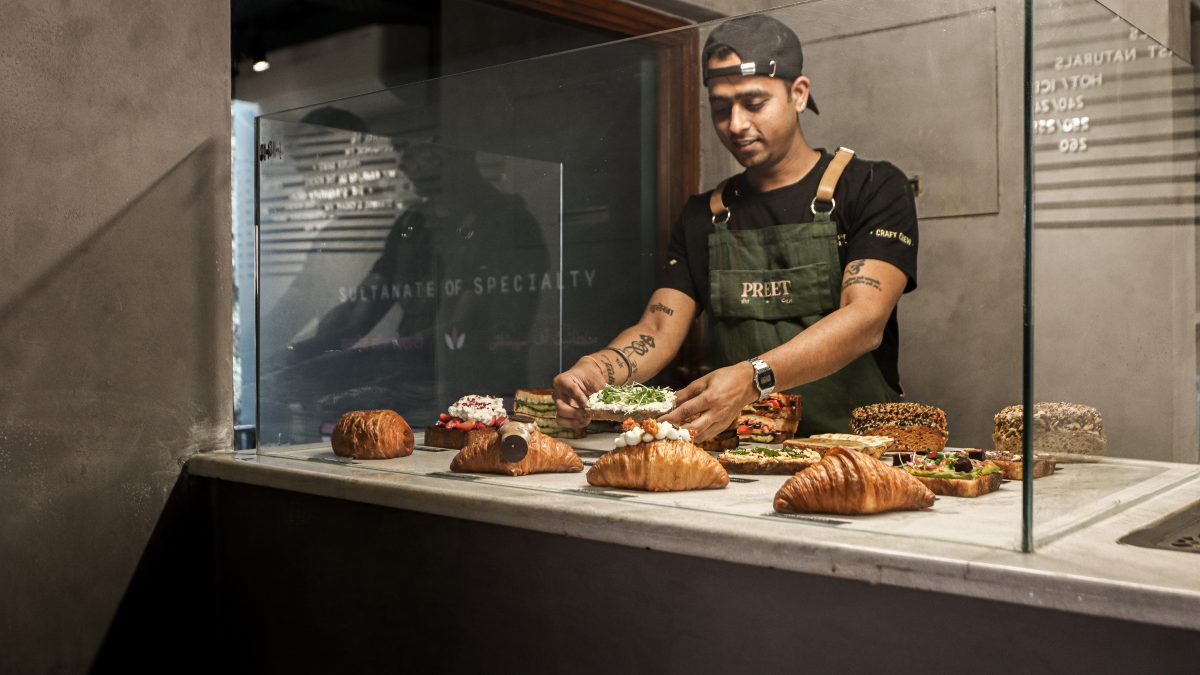
 "The coffee shop has never been just a café")
Subko’s Lodhi Colony outpost in Delhi is barely a month old. When I visited, it had been open for barely two weeks. The walls still felt new, the crowd not yet self-conscious. People came in alone, sat without urgency, stayed longer than they needed to.
Subko, of course, is not new to this kind of attention. Its Mumbai outpost in Bandra has long been a pitstop for anyone with a love for good coffee and a sense of community. Opened in 2020, a year defined by distance and disruption, the café did not respond to an existing culture of gathering so much as anticipate the one that would follow.
That sensibility has travelled with it to Delhi. But what people seemed to stay for was something less tangible. Not the caffeine alone, but the environment the café quietly brews.
Even in its earliest days, the LoCol outpost felt like a place settling into its role, allowing people to occupy it at their own pace. That early energy matters because it reveals why spaces like this are being built in the first place.
“Third places” and the creative condition
Being a creative today is rarely romantic. Work is hustle-heavy, precarious, and deeply network-dependent, fragmented across platforms and projects. Visibility often matters as much as skill. Most labour happens alone, mediated through screens. Even collaboration is usually remote or time-bound. You are expected to be self-driven, constantly available, and quietly resilient. The result is a strange contradiction. Creatives are always connected, yet often isolated.
Places like Subko emerge precisely in response to this condition. They are not just cafés. They are third places. Neutral, public spaces that sit between home and work, where people can show up without an agenda and still leave with something. Historically, creatives have always needed these kinds of spaces. Not studios or offices, but places of overlap. Places where thinking happens sideways.
Parisian cafés like Les Deux Magots and Café de Flore are often mythologised, but their function was practical. Writers, artists, and philosophers needed somewhere they could sit for hours, observe, argue, overhear, and be interrupted. These cafés were not sacred spaces. They were democratic ones. You could arrive alone, join a table, or simply exist in proximity to others who were also choosing to be there.
Filmmaker David Lynch often spoke about his love for the coffee shop atmosphere, describing it as distinctly American. Well-lit, open, and democratic. A place to watch people, pick up fragments of conversations, and let ideas surface. That same sensibility runs through his work, most famously in the Double R Diner in Twin Peaks. The café as a site of observation, tension, and quiet creativity.
The pandemic made the absence of such spaces painfully clear. French sociologist Pierre-Emmanuel Niedzielski describes this loss as the disappearance of “desired co-presence.” During lockdowns, virtual coffees and online hangouts proliferated, but few survived once restrictions lifted. What people missed was not conversation alone, but the choice to be together without obligation. At a café, you can interact or not. Come on your own or in a group. What unites everyone is that they have chosen the same place, at the same time, for their own reasons. That shared choice creates a low-stakes social fabric that no Zoom call can replicate.
There is also science behind why cafés work. Research on the “coffee shop effect” shows that moderate ambient noise, not silence and not chaos, boosts creative thinking. The low, steady hum of activity stimulates the brain without overwhelming it. Creativity, it turns out, needs energy, not isolation.
Where connections happen
Subko seems acutely aware of this. Its Lodhi Colony location is telling. Though in the heart of Delhi’s first public art district, its storefront is tucked between scattered shops, easy to miss if you’re not looking. It doesn’t sit on a high street or a curated cultural promenade. That’s exactly the point. Subko wants to be part of the everyday flow, a place people can stumble upon and occupy without the pressure of spectacle. The design reinforces this function without over-explaining itself. Shared tables and an open layout make conversation possible without making it compulsory. The mezzanine slows the pace, offering a way to stay without fully withdrawing. The space supports gatherings, screenings, and small cultural moments, not quick consumption, but the choice to linger.
As the Subko team puts it, LoCol is imagined as something specific to its neighbourhood, never copy-pasted. A meeting ground for Delhi’s design, music, and craft-driven communities, where people pause long enough to share ideas or co-create. “When someone walks into Subko,” they say, “they’re not just buying a cup of coffee. They’re entering a story about farmers, craft, regional identity, experimentation, and the Indian Subcontinent as a cultural ecosystem.” That story resonates most with people who are already asking questions about identity, consumption, and where they locate themselves in the world.
This sensibility helps explain why the pause cafes offer is crucial. Most creatives today spend their time online, producing, posting, responding. Offline spaces like this reintroduce the human element. Ideas rarely arrive when forced between deadlines. They surface when you are distracted, slightly stimulated, overhearing a conversation, or being introduced to someone you did not know you needed to meet.
In these moments, the space naturally encourages connection. People introduce friends, point collaborators toward each other, and communities that usually exist in silos begin to overlap. Food entrepreneurs converse with fashion students. Photographers meet writers. None of it is formalised; it simply emerges from the environment the café creates.
A global ecosystem
This pattern is not unique to Delhi. There are neighbourhoods like Brooklyn in New York, Seongsu-dong in Seoul, and Kreuzberg in Berlin that have long functioned as perpetual third places for creatives. Cafés, bookstores, and hybrid spaces blur the line between work, socialising, and culture-making. Even in Bengaluru, co-working cafés double as networking hubs. Cities that value creative labour tend to invest in the informal infrastructure that supports it.
India, by contrast, has relatively few public spaces designed for creative congregation. Creative roles are often undervalued, treated as hobbies rather than labour. Institutional support is limited. In this vacuum, cafés like Subko step in, not by accident, but by necessity.
There are smaller, more informal versions of this ecosystem, too. In areas like Humayunpur in Delhi, young creatives host pop-ups in skater shops, clothing stores, and temporary venues. Fashion, skating, music, and food intersect in experimental ways. These spaces skew younger, often attracting teenagers and people in their early twenties. They are driven by energy more than capital.
Subko’s demographic skews a little older, mid-twenties to mid-thirties. People young enough to experiment, established enough to sustain their creative work. Different generations need different kinds of third places. Subko seems to sit at an in-between stage, bridging aspiration with stability.
Why it matters
What makes spaces like this powerful is their self-awareness. Subko knows it is not just serving coffee. It is creating social capital. Its events, layout, and location shape a sense of shared culture. In many ways, it functions like a community centre for a demographic that does not traditionally have one.
Cafés like Subko are not becoming creative hubs by accident. They are filling a structural gap in how creative labour and social life function today. In an economy that demands constant output, they allow for a pause. In these spaces, you don’t always leave with a finished idea. Sometimes you leave with a conversation, a connection, or simply the sense of being part of something larger than your screen. Right now, that might be the most valuable thing a space can offer.

 "US-Venezuela Tensions Live Updates: Maduro's next hearing date set for March 17")
 "Anything but 'war': The words America uses to sanitise its Venezuela-like operations")
 "A Polymarket trader made over $400,000 after Maduro’s fall: Did they have insider info?")
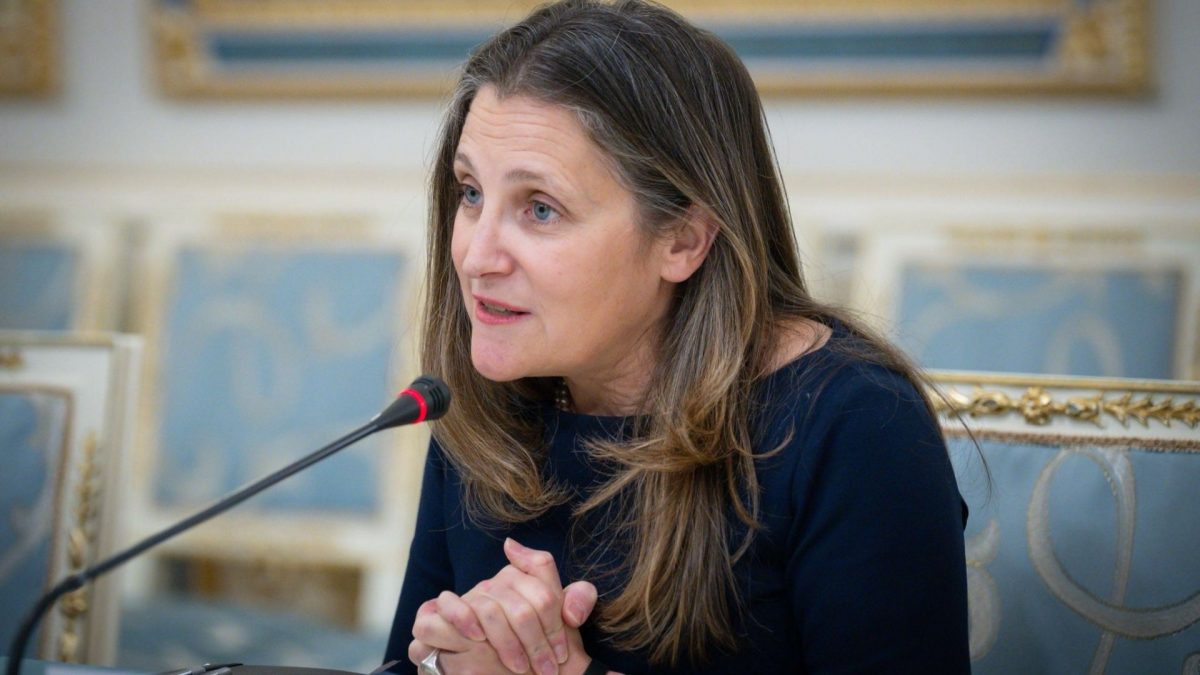 "Can Canada’s ex-finance minister fix Ukraine’s economy — something she couldn’t back home?")
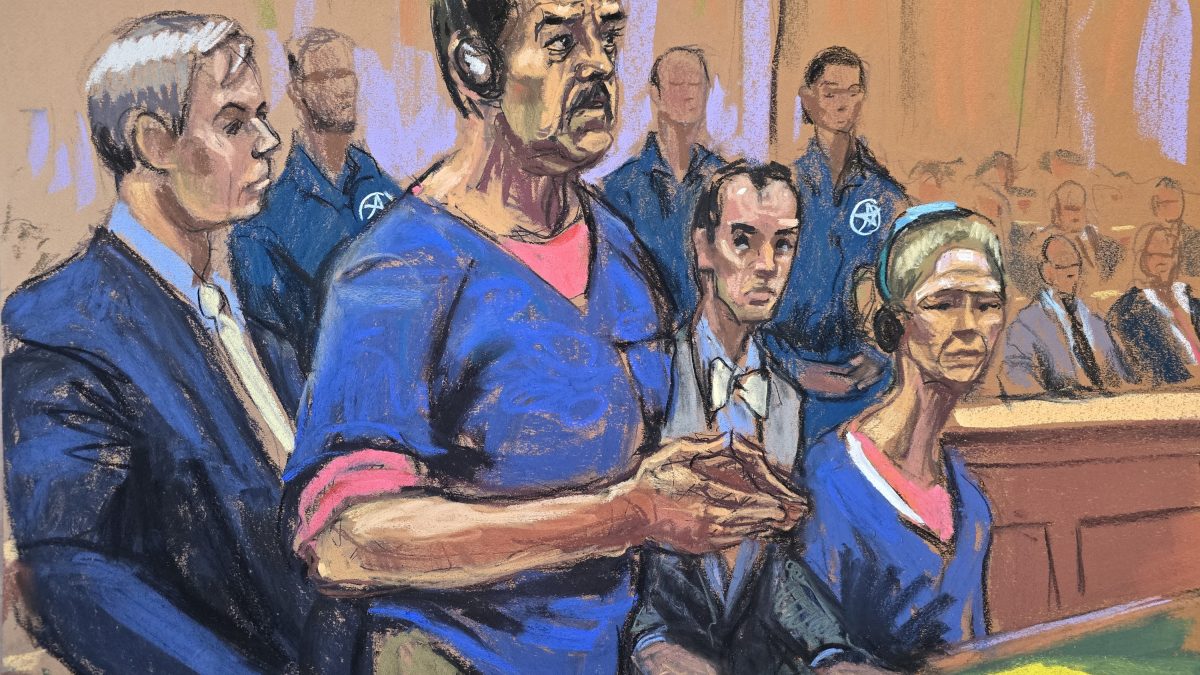 "US-Venezuela Tensions Live Updates: Maduro's next hearing date set for March 17")
 "Anything but 'war': The words America uses to sanitise its Venezuela-like operations")
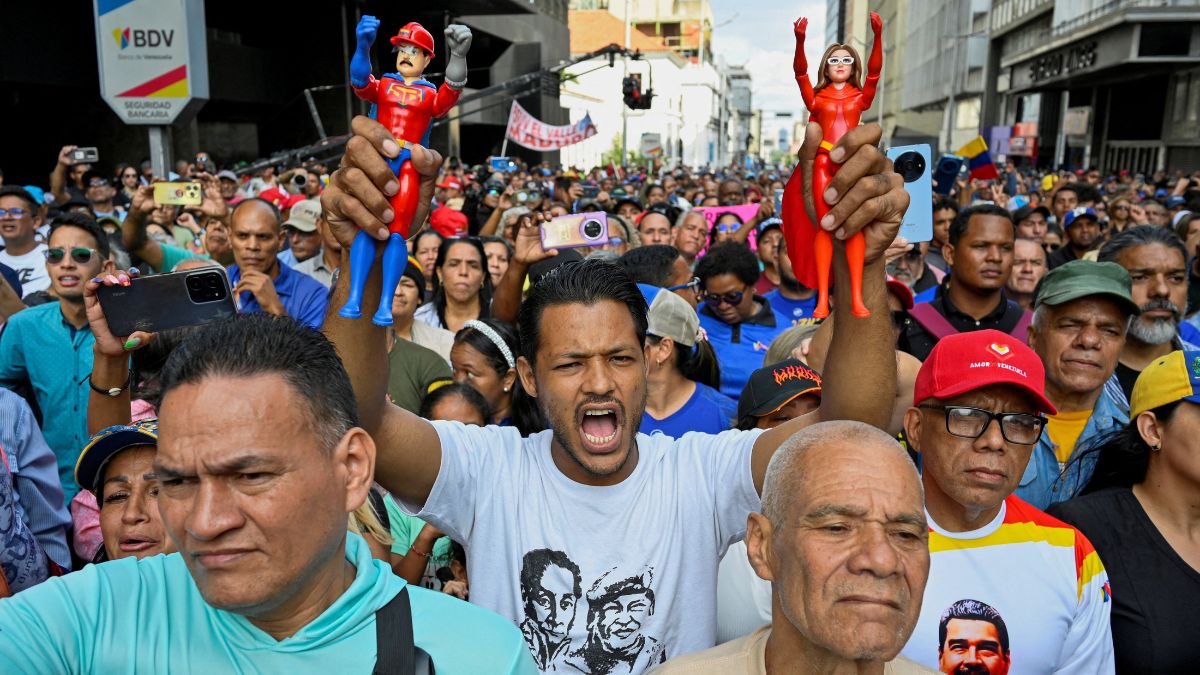 "A Polymarket trader made over $400,000 after Maduro’s fall: Did they have insider info?")
 "Can Canada’s ex-finance minister fix Ukraine’s economy — something she couldn’t back home?")