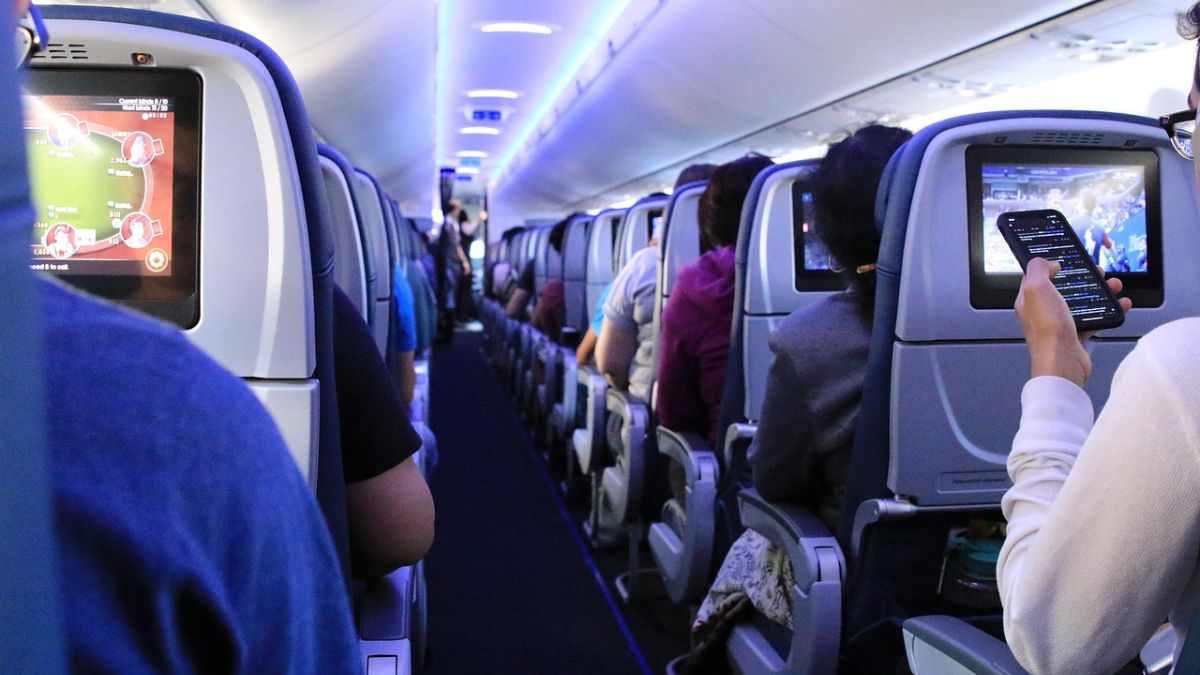
 "For $22 to $25, audiences climb into the darkness to discover what a plane crash might feel like. Representational image/Pixabay")
People pay money for concerts, movies, and theme parks. However, paying $22 to $25 to find out what a plane crash might feel like is a different form of entertainment entirely. And astonishingly, it’s a “runway hit” (pun-intended!) in Australia, slowly making its way to other countries as well!
Inside a pitch-black shipping container, passengers buckle into real airline seats, snap their tray tables into place, and listen to a “safety demonstration” that starts out normal, until it doesn’t. What follows is a 20-minute plunge into one of humanity’s most universal (and dreaded!) fears: a flight that’s destined to go wrong. Would you dare to be in one?
It’s called FLIGHT, part of the immersive theatre company Darkfield, and if you thought no one would willingly subject themselves to this kind of terror, think again. Sessions have been selling out across major cities across the world, drawing thrill-seekers, horror fans, and the curious souls alike.
It’s not your ordinary theme experience - it’s a mind game!
No screens, no jump scares, no mechanical motion - FLIGHT uses complete darkness and 360-degree binaural audio to trick your brain, making you believe you are actually trapped inside a doomed plane. The rattling overhead compartments, those blaring emergency sounds, the panicked and chaotic passengers around you, and the eerily calm crew announcements - they all combine to create something far more psychological than you think. The Broadsheet notes that throughout the aircraft, there are “unnerving creaks, whispers, sounds of children crying, and phones ringing play out on the periphery."
In that moment of complete darkness, your imagination fills in with what you can’t see. And that’s where things get truly unsettling!
Why are people paying for panic?
The thrill to flirt with your fear and walking out completely normal is what is making FLIGHT a massive success as a concept. You see, that’s the whole point. Us humans have always been attracted to the worst-case scenarios. For many, this is a cathartic experience. It’s curiosity. It’s the adrenaline hit of facing something terrifying without ever being in real danger.
Ms. Shruti Garg, an MA drama and movement therapist from London University, says “The attraction lies in controlling what feels uncontrollable. The adrenaline, the fear, and the imagined disasters let you face your trauma in a setting that feels dangerous but is actually designed to keep you safe."
Additionally, Garg also shares “As humans, we find at times, a sense of pleasure and curiosity in what feels unsafe for the sense of aliveness and adrenaline rush it brings to us."
As a matter of fact, many testimonies indicate that a large number of attendees said the experience felt “shockingly real” - too real, in fact, while for others it was a tad bit “underwhelming." Some on Reddit even reported hearing loss - a user shared “went in with two functional ears, no hearing issues whatsoever, and now I have confirmed moderate hearing loss in my right ear," highlighting an audio system that went too far in curating a real-life experience.
Controversial or popular: Two sides of the same coin
While critics argue that it trivializes something tragic like a plane crash, fans say it’s no different from a rollercoaster ride or a horror film. The experience is polarizing nevertheless: for some, it’s a thought‑provoking, unsettling encounter; for others, a disturbing and possibly unnecessary plunge into terror.
Over time, from 2019 to 2025, FLIGHT has maintained popularity and continues to run successfully, indicating sustained interest from audiences, not just a momentary novelty. According to The Guardian, over 100,000 people have attended Darkfield works across the UK, Australia, and Mexico. “FLIGHT is the second show from the company, and the third is called Coma (it’s exactly what it sounds like),” it wrote.