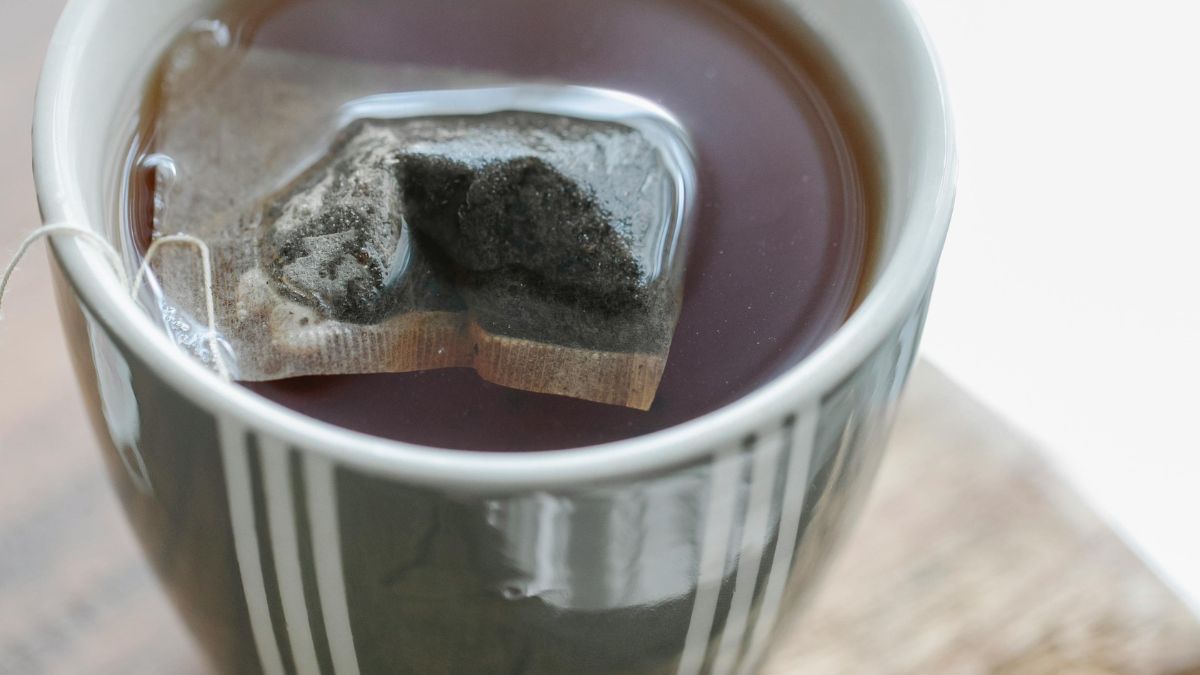
 "Your tea bags release up to one billion plastic particles into your drink during brewing, warn scientists. Pexels")
A seemingly harmless daily ritual - brewing a cup of tea - may come with an unexpected ingredient: microplastics.
Recent scientific research and reviews have found that tea bags, especially those containing plastic, can release enormous quantities of microscopic plastic particles into hot water during brewing.
Here’s what scientists discovered
Several studies have highlighted the scale of the issue. A widely cited experiment found that a single plastic tea bag can release about 11.6 billion microplastics and 3.1 billion nanoplastics into one cup of tea.
More recent analyses suggest that over a billion particles per cup can be released depending on the material used.
Some experiments reported even higher numbers, with up to 14.7 billion particles released during brewing.
These particles are extremely small (often invisible), and fall into two categories: microplastics (larger, but still tiny) and nanoplastics (so small they can enter cells).
Why tea bags release plastic
Not all tea bags are just paper. Many modern varieties contain materials like polypropylene, nylon, and plastic-based “silken” mesh.
When exposed to high temperatures (around 95°C) during brewing, these materials can break down or shed particles into the water.
Research reviews conclude that tea bags are one of the major sources of microplastics in tea, even more than the water or leaves themselves.
Can these particles affect your body?
Scientists are still studying the health impact, but early findings raise concerns.
Lab studies show human intestinal cells can absorb micro- and nanoplastics.
Some research suggests particles may enter the bloodstream and spread in the body.
Microplastics have been linked in broader research to potential inflammation, endocrine disruption, and other risks, though definitive human health effects are still being investigated.
Not all studies agree
It’s important to note that some regulatory reviews argue earlier studies may have overestimated particle counts due to measurement methods.
Even so, most scientists agree that plastic-containing tea bags do release at least some microplastics.
Here’s how you can reduce exposure
Experts suggest simple alternatives including switching to loose-leaf tea, using stainless steel or glass infusers, and choosing brands labeled plastic-free or biodegradable.
These options can significantly reduce or eliminate microplastic contamination.
Anuj is a senior sub-editor (lifestyle desk) at Firstpost who covers food, travel, health, and fitness, mostly because they’re all excellent excuses to leave the house. Powered by coffee, he spends his downtime airplane-spotting and exploring spirituality, hoping one day to understand both turbulence and the universe.