Life in the dark: 5 animals that don’t need eyes to live or hunt
In complete darkness, sight becomes useless. These animals have evolved to survive without eyes, relying instead on touch, vibration, smell or sound to navigate and hunt.
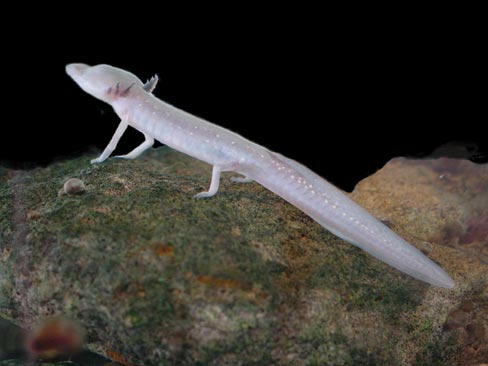)
The Texas blind salamander is a rare amphibian that lives in dark, underground aquifers in Texas and has no functional eyes. It locates prey by sensing water currents and chemical cues in its environment. File photo/ Wikipedia
Although it has tiny eyes, the star-nosed mole relies almost entirely on its star-shaped nose, covered in thousands of sensory receptors. It is considered one of the fastest-eating mammals, identifying prey in milliseconds. File photo/ Wikipedia
Found in underground caves worldwide, blind cave fish are born with eyes that slowly degenerate over time. They use a sensitive lateral line system to detect vibrations and movement in the water. File photo/ Wikipedia
Caecilians are limbless amphibians with extremely reduced eyes hidden beneath skin or bone. Specialised sensory tentacles near their snout help them detect prey in soil and leaf litter. File photo/ Wikipedia
One of the few truly eyeless spiders, the Kauaʻi cave wolf spider evolved in the dark lava tubes of Hawaii, where eyesight became unnecessary. Instead, it hunts by sensing vibrations and movement in its surroundings. File photo/ Wikipedia