Budget 2026: Key Indian archaeological sites set for a revamp
Budget 2026 put a renewed focus on the rich history of India. Speaking on the theme of heritage and culture tourism, Union Finance Minister Nirmala Sitharaman proposed to develop 15 archaeological sites into vibrant, experiential cultural destination. Excavated landscapes will be opened to the public through curated walkways. Immersive storytelling skills and technologies will be introduced to help conservation labs, interpretation centres, and guides. Checkout some of the key archeological sites under focus.
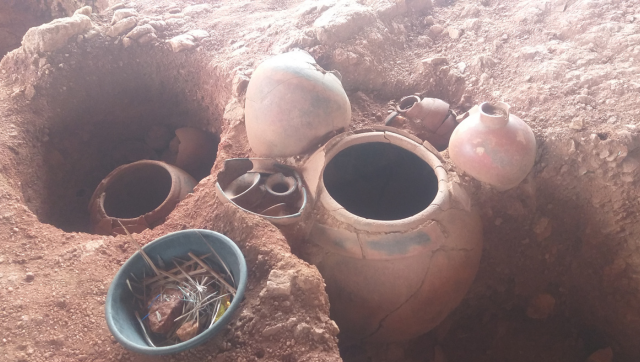)
Adichanallur, located on the banks of the Thamirabarani River in Tamil Nadu's Thoothukudi district, is a premier, 3,000-year-old Iron Age-Megalithic archaeological site. It is famous for extensive urn burials, high-tin bronze objects, iron tools, and gold diadems, indicating a highly advanced civilization. Recent studies suggest a cosmopolitan population (Negroid, Australoid, Dravidian traits) and date the site back to at least 905 BCE to 1384 BCE. Wikipedia
Leh Palace, also known as Lachen Palkar Palace, is a former royal palace overlooking the city of Leh in Ladakh, India. It was constructed circa 1600 AD by Sengge Namgyal. The palace was abandoned when Dogra forces took control of Ladakh in the mid-19th century and forced the royal family to move to Stok Palace. Pixabay
Sarnath is a town northeast of Varanasi, in Uttar Pradesh, India. As the Lalitavistara sutra states, Gautama Buddha chose Deer Park by the Hill of the Fallen Sages, outside of Varanasi for his first teaching after he attained enlightenment in Bodh Gaya. The teaching is entitled Dhammacakkappavattana sutra. Pixabay
Dholavira, located on Khadir Bet island in Gujarat's Kutch district, is a premier, well-preserved Harappan city. It is known for its advanced 5,000-year-old urban planning, sophisticated water management, and extensive stone architecture. As a UNESCO World Heritage Site (designated 2021), this 5th largest Indus Valley site features a fortified city, monumental reservoirs, and unique artifact workshops. Pixabay
Lothal, located in Gujarat, India, is one of the most prominent, 4,500-year-old archaeological sites of the Indus Valley Civilization. It is famous for housing what is believed to be the world's earliest known dockyard, connecting the ancient city to the Sabarmati River. Discovered in 1954, it was a thriving, planned port-city, known for maritime trade, bead-making, and advanced urban planning. Pixabay
Hastinapur is a city in the Meerut district in the Indian state of Uttar Pradesh. Hastinapura is described as the capital of the Kuru kingdom in Hindu texts such as the Mahabharata and the Puranas. It is also mentioned in ancient Jain texts. Hastinapur is located on the right bank of the Ganga river. Wikipedia
Five interconnected mounds spread in a huge area form the Rakhigarhi’s unique site. Two mounds, out of five, were thickly populated. This site was excavated by Shri Amarendra Nath of Archeological Survey of India. The archaeological excavations revealed mature Harappan phase represented by planned township having mud-brick as well as burnt-brick houses with proper drainage system. The ceramic industry represented by red ware, which included dish-on-stand, vase, jar, bowl, beaker, perforated jar, goblet and handis. Wikipedia
Arpita Chowdhury is Sub Editor (Travel) at Firstpost. She is a writer, poet, and researcher with a strong background in human interest storytelling. She completed her MA in Journalism and International Affairs at University College Dublin in collaboration with CNN Academy. Her reporting and commentary have appeared in numerous national and international dailies. She runs on masala chai. Arpita can be reached out at arpita.chowdhury2@nw18.com