From 2_G_ to CW_G_ to Coal_G_ to VadraG to Nitin_G,_ Indians have been treated to a procession of scams since 2010. And there is no certainty that the spectacle will end anytime soon. We are corrupt, big-time. At our own less exalted levels, we know we bribe traffic policemen for jumping signals, we offer minor bakshish to postmen for delivering us our parcels. And most tax consultants do advise taxpayers to sweeten things a bit for quick refunds. And so on. We are also corrupt, small-time. From top to bottom, we are surely far more corrupt that many other nations of communities. In case we haven’t got the point, we have Arvind Kejriwal reminding us about it every day. His message is: everyone is corrupt except us. [caption id=“attachment_504703” align=“alignleft” width=“380”]
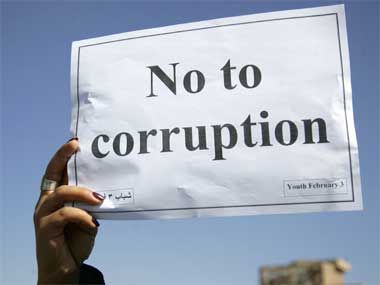 Arvind Kejriwal is right in saying that the system is the problem, so it is worthwhile understanding how we created the system so that we can unravel the knots. Reuters[/caption] However, he can’t be right. If everyone is corrupt, how is Kejriwal himself immune to this virus? He has entered the same political cesspool to fight the virus. Aakar Patel, writing in Firstpost and The Express Tribune, says corruption is a moral issue, not a political one. Hence the solution lies in moral regeneration, not in politics. I doubt that we are corrupt because we are just amoral or immoral, or that politics is not the place to fight it. Of course, politics is not the only place to fight it, but it is not the place to avoid a fight either. Without fighting it in politics, the institutional reform that is crucial to tackling corruption will never happen. I have four propositions to make on the issue of corruption. First, corruption cannot be a moral issue – though we can imbue it with that quality – because morality is a function of culture, environment and circumstances. Consider this example: you can get a railway ticket cheap by buying it from the IRCTC website in advance; you can also land up at the last hour and buy a Tatkal ticket for a higher price. The same thing happens with airlines. The late bird has to pay a premium. But if we have a tout selling the same ticket to collect a premium, we call it corruption. Is corruption merely about who collects the premium? Second, Indians are not inherently corrupt – though what we see around us may convince us otherwise. Every individual responds to the inputs provided by the system he or she lives in. Every system is based on two things: incentives and penalties. It is the skewed system of incentives and penalties that makes corruption worthwhile or not worthwhile. If we have to fix corruption, we have to evaluate the whole system of incentives and penalties that feeds the current system. Third, corruption cannot be divorced from the economic and political system you choose, and the institutions you build to support those choices. In India, we chose a mixed economy and universal suffrage in 1947 without creating the powerful and independent institutional that would have supported an open society with low levels of corruption. Fourth, corruption is not about individual morality or ethics alone. It is about institutions. The RSS-BJP flap over Nitin Gadkari’s corporate capers shows that emphasising morality won’t help. The RSS – whatever you views on the organisation – does emphasise personal probity and sacrifice, and Gadkari is an RSS man even if he is the BJP President. But he messed up. Was it just a case of moral turpitude or is it that the politico-economic system we have created needs Gadkari-type deals to navigate it? Arvind Kejriwal is right in saying that the system is the problem, so it is worthwhile understanding how we created the system so that we can unravel the knots. This is what we did wrong. Our society is relationship-based rather than rule-based. To change over from one to the other, you need to create super-strong institutions which would penalise illegal activity and incentivise legal behaviour. Given our caste- and community-based social structures, our institutions had to be completely outside these two structures to deliver the goods. To understand this point, let’s take another example from another field: share trading. In the 1980s and 1990s, the Bombay Stock Exchange (BSE) was a trading club dominated by a cartel of Marwari and Gujarati brokers. There was extreme trust (i.e. honesty) within the cartel, even strong mutual support, but together they managed to work against the interests of outsiders – especially investors. In short, they ran a relationship-based stock exchange. They were not trying to be unfair to investors – they needed investors more than anything else – but their own relationship-based working structure meant the rules were tweaked to help themselves first. This system was ended only when the National Stock Exchange – a for-profit institution whose primary interest was the sanctity of trades, not trader interests. The NSE set the rules, and brokers had to like it or lump it. As trading volumes surged in this transparent system, the same BSE brokers who were happy to run cartels on the BSE switched to the NSE because they knew there would be no favouritism. It was a rule-based mechanism they could trust. The old relationship-based model could be abandoned. This is how you change a system: tough regulation ensures that you can’t do business as usual; creating an alternative gives you a path to shift to rule-based relationships. This is what we failed to do with our country in 1947. We did not create institutions that could not be captured by community- or caste-based forces, whether it was our electoral system or our economic system. The second mistake we committed was to take the middle path. To opt out of relationship-based systems, we could have adopted either Capitalism or Communism – both antithetical to caste relationships. But we chose the middle path – and thus allowed caste combos to capture the state. A capitalist path would have forced the government to create strong property rights, and a legal system to protect the sanctity of contracts. A communist system would have created state capitalism – it would have ultimately failed, as we have now seen – but in the process it would have broken the back of privilege and caste before that. Even with a mixed economy, we could have created independent institutions that were not vulnerable to short-term political pressures – but after the initial years, short-term politics managed to destroy all our institutions since it encouraged caste-based and community-based electoral alliances to capture them. This is why even 60 years after we introduced reservations, we still don’t have justice for Dalits or scheduled tribes – because both better-off Dalits and non-Dalits have managed to game the system. The late Samuel Huntington, author of The Clash of Civilisations, and Political Order in Changing Societies, saw corruption as almost inevitable in unstable and changing societies – and India is exactly that kind of society. Huntington saw corruption as an attempt by those without economic power to use their votes as bribes to obtain a share of economic benefits; conversely, those with economic power (but without political clout) use financial bribery to buy themselves political and policy clout. Put another way, the economically and socially backward communities (Dalits, Muslims, OBCs) barter their votes for jobs and subsidy benefits – which is one form of corruption. The upper classes and businessmen, who are outnumbered in the political game, use economic power to get what they want – which is what we generally call corruption resulting in 2G, Coalgate, Vadragate, etc. When Sonia Gandhi uses state resources to buy the votes of the poor; she is using the economic power of the state to buy political power for her family. In this situation, you cannot avoid corruption since one family cannot rule a diverse country without the acquiescence of other power centres – for which the price is often the right to corruption. To make ourselves less corrupt, we need a political and economic reforms process that will incentivise good behaviours and penalise bad ones. These include: *Electoral reforms and state funding of elections – so that politicians don’t have to grab public money for campaigning *Creating strong, independent institutions that will administer the law impartially. Some institutions already exist for this – such as the Election Commission, or the higher courts – but many more remain wedded narrow interests. *Creating free markets, including the market for labour, and eliminating subsidies – and protecting only the really needy – so that producers can get a full market price. *Creating strong regulators to play referees in the markets. Giving jobs in regulatory agencies to IAS officers must be abandoned. *Deregulating and eliminating the licence-permit raj, so that rent-seeking is reduced. *Eliminating the discretionary power of ministers and bureaucrats. *Above all, the solution for excess corruption is less government, not more. The solutions to corruption thus depend on politics as much as morality. I would argue this: no society is corrupt or honest by definition. They become corrupt or honest depending on the institutions they create. In India, dynastic politics and caste-based decision-making has enabled some groups to capture and subvert many institutions that are needed to uphold the rule of law and enforce fairness.
We are not a corrupt society; we just chose badly in 1947
R Jagannathan
• October 27, 2012, 11:54:17 IST
We seem so much corruption around us that we think we must be corrupt. The problem is the choices we made in the early years of independence
Advertisement
 "We are not a corrupt society; we just chose badly in 1947")