

 "Under Narendra Modi and S Jaishankar, India's foreign policy sheds penchant for Nehruvian principles to chart out right course for diplomacy")
Swedish sociologist Gunnar Myrdal has (in)famously called India a ‘Soft State’ - a state that requires extraordinary little of its citizens. The same can be said, without loss of generality, about India’s foreign policy which has meandered, since Independence, under Nehruvian predilections of non-alignment, without anchoring itself firmly. Finally, after many years of neglect, India’s foreign policy is on the right track under the able stewardship of Prime Minister Narendra Modi and Foreign Minister S Jaishankar. To understand how and why this has happened, we need to delve into a brief background of how international relations are structured before telescoping into India’s past and present foreign policy. The Law of the Nations It was Thomas Aquinas (the great medieval philosopher whose works could never escape the affliction of Aristotelian teleology) who cogently summarized in the 13th century how to escape chaotic and anarchic international relations. Aquinas distinguished between the laws of individual states and ius gentium (law of the nations) which all states have a moral and divine obligation to adhere to. However, Aquinas failed to delineate precisely what his ius gentium meant. In the late 16th century, Spanish Jesuit theologian — Francisco de Vitoria — defined ius gentium as a law that was “created by the authority of the whole world - and not just pacts and agreements between individual nations”. [caption id=“attachment_6737191” align=“alignleft” width=“380”] 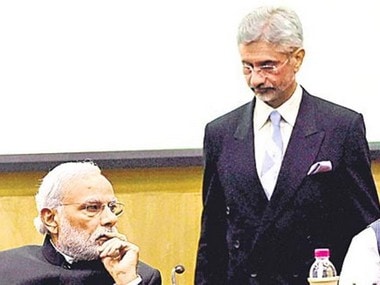 File image of Narendra Modi and S Jaishankar. PTI[/caption] De Vitoria’s larger point is quite clear – individual treaties rarely result in unblemished public good. For instance, the Treaty of Tordesillas (1494) between Spain and Portugal opened the flood-gates of colonization across the world (including India), and the Treaty of Versailles (1919) is rightly famous for its punitive terms and the role it played in giving rise to the hydra-headed, malignant obverse of German nationalism. However, it was the Dutch jurist, Hugo Grotius, who, in 1625, worked out a system of managing international relations that prevailed till the 20th century. Grotius posited that by the natural law of sovereign equality, all nations were obliged to (a) respect each other’s complete autonomy on domestic matters; (b) not interfere in each other’s domestic matters (barring extenuating circumstances such as genocides, and massacres). Further, ius gentium meant that international relations would be regulated by a ‘compact’ of mercantile and maritime laws that traditionally prevailed, and treaties made between individual nations that have been enforced either through contract or war. The system devised by Grotius did not need any ideological concurrence and worked perfectly well in maintaining peace in the 18th and 19th centuries, until the horrific World War 1 (WW1) of the 20th Century. And from the ashes of WW1, rose EH Carr’s realism as opposed to the utopian view of foreign policy that prevailed till then. Carr believed that utopianism or idealism in foreign policy was nothing but a guise devised by the elite to hold onto their power. Instead of “discarding what has been and what is in favour of a sceptre of wishful thinking of what could be or ought to be”, we should instead focus on “deducing from what has been and what is, what could be, not what ought to be”. Carr’s realist doctrine differed from realpolitik. Pure realpolitik (as in the case of Cesare Borgia, Richard Nixon, Indira Gandhi) results in naked and ungainly pursuit of power – both as the means and the ends. However, realism is a perfectly proportioned concatenation of adequate amount realpolitik (which enables nations to realise that monetary power more often than not trumps other considerations) and utopianism (which enables one not to abandon the precepts of liberalism, religious ecumenism, and cultural pluralism). India’s foreign policy – past and present Subhas Chandra Bose, the great patriot and son of India, described Nehru’s stance on foreign affairs as “nebulous”. “Frothy sentiments and pious platitudes”, Bose said of Nehru, “do not a foreign policy make”. Like Nehru, Bose argued in favour of internationalism, but unlike Nehru’s which was rooted in a “doctrinaire” version and was more derived from sonorous textbooks than actual practical considerations. Bose’s was a true internationalism, which did not ignore nationalism, but was rooted in it. As per Bose, an international society of nations could be created only on the basis of “regional federations”. First, the great flaw in Nehru’s approach was that his pursuit of “soft power” was unrelated to any acquisition of hard power; and as the humiliation of 1962 demonstrated, soft power is an empty shell without the foundation of hard power. Instead of following, Theodore Roosevelt’s aphorism “Speak softly but a carry a big stick behind the back”, we instead chose the vagueness of Nehru’s Panchsheel and Non-Alignment, the pusillanimity of IK Gujral’s doctrines, and homilies such as Vasudev Kutambhakam which mean less than nothing in transactional international relations. Whether the possession of soft power resources actually produces favourable outcomes depends on the context. And the context more often than not is one of hard geopolitics. Second, Nehru and subsequently India for the past so many years has relied on the United Nations (UN) to broker and enforce peace, considering it as manna from heaven. Blundering into the Kashmir plebiscite issue and compounding it by not abrogating Article 370, for the past so many years, was a result of misguided imperiousness. Today, India’s foreign policy has two prongs. One, a strong domestic policy aimed at correcting historical wrongs - abrogation of Article 370; abolition of Triple Talaq; the Citizenship Amendment Act et al. Second, a vibrant, yet realist foreign policy based on, deals (trade, defence etc.) where both India and the other country benefit monetarily and which has helped India win allies even in the Muslim-dominated Middle East region (Pakistani prime minister Imran Khan’s chagrin at being rebuffed by Saudi Arabia on the issue of Kashmir explains it all). Prime Minister Modi’s personal conviviality with world leaders (most apparent in President Donald Trump’s recent visit to India); a non-defensive and non-apologetic stance on domestic issues like Kashmir (as in Foreign Minister Jaishankar’s recent interaction with Senator Graham of the US); and an ability to fuse India’s rich civilizational ethos (soft power) with actual international gains (hard power). ‘West-lessness’ is what the world stares at today - a world where the US which up until now enjoyed unbridled power on the basis of its immense monetary wealth is slowly, but surely, losing the ground to China; a world where the idea of a united Europe has turned out to be a chimerical pursuit and each nation-state is branching out on its own; a world where the hegemony of UN is on the downturn and it is no longer the global policeman. In such a world, India’s current foreign policy of multilateralism, engaging with countries which were traditionally not considered as allies (as in Israel), not engaging with countries which criticise India’s domestic decisions (as in Malaysia), and not bothering too much about the UN, makes it perfectly poised to emerge, if not as the front-runner, but surely as one of the premier nations which manage internationals relations just as EH Carr envisaged - perfectly, realistically, and peacefully. The author is an independent columnist.
Blundering into the Kashmir plebiscite issue and compounding it by not abrogating Article 370, for the past so many years, was a result of misguided imperiousness.
Advertisement
End of Article


 "Charlie Kirk, shot dead in Utah, once said gun deaths are 'worth it' to save Second Amendment")
 "From governance to tourism, how Gen-Z protests have damaged Nepal")
 "Did Russia deliberately send drones into Poland’s airspace?")
 "Netanyahu ‘killed any hope’ for Israeli hostages: Qatar PM after Doha strike")
 "Charlie Kirk, shot dead in Utah, once said gun deaths are 'worth it' to save Second Amendment")
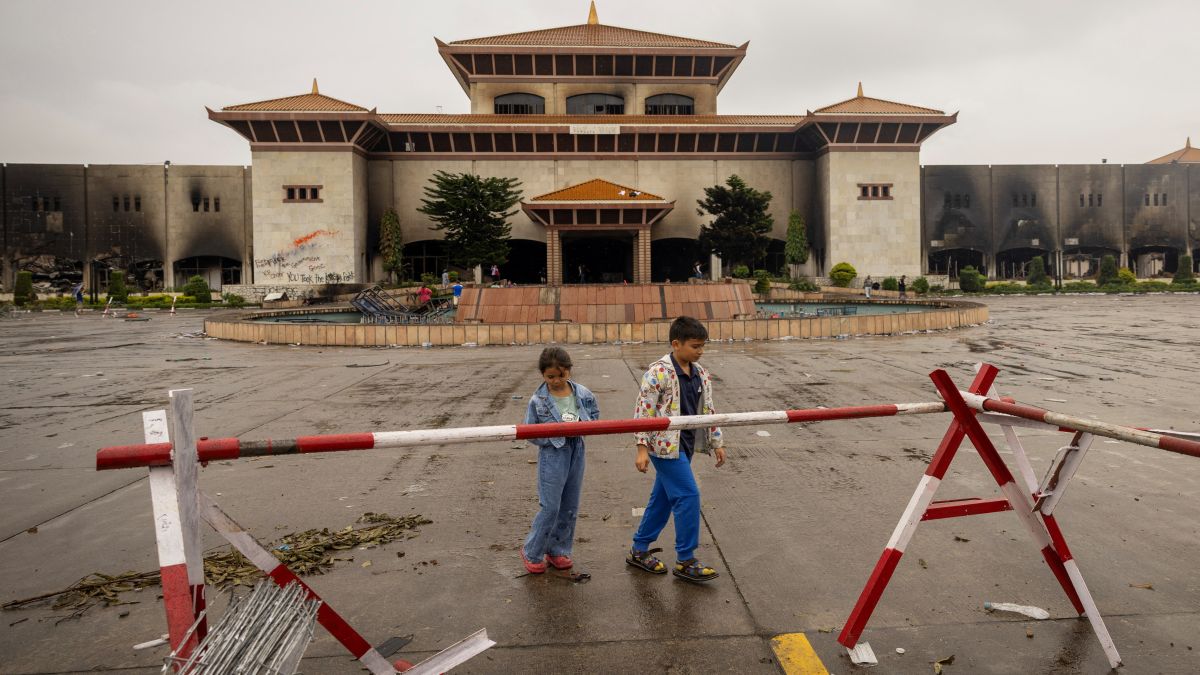 "From governance to tourism, how Gen-Z protests have damaged Nepal")
 "Did Russia deliberately send drones into Poland’s airspace?")
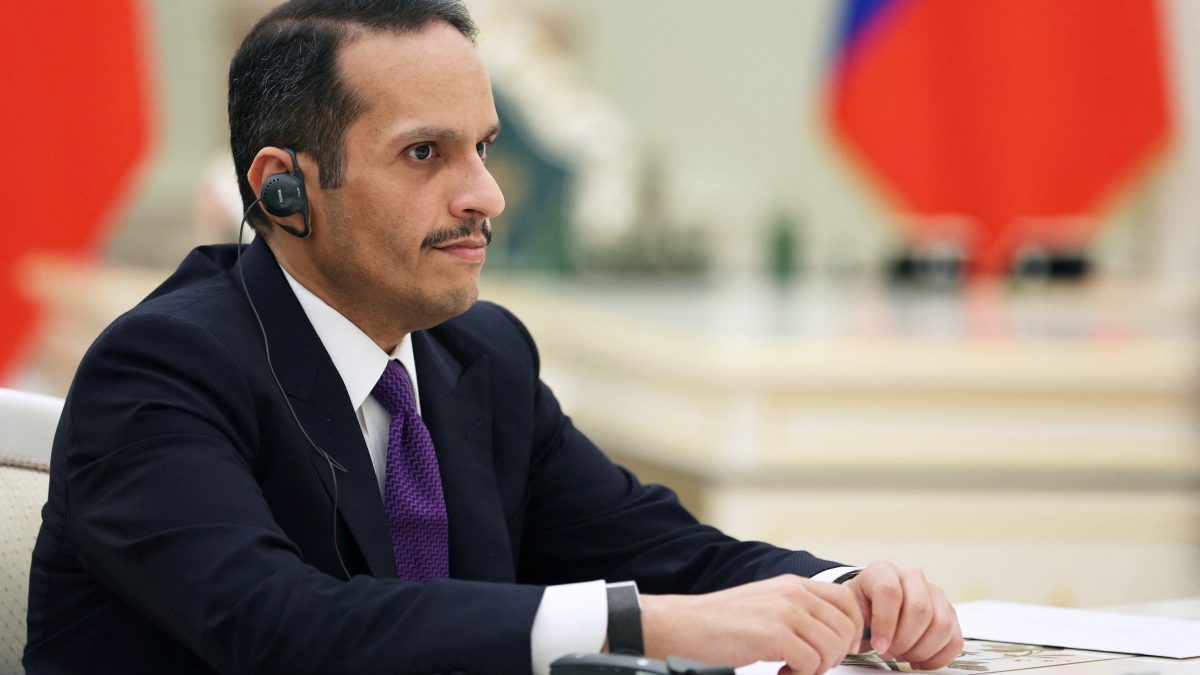 "Netanyahu ‘killed any hope’ for Israeli hostages: Qatar PM after Doha strike")



](https://images.firstpost.com/wp-content/uploads/2019/05/Modi_SJaishankar_PTI_380.jpg)