

 "The great 'nationalism' debate: What the prime time chest-thumping doesn't tell you")
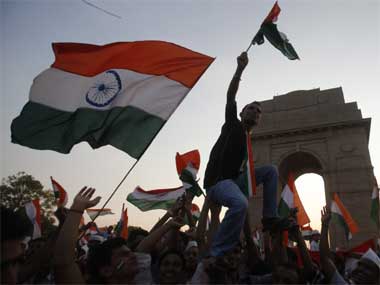
On the sidelines of the greater debate about freedom of speech and limits to state power, there is a tango of polemics going on regarding patriotism and nationalism. This is a recurring exchange in India, the latest round of sonic warfare being sparked by the drama at Jawaharlal Nehru University; an earlier episode occurred when a junior minister was perceived as chest-thumping about an Indian inclusion into Burma in pursuit of terrorists. The hanging of terrorists Ajmal Kasab and Afzal Guru in November 2012 and February 2013 also stirred this topic, albeit in the background of a debate on the death penalty. In this rather boring dispute, the lazy thinking of one side is matched only by the inarticulate stumbling of the other. Patriotism, we are to understand, is the love of one’s country without harbouring ill-will or hatred against any other country. Nationalism, on the other hand, is an aggressive monster we should all know better than to indulge in after the horrific lessons of early 20th century Europe. The implicit re-verification of Godwin’s law not withstanding, this strikes as a rather restricted view. First, it assumes under patriotism, questionably, qualities of the nation in their milder and more positive manifestation, and second, it limits nationalism to only its extreme elements, making it easier to dismiss intellectually by making the fringe mainstream . What does ’love of one’s country’ mean? Strictly speaking, ‘country’ implies land or territory. With no additional implication of culture or bonding with other citizens in an imagined community, patriotism comes off as cold, impersonal, and somehow incomplete. What is there to love about a land without its people? Does an Italian patriot love the boot-shaped geography of his land or the words of Boccaccio and Dante, the wines of Piedmont, and the music of Verdi that bind him to that land incidentally? Furthermore, a loyalty to territory alone comes off as anachronistic in a globalised and multicultural world wherein international bodies, corporations and other non-governmental organisations increasingly exist fluidly across borders. [caption id=“attachment_2636420” align=“alignleft” width=“380”] 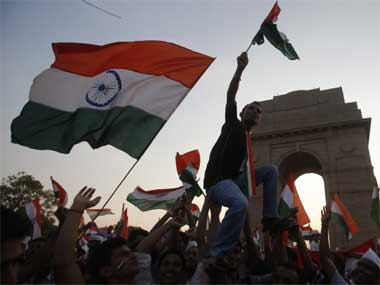 Representational image. Reuters[/caption] A phrase that is sometimes thrown up is constitutional patriotism. Coined by German philosopher Jürgen Habermas in the mid-to-late 1980s, it essentially holds that people should form a political attachment to liberal democratic principles rather than to the cultural nation. Patriotism, understood thus, is not nationalism-lite: it is a political grouping of an entirely different dynamic, one that is not rooted in the historical specificity of a group but is an imposition of values marketed as universal. Such ideas of civic nationalism are not new — the American Revolution and Revolutionary France were among the first to declare such ideals. However, practice was different from theory and the new universalism found few takers; Napoleon’s Jewish emancipation was reversed and the United States controlled immigration and maintained slavery. Today, it is only in the Americas that citizenship is by jus soli — place of birth — rather than jus sanguinis — bloodline. In this, they were aided by genocide and a whole new hemisphere in which to settle without the ties of the Old World to influence new beginnings. Most states, however liberal, have found cultural ties of language, faith, and ethnicity to be better bonds between citizens than abstract principles. Constitutional patriotism would take us further into abstraction to jus constitutio which is unlikely to find any subscribers. Nationalism, on the other hand, is a feeling of group identity based on kinship, faith, language, or other cultural markers. These nebulous sentiments are made concrete not just via the cultural creation of the nation - the national anthem, the national flag, national epics, national heroes — but also mundane and quotidian acts such as the recitation of the Saraswati vandana in school, the casual display of the national flag on buildings and in offices, sporting events and national teams, and interactions with other shared symbols such as currency, stamps, and road names. Nationalism has suffered from a negative reputation, perhaps a tad unfairly. Though the catastrophe of two world wars has been indelibly imprinted on the world’s psyche, the body count of other -isms, arguably far more horrendous, has received a generous wave off. There is no reason for the intellectual opprobrium towards nationalism alone given the nastier tendencies of other political and cultural movements. In the fear over its explosive divisiveness, the power of nationalism to bring people together is completely overlooked, a power so profound and overwhelming that it inspires solidarity among strangers and even sacrifice. It is doubtful if a modern state can be built on less. Historically, a community of ideas has not been able to wrest belonging from the nation. Lenin famously claimed that he was betrayed by European communists on the eve of World War I as they gathered under nationalist banners. Mao had a similar grievance with Soviet communism post Stalin, that Moscow’s belief in its leadership of the Communist movement stemmed from Russian nationalism rather than any true internationalism. Today, the European Union struggles to fashion Europeans out of Englishmen, Netherlanders, and Czechs. Interestingly, the EU is also an example of how it has been easier to share sovereignty than dilute national identity — despite repeated rumours of its demise, the supranational grouping has clung on as an important yet secondary identity, perhaps bound by common history and faith more than the memoranda out of Brussels. In India, the Leftist fear of nationalism is that the country’s overwhelmingly Hindu past would have to be conceded. For a state that has so far extended special privileges to select communities in the guise of minority rights, this would fundamentally alter the idea of India, so much so that it might even be called the birth of the Second Republic. Though it is stated with pride that multiple nations reside within the Indian state, it ought to be considered how many such experiments have been successful in the past — none come to mind. Perhaps the weakness of Indian democracy lies in the inevitable and constant pandering to these national identities? Instead of trying to be fashionably post-national, it is better to harness the communitarian nature of nationalism to forge a more stable union wherein no group is threatened but neither is any given special dispensation. A confident nation will be a mature state, one which may not only see better governance at home but also be a more valuable member of the international community. As for the excesses of nationalism in the past, what idea have men not abused? Perchance the fault is not in our stars or ideas, dear Brutus, but in ourselves.
Instead of trying to be fashionably post-national, it is better to harness the communitarian nature of nationalism to forge a more stable union wherein no group is threatened but neither is any given special dispensation.
Advertisement
End of Article


 "Charlie Kirk, shot dead in Utah, once said gun deaths are 'worth it' to save Second Amendment")
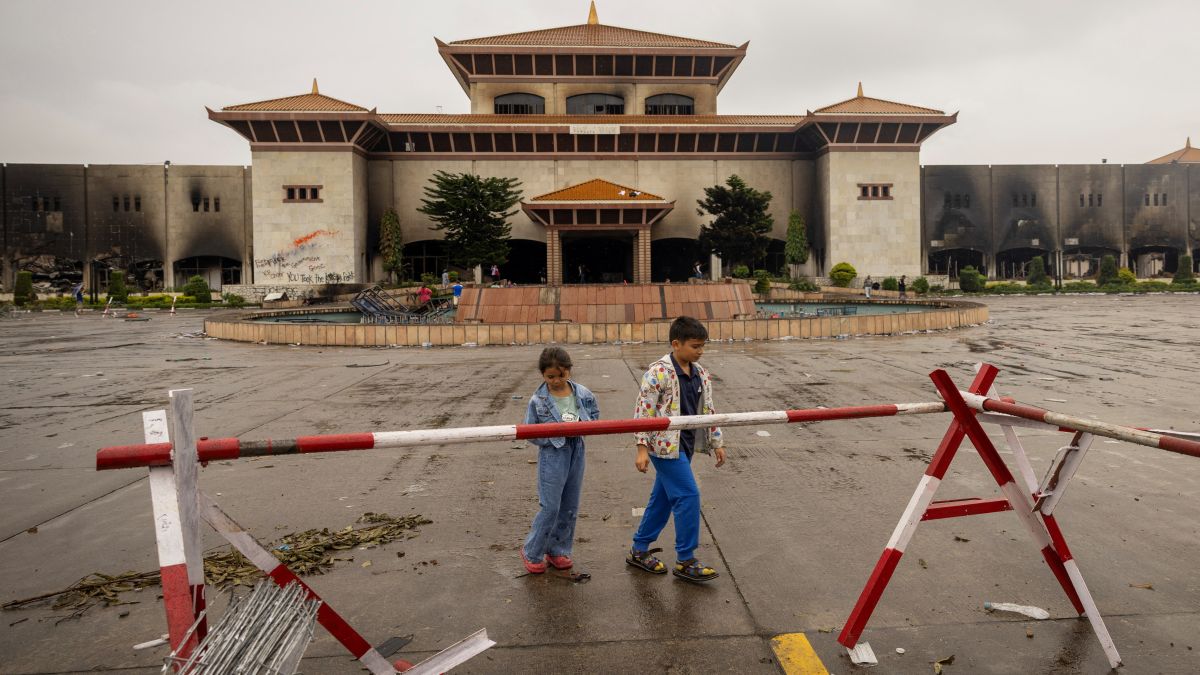 "From governance to tourism, how Gen-Z protests have damaged Nepal")
 "Did Russia deliberately send drones into Poland’s airspace?")
 "Netanyahu ‘killed any hope’ for Israeli hostages: Qatar PM after Doha strike")
 "Charlie Kirk, shot dead in Utah, once said gun deaths are 'worth it' to save Second Amendment")
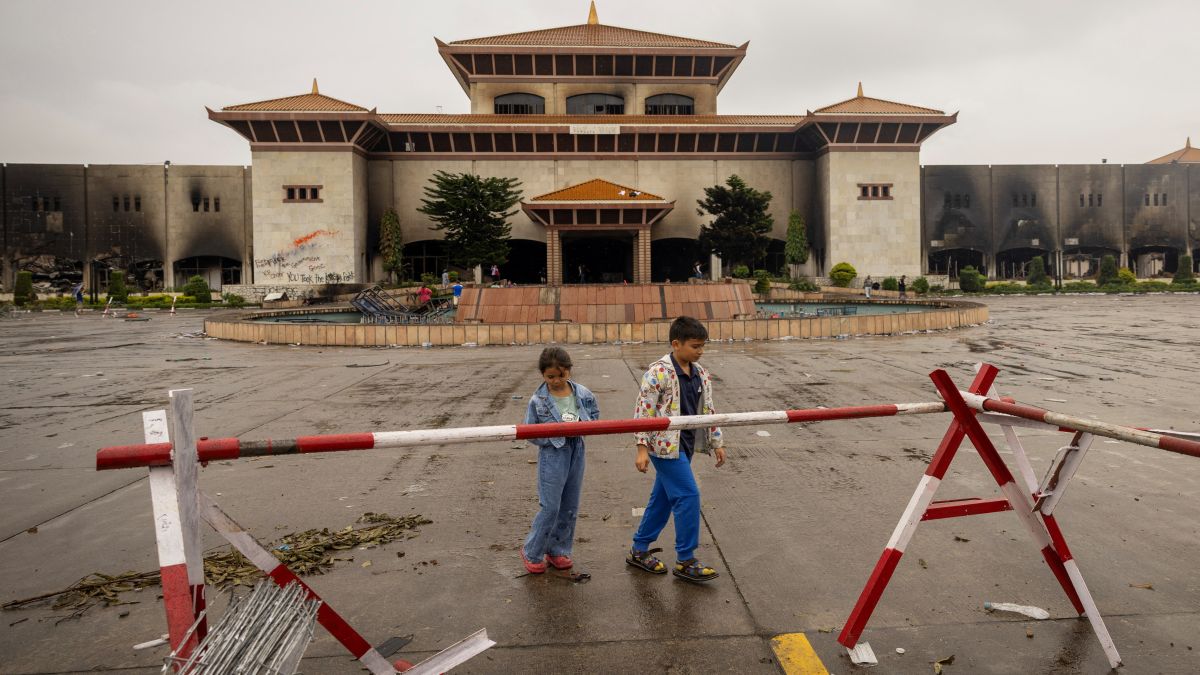 "From governance to tourism, how Gen-Z protests have damaged Nepal")
 "Did Russia deliberately send drones into Poland’s airspace?")
 "Netanyahu ‘killed any hope’ for Israeli hostages: Qatar PM after Doha strike")



](https://images.firstpost.com/wp-content/uploads/2016/02/indian-flag-reuters.jpg)