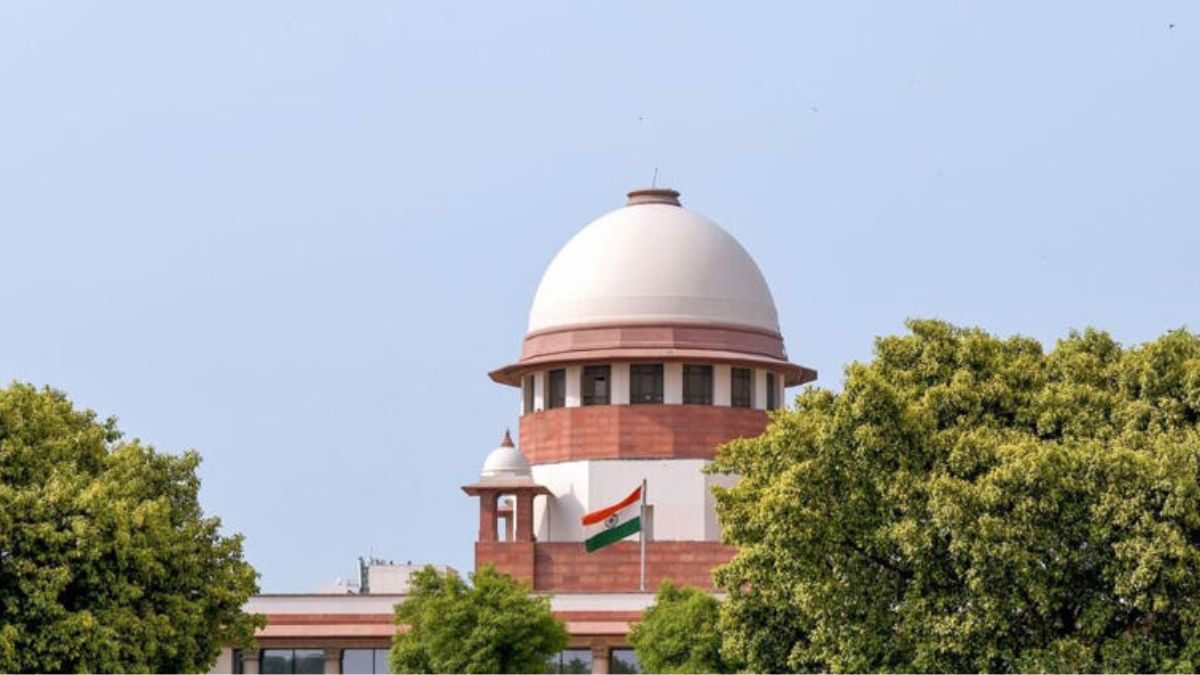
 "Supreme Court of India (File image)")
The Supreme Court of India has taken up a curative plea from death-row convict Mohammad Arif, also known as Ashfaq, who was sentenced to death for his role in the 2000 Red Fort terror attack, as reported by news agency ANI. The top court issued notices to the Delhi government after hearing arguments from lawyers representing Arif.
The curative petition challenges the dismissal of his earlier review plea against the death sentence he received for the Red Fort attack that claimed the lives of three Army personnel nearly 26 years ago. A Bench led by Chief Justice Surya Kant and Justices Vikram Nath and J.K. Maheshwari considered the arguments before issuing the notice.
During the hearing, Arif’s counsel argued that recent Supreme Court jurisprudence, including a decision in Manoj vs State of Haryana, calls for a fresh look at cases even at the curative stage.
Limited jurisdiction for curative petitions
The Supreme Court took note of the legal submissions and highlighted the narrow scope of curative jurisdiction, which is only meant for rare circumstances where a gross miscarriage of justice may have occurred. After hearing the arguments, the Bench simply said, “Issue notice,” to which the lawyer responding for Arif said, “Most grateful.”
Arif was convicted in connection with the December 22, 2000 attack on the Red Fort in Delhi, where intruders fired at the 7 Rajputana Rifles unit stationed inside the historic military site. Three Army personnel were killed during the assault.
Quick Reads
View AllHis death sentence has repeatedly survived legal scrutiny. In November 2022, the Supreme Court rejected Arif’s review petition, upholding the death penalty after earlier courts affirmed the conviction.
In June 2024, President Droupadi Murmu rejected Arif’s mercy petition , closing another avenue for clemency and reaffirming the executive’s stand on his conviction. Despite those setbacks, Arif is now seeking another round of judicial consideration through the curative process.