

 "Planning New Year in Sikkim? Only Indians can visit this place")
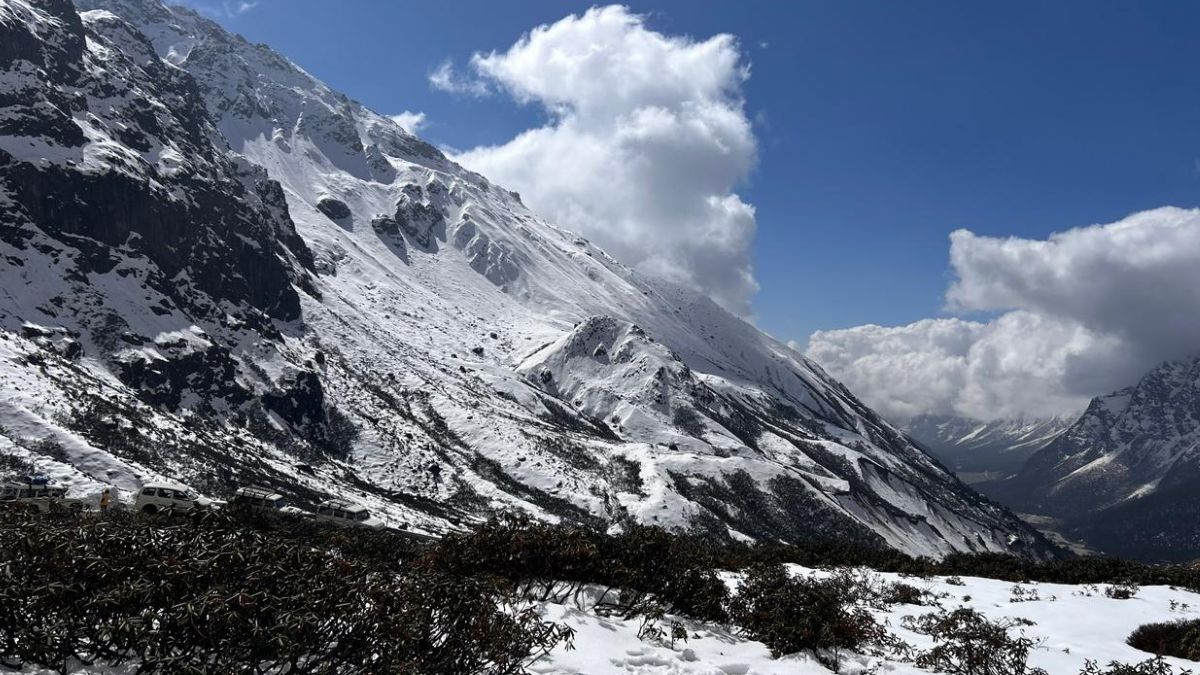
Welcoming the year in Sikkim feels less like a celebration and more like a pause. Sikkim greets the New Year gently. Snow settles on the mountains, prayer flags sway in the cold air and the light feels softer, almost thoughtful. In Gangtok, there is no rush to celebrate. Cafés stay warm and inviting, tea is poured slowly and people greet one another without hurry. The hills seem to quiet the mind. As the old year fades, the winding roads, frosted peaks and still mornings invite you to slow down and simply take it all in.
Moving through the state at this time feels deeply personal. Monasteries like Rumtek and Pemayangtse echo with chants that drift into the winter air, far removed from the noise of New Year elsewhere. At sunrise, Kanchenjunga briefly glows pink and gold, a moment so calm it feels meant just for those watching. Evenings pass in small markets, where the smell of momos and thukpa hangs in the cold and conversations stretch on, unbothered by the ticking clock.
Where beauty meets boundaries
Winter travel in Sikkim is guided as much by rules as by the mountains themselves. As the road climbs into North Sikkim, the journey tightens. Lachung and Lachen are not places you simply drive into. Permits, checkpoints and clear restrictions shape the route. Several high-altitude areas, including Nathula Pass and Yumthang Valley, are open only to Indian citizens. For foreign travellers, these places remain closed, no matter the season or reason. The higher you go, the clearer the limits become.
Who can visit?
The entire state of Sikkim falls under a restricted area regime, making permits mandatory for both Indian and foreign travellers. Foreign nationals must obtain a Restricted Area Permit (RAP), applicable to most nationalities except Bhutanese citizens. Beyond this, specific sensitive locations in North Sikkim, including Gurudongmar Lake, Tsomgo Lake and Zuluk, require an additional Protected Area Permit (PAP). Foreign visitors are also often required to travel in groups of two or more when entering protected zones, a rule linked to safety and oversight. Even with the correct permits, access remains limited, and some areas remain largely inaccessible to non-Indians.
The entire state of Sikkim falls under a restricted area regime, making permits mandatory for both Indian and foreign travellers. Foreign nationals must obtain a Restricted Area Permit (RAP), applicable to most nationalities except Bhutanese citizens. Beyond this, specific sensitive locations in North Sikkim, including Gurudongmar Lake, Tsomgo Lake and Zuluk, require an additional Protected Area Permit (PAP). Foreign visitors are also often required to travel in groups of two or more when entering protected zones, a rule linked to safety and oversight. Even with the correct permits, access remains limited, and some areas remain largely inaccessible to non-Indians.
Indian travellers are not exempt from regulation. Access to Lachung and other parts of North Sikkim requires an Inner Line Permit (ILP), which must be arranged in advance through registered travel agents or designated district offices. These permits are usually issued in Gangtok and checked again at official posts along the route. In Sikkim, the journey north is never spontaneous. Paperwork, patience and planning are as essential as warm clothes, reinforcing the sense that this is a place where nature sets the mood, but rules set the pace.


 "India’s backyard in flux: From Gen-Z chaos in Nepal to civilian surrender in Pakistan")
 "'I see that happening': Trump says Russia, Ukraine & US could meet in trilateral talks soon")
 "Kremlin confirms Ukraine peace talks are in final stage as Trump-Putin to speak 'very soon'")
 "Bangladesh to run out of condoms in the next 39 days. Here’s why")
 "India’s backyard in flux: From Gen-Z chaos in Nepal to civilian surrender in Pakistan")
 "'I see that happening': Trump says Russia, Ukraine & US could meet in trilateral talks soon")
 "Kremlin confirms Ukraine peace talks are in final stage as Trump-Putin to speak 'very soon'")
 "Bangladesh to run out of condoms in the next 39 days. Here’s why")



