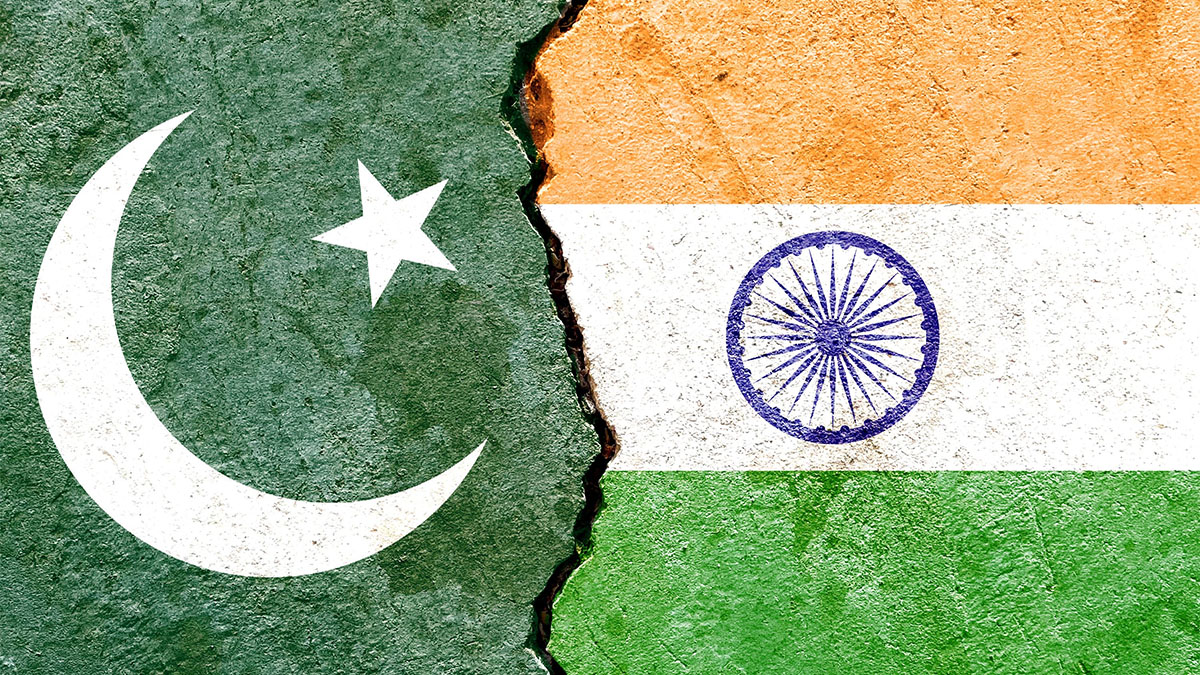
 "Pahalgam: India's multi-sectoral attack as Pakistan awaits a military strike")
The terrorist attack in Pahalgam on April 22, which resulted in the death of 26 people, marked a significant inflection point in India-Pakistan relations. India’s response has been multi-layered, involving diplomatic, economic, strategic and military dimensions.
The retaliatory measures undertaken reveal not only the depth of New Delhi’s preparedness but also its willingness to assertively recalibrate bilateral ties. India’s punitive measures have come against the backdrop of Pakistan, going by the statements of its senior leaders including federal ministers, expecting a military strike by Indian forces on similar lines as seen after the Uri and Pulwama terror strikes in 2016 and 2019 respectively.
Indus Waters Treaty suspension
The suspension of the Indus Waters Treaty (IWT) marks a historic deviation from over six decades of water-sharing cooperation between India and Pakistan. Signed in 1960 by prime minister Jawaharlal Nehru and president Ayub Khan, the IWT divided the six rivers of the Indus basin, allocating the three eastern rivers to India and the three western ones—Indus, Jhelum and Chenab—to Pakistan.
Although India was allowed to build projects on the western rivers under specific rules, the Indus Waters Treaty has remained in place and respected—even during the wars in 1965, 1971 and 1999.
India’s choice to pause the treaty—without officially pulling out—shows a change from quietly following it to using it as a strategic move. By stopping the sharing of river data and easing rules on how it uses water from the western rivers, India has started using water as a tool of pressure.
Right now, Pakistan’s water supply is not likely to be affected much because of limits in water infrastructure. But in the long run, the effects could be serious. Pakistan depends on the Indus river system for 80 per cent of its farming and a big part of its energy, which makes this a powerful strategy for India.
Quick Reads
View AllDiplomatic barrage
In parallel with domestic measures, India launched an expansive diplomatic offensive. Within days of the Pahalgam massacre, India reached out to over 100 countries to highlight the transnational nature of the terror threat emanating from Pakistani soil. This outreach was aimed at isolating Pakistan internationally and gathering broad-based support to justify India’s forthcoming actions across diplomatic and economic platforms.
Prime Minister Narendra Modi received calls from leaders including US President Donald Trump, French President Emmanuel Macron, British Prime Minister Keir Starmer and Japanese Prime Minister Shigeru Ishiba all condemning the attack.
Notably, support was bipartisan and spanned multiple continents suggesting that India’s position had resonance well beyond traditional allies. Over 100 US lawmakers expressed solidarity, a testament to deep-rooted Indo-US cooperation in the realms of counterterrorism and strategic security.
India launched a wide-ranging diplomatic effort, with Foreign Secretary Vikram Misri and External Affairs Minister S Jaishankar meeting with envoys from key global groups such as the G7 and G20. Their goal was to rally international support and explain India’s position.
The level of regional concern became clear when Iran stepped forward, offering to mediate between India and Pakistan. Adding to the diplomatic momentum, Israeli Prime Minister Benjamin Netanyahu issued a statement linking joint efforts against terrorism with economic cooperation. He specifically pointed to the India-Middle East-Europe Corridor underlining how security and trade are now closely tied in international partnerships.
India’s diplomatic efforts had two main purposes. First, they helped justify India’s actions both inside the country and across the border. Second, they helped set the stage for possible future steps in finance and the military. By getting support from other countries, India protected itself from global criticism and showed itself as a victim trying to follow legal steps.
Airspace closure as strategic containment
India’s decision to deny access to its airspace for aircraft linked to Pakistan—including military planes—marks a deliberate and strategic action. Though primarily tactical, the move carries powerful symbolism, clearly expressing India’s hardened position.
Announced through a Notice to Airmen (Notam), the order blocks any aircraft owned, operated, or leased by Pakistan from flying through Indian skies until May 23, 2025. This restriction effectively closes all Indian Flight Information Regions—Delhi, Mumbai, Chennai and Kolkata—to Pakistani aviation.
The move reflects a reciprocal response to Pakistan’s previous airspace closures targeting Indian carriers. This back-and-forth has added a layer of tension to an already strained diplomatic relationship. On a practical level, both countries face longer flight times and increased fuel expenses.
However, the cost is steeper for Pakistan. Indian airspace serves as a key route for flights headed east from Pakistan. The restriction places added pressure on Pakistan International Airlines, which is already struggling with financial challenges.
By extending its response to the aviation sector, India is sending a clear message. It is prepared to challenge Pakistan across multiple domains. The airspace ban is part of a broader strategy to disrupt the status quo and compel Islamabad to rethink its approach.
Targeting Pakistan’s economic lifelines
India’s approach has not stopped at borders and treaties—it has extended into the global financial architecture. Two coordinated efforts target Pakistan’s financial credibility. While one move seeks to reinstate Pakistan on the Financial Action Task Force (FATF) grey list, the other raises objections against an ongoing International Monetary Fund (IMF) bailout package.
Pakistan had exited the FATF grey list in 2022 after years of compliance measures. Re-listing would subject Islamabad to renewed scrutiny and restrict its access to global capital markets. India is attempting to mobilise a critical mass of FATF member states to support this proposition.
Condolences from 23 FATF members following the Pahalgam attack indicate that such a coalition may be within reach. These include the United States, France, Germany, Saudi Arabia and the UAE—players who could significantly sway plenary outcomes.
Simultaneously, New Delhi is lobbying the IMF to reassess Pakistan’s compliance with the terms of its $7 billion Extended Fund Facility. India alleges that these funds are being misdirected toward activities that indirectly support terrorism, thereby violating IMF lending norms. With Pakistan’s next tranche under review, India’s objections could complicate approval and delay financial relief at a critical time.
These financial strikes add a new layer to the escalation ladder. Unlike military manoeuvres, they are silent but deeply disruptive aiming to erode Pakistan’s ability to sustain its domestic economy and its covert strategic ambitions.
Readying the frontlines
India’s armed forces have adopted a demonstrative posture in the wake of the Pahalgam attack. The Indian Navy, Indian Army and Indian Air Force have all conducted intensive drills across their respective domains—land, air and sea—culminating in a three-pronged display of readiness.
On April 25, the Indian Air Force executed Exercise Aakraman, a large-scale combat drill simulating strikes on mountainous and ground targets. Featuring Rafale and Su-30MKI jets, the exercise tested advanced capabilities including electronic warfare, air-to-air combat and precision missile strikes.
The deployment of Meteor and Rampage missiles and the integration of the S-400 defence system demonstrated the technological edge India intends to wield in any future conflict scenario.
At sea, the Indian Navy carried out extensive drills in the Arabian Sea within its Exclusive Economic Zone. Warships fired anti-ship and anti-aircraft missiles to validate strike readiness.
Simultaneously, the Coast Guard maintained vigilance along the maritime boundary near Gujarat ensuring no unusual activity escaped detection. These moves highlight India’s intent to secure its entire regional footprint extending deterrence beyond the Line of Control (LoC) to maritime frontiers.
On land, the Indian Army conducted Exercise Sanyukt Abhyas alongside the Armed Police Forces focussing on joint operational preparedness. This reflects a broader inter-agency synergy and rapid response capacity.
While these exercises may have been partly pre-scheduled, their timing and scale suggest a strong connection to current geopolitical tensions.
Pakistan’s retaliatory firings along the LoC—reported for the eighth straight day on May 1–2 across five sectors—add tension and uncertainty, as Islamabad remains unsure about how India might respond to its terror attacks on Indian soil. However, the Indian Army’s measured response shows both restraint and readiness.
The architecture of escalation
The Pahalgam attack has triggered a strong and wide-ranging response from India—covering diplomacy, the economy, military drills and strategy. India has paused the Indus Waters Treaty, reached out strongly to the international community, denied airspace access, plans to apply financial pressure through groups like FATF and the IMF and carried out coordinated military exercises.
Together, these actions show a major change in how India deals with cross-border terrorism. Every step has been carefully planned to increase pressure without causing a full-blown conflict showing a thoughtful and controlled approach. With most of the world supporting India’s position, New Delhi seems to have gained both moral support and strategic advantage.

 "'Indian food, our pride': $200k settlement in Palak Paneer case a moral victory against racism in the west")
 "India’s air dominance in Operation Sindoor forced Pakistan to seek ceasefire, European report says")
 "How Pakistan’s support may have led Bangladesh towards a very costly mistake")
 "India vs New Zealand Live Score 3rd T20: Kishan gone after IND cross 50 in just 3.1 overs")
 "'Indian food, our pride': $200k settlement in Palak Paneer case a moral victory against racism in the west")
 "India’s air dominance in Operation Sindoor forced Pakistan to seek ceasefire, European report says")
 "How Pakistan’s support may have led Bangladesh towards a very costly mistake")
 "India vs New Zealand Live Score 3rd T20: Kishan gone after IND cross 50 in just 3.1 overs")