

 "Minority institutions heading towards exclusion, not inclusion")
Minoritarianism is fast becoming a way of exclusion and special treatment as opposed to the fundamental constitutional principle of inclusiveness, equality and non-discrimination. Thanks to the tendency of the state to meddle in every so-called “majority” institution, everyone seeks refuge in a minority status. But the state has found other ways to interfere – and this time through the minorities commission itself. The Maharashtra Minorities Commission has stepped in to make the minority status of a linguistic minority institution in Mumbai exclusionary – something the institution never intended. DNA newspaper reported on the case of the South Indian Education Society (SIES) on Wednesday (11 June). The state Minorities Commission apparently told SIES that it could provide quotas only for one linguistic community. It must thus exclude the other south Indian communities in order to retain its minority status. The institution has since complied, and now allows only Tamils in its 50 percent admission quota; Telugus, Malayalis, Kannadigas, Tulus and speakers of other south Indian languages have been left out in the cold. [caption id=“attachment_1570871” align=“alignleft” width=“380”] 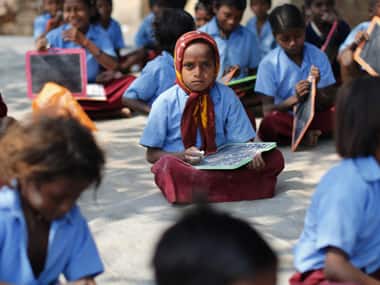 Representational Image. Reuters[/caption] This shows how the primary purpose of Articles 30(1) and 30(2) of the constitution has been subverted in practice. These two articles guarantee the rights of religious and linguistic minorities to set up and administer their own educational institutions. The idea was to ensure that minority cultural and educational rights did not get trampled by covert or overt majoritarianism. However, the mere existence of these articles has been interpreted to mean that the state can interfere with the rights of so-called majority-run institutions. So, in order to escape state interference, all communities - and not just linguistic and religious minorities - have sought to set up minority institutions in states where they are a minority. So, theoretically, if you are Hindu and want to run an interference-free educational institution, you can do it only by setting up shop in Kashmir, Nagaland, Mizoram or Lakshadweep. But even this loophole is being subverted by Minorities Commissions stepping in. Far from solving the problem of state interference, minoritarian thinking has ensured that such institutions – even if set up in other states - become more exclusive than inclusive. Articles 30(1) and 30(2), by creating an exclusive and separate domain of rights for minorities, has militated against the idea of common citizenship with a universal guarantee of rights. As Manoj Nair, communities columnist in Hindustan Times, notes today (13 June), SIES started out in the 1930s with the idea of creating a high quality educational institution accessible to all. But excessive state meddling forced it to seek minority status in Maharashtra, where it is domiciled. Even though it was a Tamilian-run institution, it operated quotas for all south Indians and not just Tamils. It was more inclusive despite being a minority institution. But now that’s gone. Nair quotes V Shankar, SIES president, as saying that seeking minority status became vital to retain some degree of administrative freedom. “We were never interested in recognition as a minority-run institution. We wanted to grow with the city (of Mumbai).” But what grew was governmental interference, with a “plethora of rules” circumscribing the institution’s freedom of action. Now, with the Minorities Commission stepping in with its narrow interpretation of which minority SIES should be catering too, SIES’s minority status is all about narrowing down its pool of students to one linguistic community. Some minority-run schools find it tough to find enough students from their own community to fill the 50 percent quota, and so they prefer to keep those seats vacant. So the Minorities Commission has actually ended up reducing the number of seats available in an institution to a minuscule minority. What a travesty. Constitutional provisions intended to assure minorities that their rights would be safeguarded in India have had the opposite effect of the state trampling on the rights of majority-run institutions – which now seek minority status. And the minorities commission has put in its two bits and made things worse. Clearly, our constitutional scheme was not intended to protect the rights of minorities and trample on the rest. Articles 30 (1) and 30(2) clearly need to be explicitly extended to all communities.
A minority institution in Mumbai has been asked to narrow down its minority intake to something ever narrower. The Minorities Commission is thus making the meaning of minority even narrower, and exclusive rather than inclusive
Advertisement
End of Article
Written by R Jagannathan
R Jagannathan is the Editor-in-Chief of Firstpost. see more


 "Russian drones over Poland: Trump’s tepid reaction a wake-up call for Nato?")
 "As Russia pushes east, Ukraine faces mounting pressure to defend its heartland")
 "Why Mossad was not on board with Israel’s strike on Hamas in Qatar")
 "Turkey: Erdogan's police arrest opposition mayor Hasan Mutlu, dozens officials in corruption probe")
 "Russian drones over Poland: Trump’s tepid reaction a wake-up call for Nato?")
 "As Russia pushes east, Ukraine faces mounting pressure to defend its heartland")
 "Why Mossad was not on board with Israel’s strike on Hamas in Qatar")
 "Turkey: Erdogan's police arrest opposition mayor Hasan Mutlu, dozens officials in corruption probe")



](https://images.firstpost.com/wp-content/uploads/2014/06/RTX18LM9.jpg)